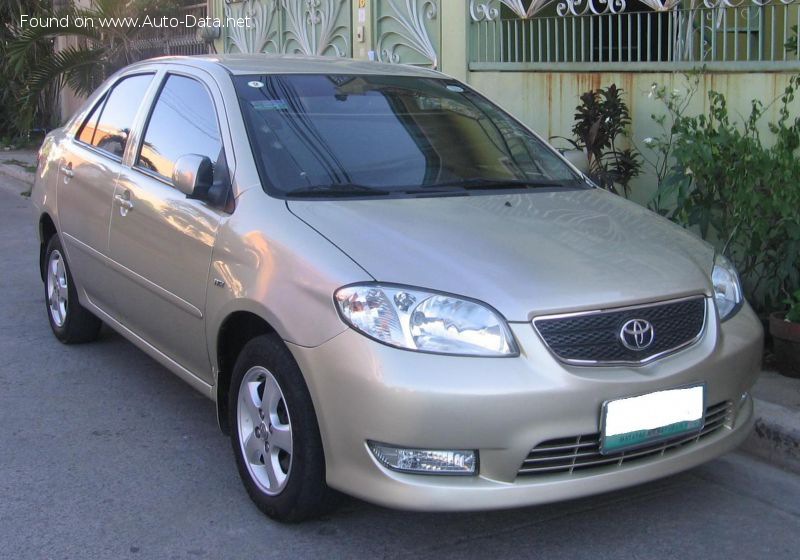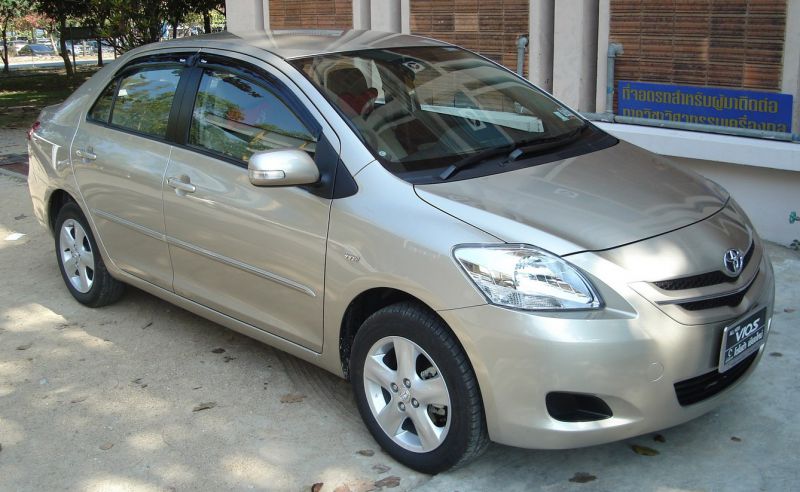
The Toyota Vios II 1.5, produced between 2007 and 2013, represents the second generation of Toyota’s subcompact sedan aimed primarily at the Asian market. While not officially sold in the United States, the Vios holds significant importance in regions like Thailand, the Philippines, and Indonesia, where it consistently ranked among the best-selling vehicles in its class. Positioned as an affordable and reliable family car, the Vios II offered a practical alternative to larger, more expensive sedans, focusing on fuel efficiency and ease of maintenance. This generation built upon the success of the first Vios, refining its design and improving its overall performance.
Toyota Vios II 1.5: A Detailed Overview
The Vios II was designed to cater to the needs of emerging markets, prioritizing practicality and affordability. It served as a crucial entry point into the Toyota brand for many consumers, offering the renowned Toyota reliability at a competitive price point. The vehicle’s design reflected a conservative aesthetic, focusing on functionality rather than radical styling. It was often seen as a workhorse vehicle, favored by families and businesses alike for its dependability and low running costs.
Engine & Performance
The heart of the Toyota Vios II 1.5 is a 1.5-liter inline-four cylinder gasoline engine. This engine produces 109 horsepower at 6000 rpm and 141 Nm (104 lb.-ft.) of torque at 4000 rpm. The engine utilizes a multi-port fuel injection system and a naturally aspirated configuration, contributing to its relatively simple and reliable design. The power-to-weight ratio of 9.5 kg/Hp (104.8 Hp/tonne) provides adequate performance for everyday driving conditions. The Vios II was typically equipped with a 5-speed manual transmission, offering drivers direct control over gear selection. While not a performance-oriented vehicle, the Vios II provided sufficient power for navigating urban environments and highway cruising. The engine’s 72.9 Hp/l specific output demonstrates a focus on efficiency rather than outright power.
Design & Features
The Toyota Vios II is a traditional four-door sedan with a relatively conservative design. Its dimensions – 4300 mm (169.29 in) in length, 1690 mm (66.54 in) in width, and 1460 mm (57.48 in) in height – place it squarely in the subcompact sedan segment. The vehicle comfortably seats five passengers and offers a trunk capacity of 475 liters (16.77 cu. ft.), providing ample space for luggage and everyday items.
Features were geared towards practicality and affordability. Standard equipment typically included air conditioning, power steering, and basic audio systems. Safety features, while not as comprehensive as those found in more expensive vehicles, included basic braking systems and seatbelts. The McPherson strut front suspension and semi-independent coil spring rear suspension provided a comfortable, if not particularly sporty, ride. The 165/70 R14 tires mounted on 14-inch wheels were chosen for their balance of comfort, fuel efficiency, and cost. The Vios II’s design prioritized functionality and durability over luxurious appointments.
Technical Specifications
| Brand | Toyota |
| Model | Vios |
| Generation | Vios II |
| Type (Engine) | 1.5 (109 Hp) |
| Start of production | 2007 |
| End of production | 2013 |
| Powertrain Architecture | Internal Combustion engine |
| Body type | Sedan |
| Seats | 5 |
| Doors | 4 |
| Fuel Type | Petrol (Gasoline) |
| Weight-to-power ratio | 9.5 kg/Hp |
| Weight-to-torque ratio | 7.4 kg/Nm |
| Power | 109 Hp @ 6000 rpm |
| Power per litre | 72.9 Hp/l |
| Torque | 141 Nm @ 4000 rpm |
| Torque (lb.-ft.) | 104 lb.-ft. @ 4000 rpm |
| Engine layout | Front, Transverse |
| Engine displacement | 1495 cm3 |
| Engine displacement (cu. in.) | 91.23 cu. in. |
| Number of cylinders | 4 |
| Engine configuration | Inline |
| Cylinder Bore | 72 mm |
| Cylinder Bore (in.) | 2.83 in. |
| Piston Stroke | 91.8 mm |
| Piston Stroke (in.) | 3.61 in. |
| Compression ratio | 10:1 |
| Number of valves per cylinder | 4 |
| Fuel injection system | Multi-port manifold injection |
| Engine aspiration | Naturally aspirated engine |
| Kerb Weight | 1040 kg |
| Kerb Weight (lbs.) | 2292.81 lbs. |
| Max. weight | 1315 kg |
| Max. weight (lbs.) | 2899.08 lbs. |
| Max load | 275 kg |
| Max load (lbs.) | 606.27 lbs. |
| Trunk (boot) space – minimum | 475 l |
| Trunk (boot) space – minimum (cu. ft.) | 16.77 cu. ft. |
| Fuel tank capacity | 42 l |
| Fuel tank capacity (US gal) | 11.1 US gal |
| Fuel tank capacity (UK gal) | 9.24 UK gal |
| Length | 4300 mm |
| Length (in.) | 169.29 in. |
| Width | 1690 mm |
| Width (in.) | 66.54 in. |
| Height | 1460 mm |
| Height (in.) | 57.48 in. |
| Wheelbase | 2550 mm |
| Wheelbase (in.) | 100.39 in. |
| Front track | 1480 mm |
| Front track (in.) | 58.27 in. |
| Rear (Back) track | 1470 mm |
| Rear (Back) track (in.) | 57.87 in. |
| Ride height (ground clearance) | 150 mm |
| Ride height (ground clearance) (in.) | 5.91 in. |
| Drivetrain Architecture | ICE, Front wheel drive |
| Drive wheel | Front wheel drive |
| Number of gears and type of gearbox | 5 gears, manual transmission |
| Front suspension | Independent type McPherson |
| Rear suspension | Semi-independent, coil spring |
| Front brakes | Ventilated discs |
| Rear brakes | Drum |
| Tires size | 165/70 R14 |
| Wheel rims size | 14 |
The Toyota Vios II 1.5, while not a groundbreaking vehicle, served a vital role in providing affordable and reliable transportation to a large segment of the population in Southeast Asia. Its focus on practicality, fuel efficiency, and durability cemented its position as a popular choice in its target markets.