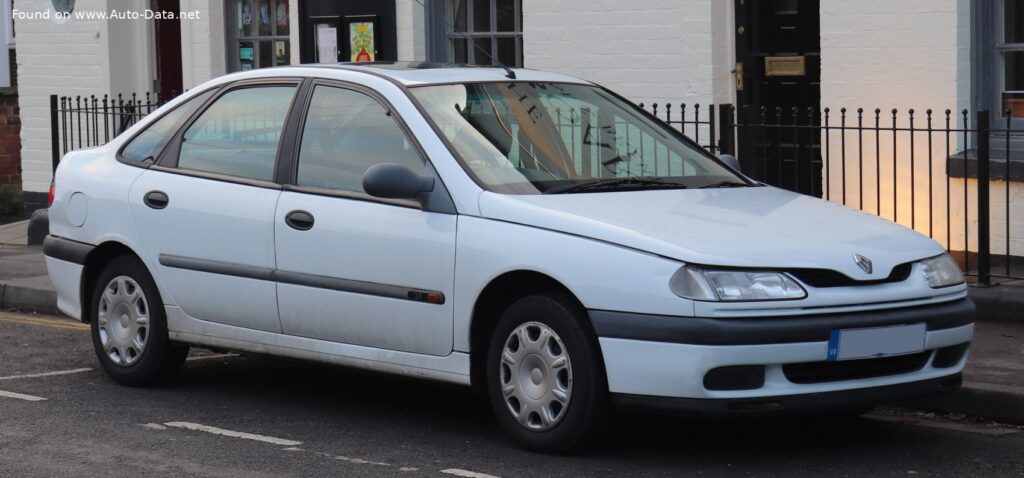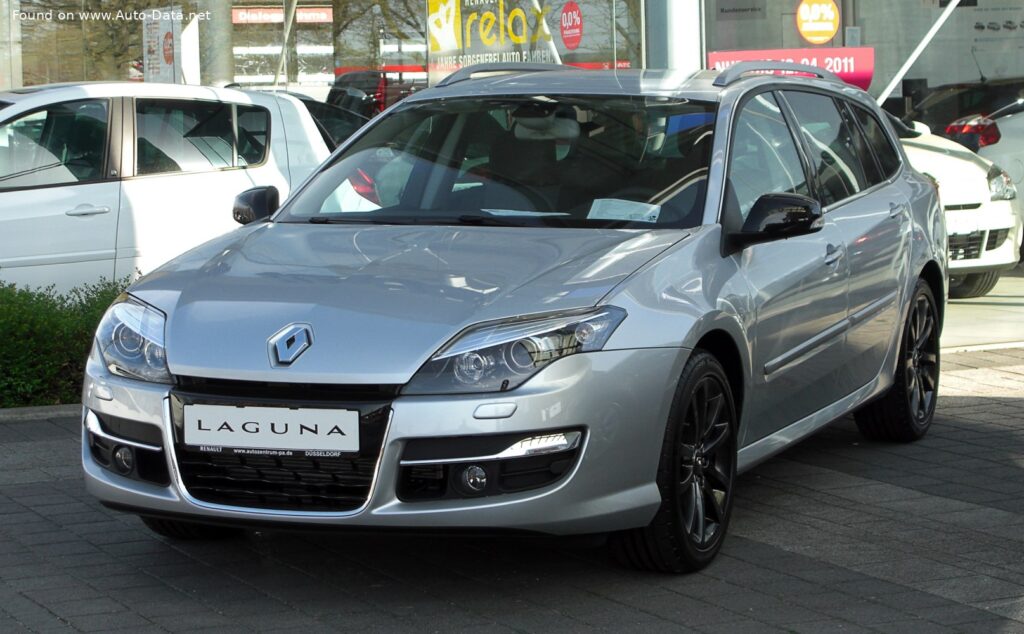
The Renault Laguna III Grandtour (Phase II) 2.0 16V, produced from 2010 to 2015, represents a significant iteration of Renault’s mid-size family car. As a station wagon (estate) body style, it aimed to provide practicality and comfort within the competitive European D-segment. While not officially sold in the United States, the Laguna held a prominent position in the European market, competing with vehicles like the Ford Mondeo, Volkswagen Passat, and Peugeot 407. The Phase II update brought refinements to the styling, interior, and available technology, solidifying the Laguna’s appeal as a well-rounded and modern vehicle for families and business users alike.
Renault Laguna III Grandtour: A Detailed Overview
The Laguna III, launched in 2007, was a departure for Renault, emphasizing quality and refinement. The Grandtour variant, the station wagon version, offered increased cargo capacity without sacrificing the vehicle’s stylish design. The Phase II facelift, introduced in 2010, focused on enhancing the car’s aesthetics and improving the overall driving experience. This version, equipped with the 2.0 16V engine producing 140 horsepower, was a popular choice for those seeking a balance between performance and fuel efficiency.
Engine & Performance
The Laguna III Grandtour 2.0 16V is powered by Renault’s M4R engine, a 1.997-liter (121.86 cubic inches) inline four-cylinder gasoline engine. This naturally aspirated engine delivers 140 horsepower (Hp) and 195 Newton-meters (143.82 lb.-ft.) of torque. Power is sent to the front wheels via a six-speed manual transmission. The engine’s design prioritizes smooth operation and reasonable fuel economy over outright performance. Acceleration from 0 to 100 km/h (0-62 mph) takes 9.3 seconds, while 0 to 60 mph is achieved in approximately 8.8 seconds. The vehicle boasts a maximum speed of 203 km/h (126.14 mph). The weight-to-power ratio of 10 kg/Hp and weight-to-torque ratio of 7.1 kg/Nm contribute to a responsive, if not particularly sporty, driving experience. Fuel consumption is rated at 7.6 liters per 100 kilometers (30.9 US mpg) combined, with 10.2 l/100km (23.1 US mpg) in urban settings and 6.2 l/100km (37.9 US mpg) on the extra-urban cycle. The engine meets Euro 5 emission standards, reflecting Renault’s commitment to reducing environmental impact.
Design & Features
The Laguna III Grandtour Phase II presents a sleek and contemporary station wagon profile. The exterior design features Renault’s signature styling cues, including a prominent front grille and sculpted body lines. The Phase II update brought revised headlights, a redesigned front bumper, and updated taillights, giving the car a more modern appearance. Inside, the cabin is designed with practicality and comfort in mind. The five-seat layout offers ample space for passengers, while the station wagon body style provides a generous 508 liters (17.94 cubic feet) of trunk space with the rear seats up, expanding to 1593 liters (56.26 cubic feet) when folded down.
Key features of the Laguna III Grandtour Phase II include ABS (Anti-lock Braking System) for enhanced safety, ventilated disc brakes on the front and disc brakes on the rear, and a steering rack and pinion system for precise handling. The vehicle rides on 17-inch wheel rims with 215/50 R17 tires. While not boasting the advanced driver-assistance systems found in modern vehicles, the Laguna III Grandtour offered a respectable level of equipment for its time, focusing on providing a comfortable and safe driving experience for families.
Technical Specifications
| Brand | Renault |
| Model | Laguna |
| Generation | Laguna III Grandtour (Phase II) |
| Type (Engine) | 2.0 16V (140 Hp) |
| Start of production | 2010 |
| End of production | 2015 |
| Powertrain Architecture | Internal Combustion engine |
| Body type | Station wagon (estate) |
| Seats | 5 |
| Doors | 5 |
| Fuel consumption (urban) | 10.2 l/100 km (23.1 US mpg) |
| Fuel consumption (extra urban) | 6.2 l/100 km (37.9 US mpg) |
| Fuel consumption (combined) | 7.6 l/100 km (30.9 US mpg) |
| CO2 emissions | 175 g/km |
| Fuel Type | Petrol (Gasoline) |
| Acceleration 0 – 100 km/h | 9.3 sec |
| Acceleration 0 – 62 mph | 9.3 sec |
| Acceleration 0 – 60 mph | 8.8 sec |
| Maximum speed | 203 km/h (126.14 mph) |
| Emission standard | Euro 5 |
| Weight-to-power ratio | 10 kg/Hp |
| Weight-to-torque ratio | 7.1 kg/Nm |
| Power | 140 Hp |
| Torque | 195 Nm (143.82 lb.-ft.) |
| Engine layout | Front, Transverse |
| Engine Model/Code | M4R |
| Engine displacement | 1997 cm3 (121.86 cu. in.) |
| Engine configuration | Inline |
| Fuel injection system | Multi-port manifold injection |
| Engine aspiration | Naturally aspirated engine |
| Engine oil capacity | 4.4 l (4.65 US qt | 3.87 UK qt) |
| Coolant capacity | 7.2 l (7.61 US qt | 6.34 UK qt) |
| Kerb Weight | 1394 kg (3073.24 lbs.) |
| Max. weight | 1940 kg (4276.97 lbs.) |
| Max load | 546 kg (1203.72 lbs.) |
| Trunk (boot) space – minimum | 508 l (17.94 cu. ft.) |
| Trunk (boot) space – maximum | 1593 l (56.26 cu. ft.) |
| Fuel tank capacity | 66 l (17.44 US gal | 14.52 UK gal) |
| Length | 4803 mm (189.09 in.) |
| Width | 1811 mm (71.3 in.) |
| Minimum turning circle | 11.05 m (36.25 ft.) |
| Drivetrain | Front wheel drive |
| Number of gears | 6 gears, manual transmission |
| Front brakes | Ventilated discs |
| Rear brakes | Disc |
| Tires size | 215/50 R17 |
| Wheel rims size | 17 |
The Renault Laguna III Grandtour (Phase II) 2.0 16V, while not a performance icon, offered a compelling package of practicality, comfort, and reasonable efficiency for European buyers. Its position in the market was as a sensible and well-equipped family vehicle, providing a viable alternative to more mainstream competitors.