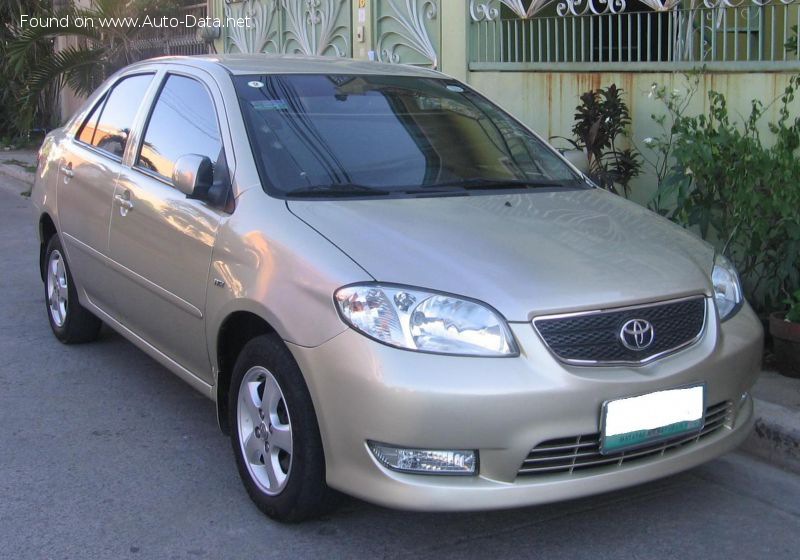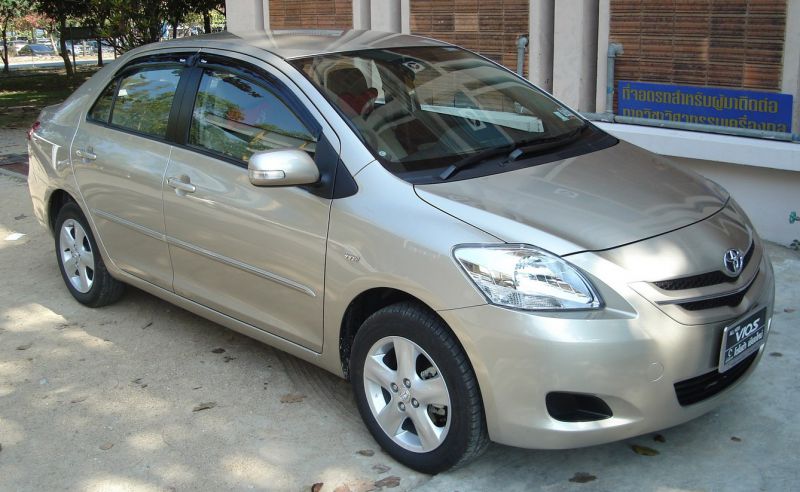
The Toyota Vios II 1.5 (109 Hp) Automatic, produced between 2007 and 2013, represents the second generation of Toyota’s subcompact sedan designed primarily for the Asian market. While not officially sold in the United States, the Vios holds significant importance as a popular and affordable vehicle in countries like the Philippines, Thailand, and Indonesia. It served as a crucial entry point into vehicle ownership for many, offering a blend of practicality, fuel efficiency, and Toyota’s renowned reliability. This generation of the Vios built upon the success of its predecessor, offering improved styling, interior space, and features, solidifying its position as a leading contender in the competitive subcompact segment.
Toyota Vios II: A Regional Success Story
The Vios, in its various iterations, has been a cornerstone of Toyota’s strategy in emerging markets. The second-generation model, specifically, was engineered to meet the demands of these regions, prioritizing affordability, durability, and ease of maintenance. It often served as a replacement for the Toyota Soluna Vios, depending on the specific market. The Vios II was designed to be a practical and reliable family car, capable of navigating congested city streets and providing comfortable transportation for up to five passengers. Its relatively simple mechanical design contributed to its low cost of ownership and widespread appeal.
Engine & Performance
Powering the Toyota Vios II 1.5 Automatic is a 1.5-liter inline four-cylinder gasoline engine. This engine produces 109 horsepower at 6000 rpm and 141 Nm (104 lb.-ft.) of torque at 4000 rpm. The engine features multi-port fuel injection and a naturally aspirated design, prioritizing fuel efficiency over outright performance. The power-to-weight ratio of 72.9 hp per liter reflects the engine’s focus on economy. The engine is transversely mounted at the front of the vehicle, driving the front wheels through a four-speed automatic transmission. While not a performance-oriented vehicle, the Vios II provides adequate power for everyday driving conditions and urban commutes. The automatic transmission offers smooth shifts and contributes to the vehicle’s ease of use.
Design & Features
The Toyota Vios II is a traditional four-door sedan with a relatively conservative design. Its styling was intended to appeal to a broad range of customers, emphasizing practicality and functionality. The interior is designed to maximize space and comfort within the subcompact dimensions. The Vios II offers seating for five passengers and provides a trunk capacity of 475 liters (16.77 cubic feet), ample for everyday needs. Features typically included air conditioning, power windows, and a basic audio system. Safety features, while not as comprehensive as those found in vehicles sold in developed markets, generally included dual airbags and seatbelts. The focus was on providing a safe and reliable transportation solution at an affordable price point. The vehicle’s ride height of 150 mm (5.91 inches) provides adequate ground clearance for navigating typical road conditions in its target markets.
Suspension and Handling
The Vios II utilizes an independent McPherson strut suspension system at the front, providing a comfortable ride and reasonable handling characteristics. The rear suspension employs a semi-independent coil spring setup, balancing ride comfort with cost-effectiveness. Braking duties are handled by ventilated discs at the front and drum brakes at the rear. The vehicle rides on 14-inch wheels with tire sizes of 165/70 R14. The front track measures 1480 mm (58.27 inches), while the rear track is slightly narrower at 1470 mm (57.87 inches). The front-wheel-drive configuration contributes to the vehicle’s fuel efficiency and predictable handling.
Technical Specifications
| Brand | Toyota |
| Model | Vios |
| Generation | Vios II |
| Type (Engine) | 1.5 (109 Hp) Automatic |
| Start of production | 2007 |
| End of production | 2013 |
| Powertrain Architecture | Internal Combustion engine |
| Body type | Sedan |
| Seats | 5 |
| Doors | 4 |
| Fuel Type | Petrol (Gasoline) |
| Power | 109 Hp @ 6000 rpm |
| Power per litre | 72.9 Hp/l |
| Torque | 141 Nm @ 4000 rpm |
| Torque (lb.-ft.) | 104 lb.-ft. @ 4000 rpm |
| Engine layout | Front, Transverse |
| Engine displacement | 1495 cm3 |
| Engine displacement (cu. in.) | 91.23 cu. in. |
| Number of cylinders | 4 |
| Engine configuration | Inline |
| Cylinder Bore | 72 mm |
| Cylinder Bore (in.) | 2.83 in. |
| Piston Stroke | 91.8 mm |
| Piston Stroke (in.) | 3.61 in. |
| Compression ratio | 10:1 |
| Number of valves per cylinder | 4 |
| Fuel injection system | Multi-port manifold injection |
| Engine aspiration | Naturally aspirated engine |
| Max. weight | 1315 kg |
| Max. weight (lbs.) | 2899.08 lbs. |
| Trunk (boot) space – minimum | 475 l |
| Trunk (boot) space – minimum (cu. ft.) | 16.77 cu. ft. |
| Fuel tank capacity | 42 l |
| Fuel tank capacity (US gal) | 11.1 US gal |
| Fuel tank capacity (UK gal) | 9.24 UK gal |
| Length | 4300 mm |
| Length (in.) | 169.29 in. |
| Width | 1690 mm |
| Width (in.) | 66.54 in. |
| Height | 1460 mm |
| Height (in.) | 57.48 in. |
| Wheelbase | 2550 mm |
| Wheelbase (in.) | 100.39 in. |
| Front track | 1480 mm |
| Front track (in.) | 58.27 in. |
| Rear (Back) track | 1470 mm |
| Rear (Back) track (in.) | 57.87 in. |
| Ride height (ground clearance) | 150 mm |
| Ride height (ground clearance) (in.) | 5.91 in. |
| Drivetrain Architecture | Internal combustion engine (ICE) drives the front wheels |
| Drive wheel | Front wheel drive |
| Number of gears and type of gearbox | 4 gears, automatic transmission |
| Front suspension | Independent type McPherson |
| Rear suspension | Semi-independent, coil spring |
| Front brakes | Ventilated discs |
| Rear brakes | Drum |
| Tires size | 165/70 R14 |
| Wheel rims size | 14 |
The Toyota Vios II 1.5 Automatic, while not a vehicle commonly found in the United States, represents a significant example of Toyota’s successful strategy in developing markets. Its blend of affordability, reliability, and practicality made it a popular choice for families and individuals seeking a dependable mode of transportation.