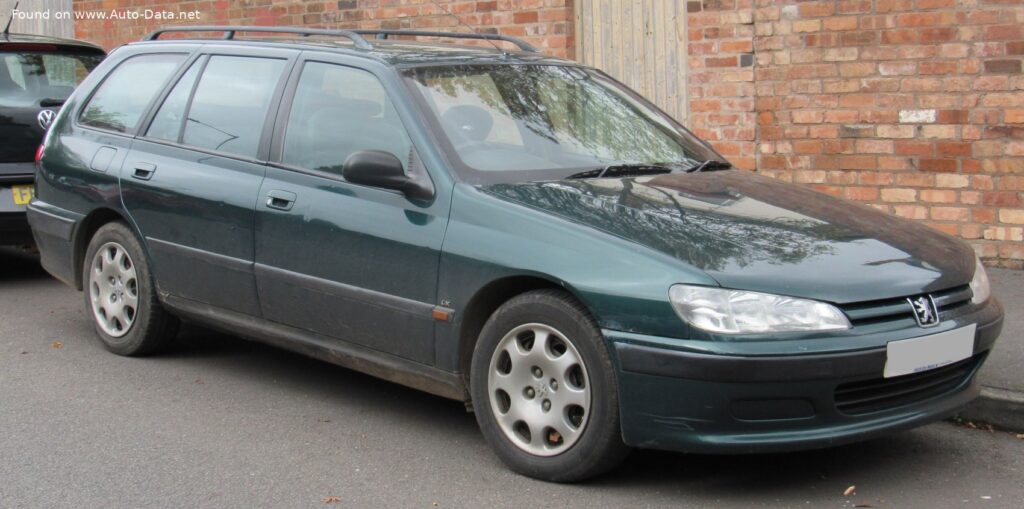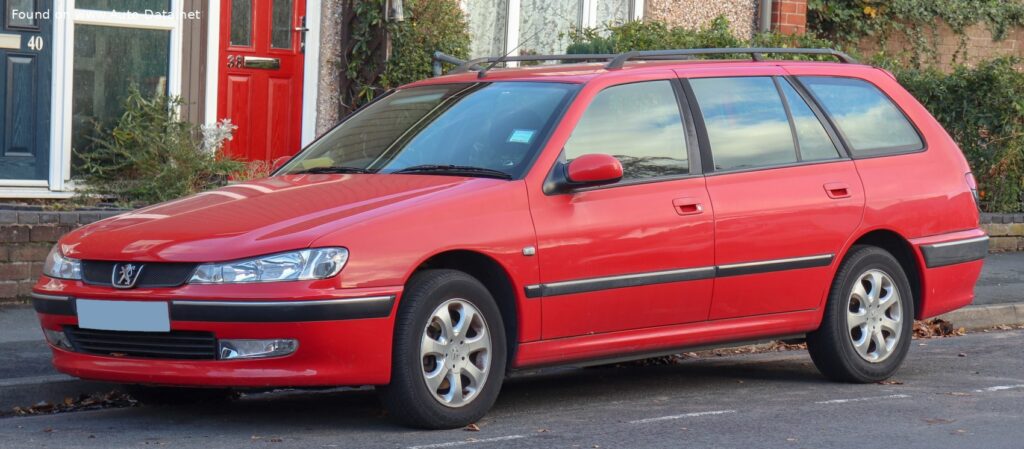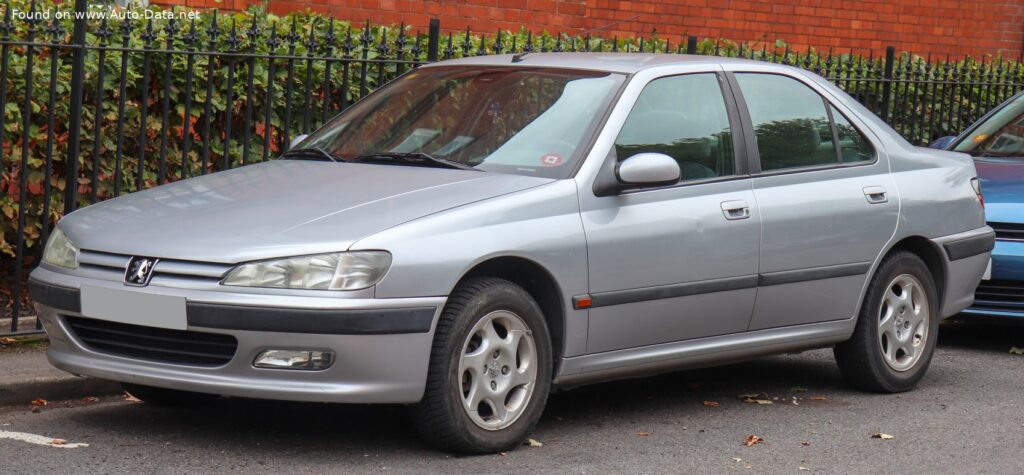
The Peugeot 406, launched in 1995, represented a significant step forward for the French automaker, replacing the aging 405. Positioned as a large family car, the 406 aimed to compete with established rivals like the Ford Mondeo, Vauxhall/Opel Vectra, and Renault Laguna. The Phase I models, produced from 1995 to 1999, established the 406’s reputation for comfortable ride quality, stylish Pininfarina-designed aesthetics, and a range of efficient engine options. While not initially a major seller in the United Kingdom or the United States (where Peugeot’s presence was limited), the 406 found considerable success in continental Europe, becoming a popular choice for families and company car fleets. This article focuses on the 1.9 TD variant, a diesel-powered version popular for its fuel economy and torque.
Peugeot 406 1.9 TD (Phase I): A Detailed Overview
The 1.9 TD model of the Peugeot 406 Phase I was a key component of the range, particularly in markets where diesel fuel was more affordable and readily available. It offered a balance between performance and economy, making it a practical choice for long-distance driving. The 406, in general, was praised for its refined interior and relatively sophisticated engineering for its time. The Phase I models, while lacking some of the later refinements of the Phase II (introduced in 1999), established the core characteristics that defined the 406’s appeal.
Engine & Performance
The heart of the 406 1.9 TD is its 1.9-liter, four-cylinder diesel engine, designated DHY XUD9TE. This engine produces 92 horsepower (Hp) and utilizes a precombustion chamber injection system. This system, common in European diesels of the era, involved injecting fuel into a precombustion chamber before it entered the main cylinder, promoting more complete combustion and reducing noise. The engine is turbocharged, which significantly boosts torque output, making it well-suited for hauling passengers and luggage. While 92 Hp might seem modest by modern standards, the engine delivers a respectable 192 lb-ft of torque, providing strong acceleration, especially in the lower and mid-range. Power per liter is rated at 48.3 Hp/l. The engine’s architecture is a traditional internal combustion engine (ICE) driving the front wheels. The 406 1.9 TD wasn’t designed for outright speed, but for efficient and comfortable transportation. The engine oil capacity is 4 liters (4.23 US qt | 3.52 UK qt), and requires a specific oil specification (details available in the vehicle’s service manual). The cooling system holds 8 liters (8.45 US qt | 7.04 UK qt) of coolant.
Design & Features
The Peugeot 406 Phase I is a four-door sedan with a sleek, aerodynamic profile penned by the renowned Italian design house Pininfarina. The exterior styling is characterized by its flowing lines, integrated headlights, and a relatively low-slung stance. The interior is designed with practicality and comfort in mind, offering seating for five passengers. The dashboard layout is functional, with clearly labeled controls. While not brimming with cutting-edge technology by today’s standards, the 406 offered features considered relatively advanced for its time, including power steering, central locking, and electric windows. Safety features were also improving during this period, and the 406 included features like ABS anti-lock brakes on some models. The trunk (boot) space is a generous 430 liters (15.19 cu. ft.), providing ample room for luggage. The fuel tank capacity is 70 liters (18.49 US gal | 15.4 UK gal), contributing to a long driving range. The 406’s design prioritized a balance between aesthetics, practicality, and passenger comfort.
Technical Specifications
| Brand | Peugeot |
| Model | 406 |
| Generation | 406 (Phase I, 1995) |
| Type (Engine) | 1.9 TD (92 Hp) |
| Start of production | 1996 |
| End of production | 1999 |
| Powertrain Architecture | Internal Combustion engine |
| Body type | Sedan |
| Seats | 5 |
| Doors | 4 |
| Fuel Type | Diesel |
| Power | 92 Hp |
| Power per litre | 48.3 Hp/l |
| Engine Model/Code | DHY XUD9TE |
| Engine displacement | 1905 cm3 |
| Engine displacement (cu. in.) | 116.25 cu. in. |
| Number of cylinders | 4 |
| Fuel injection system | Precombustion chamber injection |
| Engine aspiration | Turbocharger |
| Engine oil capacity | 4 l |
| Engine oil capacity (US qt) | 4.23 US qt |
| Engine oil capacity (UK qt) | 3.52 UK qt |
| Coolant | 8 l |
| Coolant (US qt) | 8.45 US qt |
| Coolant (UK qt) | 7.04 UK qt |
| Trunk (boot) space – minimum | 430 l |
| Trunk (boot) space – minimum (cu. ft.) | 15.19 cu. ft. |
| Fuel tank capacity | 70 l |
| Fuel tank capacity (US gal) | 18.49 US gal |
| Fuel tank capacity (UK gal) | 15.4 UK gal |
| Length | 4600 mm |
| Length (in.) | 181.1 in. |
| Width | 1765 mm |
| Width (in.) | 69.49 in. |
| Height | 1396 mm |
| Height (in.) | 54.96 in. |
| Wheelbase | 2700 mm |
| Wheelbase (in.) | 106.3 in. |
| Front overhang | 937 mm |
| Front overhang (in.) | 36.89 in. |
| Rear overhang | 963 mm |
| Rear overhang (in.) | 37.91 in. |
| Drivetrain Architecture | The Internal combustion engine (ICE) drives the front wheels of the vehicle. |
| Drive wheel | Front wheel drive |
The Peugeot 406 1.9 TD (Phase I) remains a fondly remembered vehicle, particularly in Europe, for its blend of style, comfort, and fuel efficiency. While it may not have achieved widespread popularity in the United States, it represents a significant chapter in Peugeot’s history and a testament to the enduring appeal of well-engineered, practical family cars.