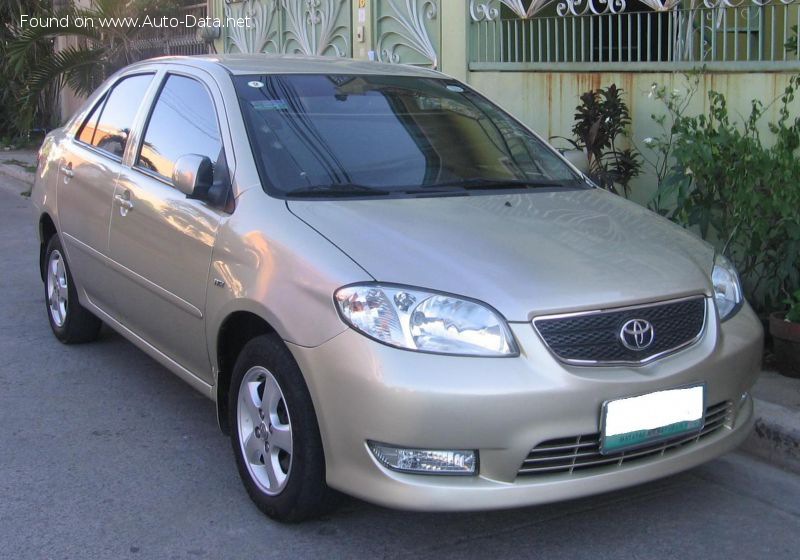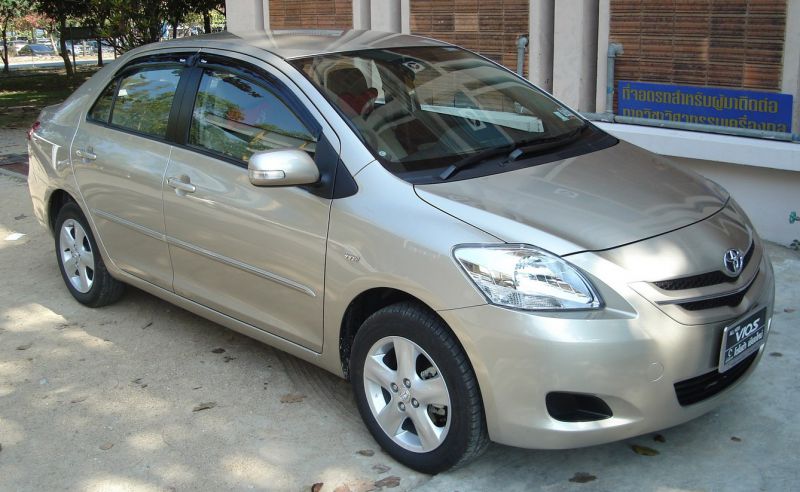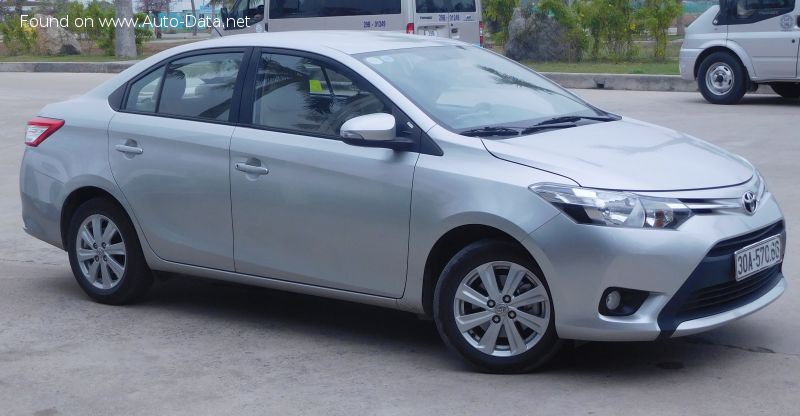
The Toyota Vios III 1.5 VVTi, produced between 2013 and 2016, represents the third generation of Toyota’s subcompact sedan, primarily aimed at the Southeast Asian market. While not officially sold in the United States, the Vios holds significant importance as a popular and affordable vehicle in countries like Thailand, the Philippines, and Indonesia. It serves as a crucial entry-level offering for Toyota in these regions, competing with models like the Honda City and Nissan Almera. The Vios III offered a blend of practicality, fuel efficiency, and Toyota’s reputation for reliability, making it a staple for families and individual commuters.
Toyota Vios III 1.5 VVTi: An Overview
The Vios III was designed to appeal to a broad customer base seeking a dependable and economical sedan. It underwent a significant redesign compared to its predecessors, featuring a more modern exterior and interior. The 1.5 VVTi variant, equipped with Toyota’s Variable Valve Timing-intelligent system, was a popular choice due to its balance of performance and fuel economy. This generation of Vios focused on improving comfort and features while maintaining the core values of affordability and durability that defined the nameplate.
Engine & Performance
The heart of the Toyota Vios III 1.5 VVTi is the 2NR-FE 1.5-liter inline-four cylinder gasoline engine. This naturally aspirated engine produces 109 horsepower at 6000 rpm and 141 Nm (104 lb.-ft.) of torque at 4200 rpm. The engine utilizes multi-port fuel injection and a double overhead camshaft (DOHC) valvetrain, contributing to its efficiency and responsiveness. Power is delivered to the front wheels through a five-speed manual transmission. Acceleration from 0 to 100 km/h (0-62 mph) takes approximately 12 seconds, while 0 to 60 mph is achieved in around 11.4 seconds. The Vios III has a top speed of 170 km/h (105.63 mph). The engine’s power-to-weight ratio is 9.5 kg/Hp, and its torque-to-weight ratio is 7.3 kg/Nm, indicating a reasonably efficient powertrain for its class. The engine displacement is 1497 cm3 (91.35 cu. in.), with a bore of 75 mm (2.95 in.) and a stroke of 84.7 mm (3.33 in.). The compression ratio is 10.5:1.
Design & Features
The Toyota Vios III is a traditional four-door sedan with a relatively conservative design. It offers seating for five passengers and features a trunk capacity of 475 liters (16.77 cu. ft.). The exterior styling was updated from previous generations, with a more prominent front grille and sleeker headlights. Inside, the Vios III offered a functional and practical interior, with a focus on durability and ease of use. While not laden with luxury features, it provided essential amenities such as air conditioning, power windows, and a basic audio system. Safety features included an Anti-lock Braking System (ABS), which was becoming increasingly standard in this segment. The vehicle’s dimensions are 4410 mm (173.62 in.) in length, 1700 mm (66.93 in.) in width, and 1475 mm (58.07 in.) in height, with a wheelbase of 2550 mm (100.39 in.). The front and rear tracks measure 1470 mm (57.87 in.) and 1460 mm (57.48 in.) respectively, and the ride height (ground clearance) is 147 mm (5.79 in.).
Technical Specifications
| Brand | Toyota |
| Model | Vios |
| Generation | Vios III |
| Type (Engine) | 1.5 VVTi (109 Hp) |
| Start of production | 2013 |
| End of production | 2016 |
| Powertrain Architecture | Internal Combustion engine |
| Body type | Sedan |
| Seats | 5 |
| Doors | 4 |
| Fuel Type | Petrol (Gasoline) |
| Acceleration 0 – 100 km/h | 12 sec |
| Acceleration 0 – 62 mph | 12 sec |
| Acceleration 0 – 60 mph | 11.4 sec |
| Maximum speed | 170 km/h (105.63 mph) |
| Weight-to-power ratio | 9.5 kg/Hp |
| Weight-to-torque ratio | 7.3 kg/Nm |
| Power | 109 Hp @ 6000 rpm |
| Torque | 141 Nm @ 4200 rpm (104 lb.-ft. @ 4200 rpm) |
| Engine layout | Front, Transverse |
| Engine Model/Code | 2NR-FE |
| Engine displacement | 1497 cm3 (91.35 cu. in.) |
| Number of cylinders | 4 |
| Engine configuration | Inline |
| Cylinder Bore | 75 mm (2.95 in.) |
| Piston Stroke | 84.7 mm (3.33 in.) |
| Compression ratio | 10.5:1 |
| Number of valves per cylinder | 4 |
| Fuel injection system | Multi-port manifold injection |
| Engine aspiration | Naturally aspirated engine |
| Valvetrain | DOHC |
| Engine oil capacity | 3.3 l (3.49 US qt | 2.9 UK qt) |
| Kerb Weight | 1035 kg (2281.78 lbs.) |
| Trunk (boot) space – minimum | 475 l (16.77 cu. ft.) |
| Fuel tank capacity | 42 l (11.1 US gal | 9.24 UK gal) |
| Length | 4410 mm (173.62 in.) |
| Width | 1700 mm (66.93 in.) |
| Height | 1475 mm (58.07 in.) |
| Wheelbase | 2550 mm (100.39 in.) |
| Front track | 1470 mm (57.87 in.) |
| Rear (Back) track | 1460 mm (57.48 in.) |
| Ride height (ground clearance) | 147 mm (5.79 in.) |
| Minimum turning circle (turning diameter) | 10.2 m (33.46 ft.) |
| Drivetrain Architecture | Front wheel drive |
| Number of gears and type of gearbox | 5 gears, manual transmission |
| Front suspension | Independent, type McPherson with coil spring and anti-roll bar |
| Rear suspension | Semi-independent, coil spring |
| Front brakes | Ventilated discs |
| Rear brakes | Drum |
| Assisting systems | ABS (Anti-lock braking system) |
| Tires size | 185/60 R15 |
| Wheel rims size | 15 |
The Toyota Vios III 1.5 VVTi, while not a performance car, provided a reliable and affordable transportation solution for many consumers in Southeast Asia. Its focus on practicality, fuel efficiency, and Toyota’s renowned build quality cemented its position as a leading model in its segment.