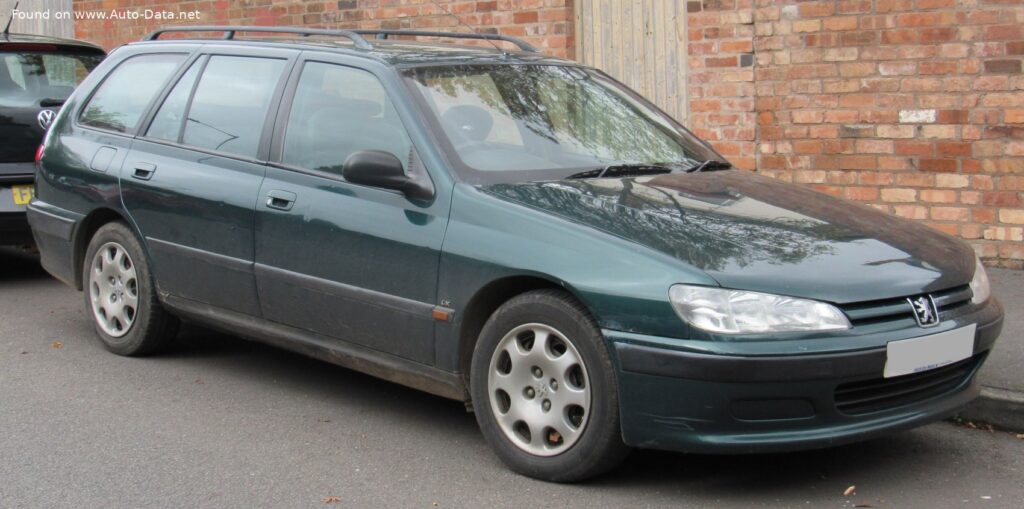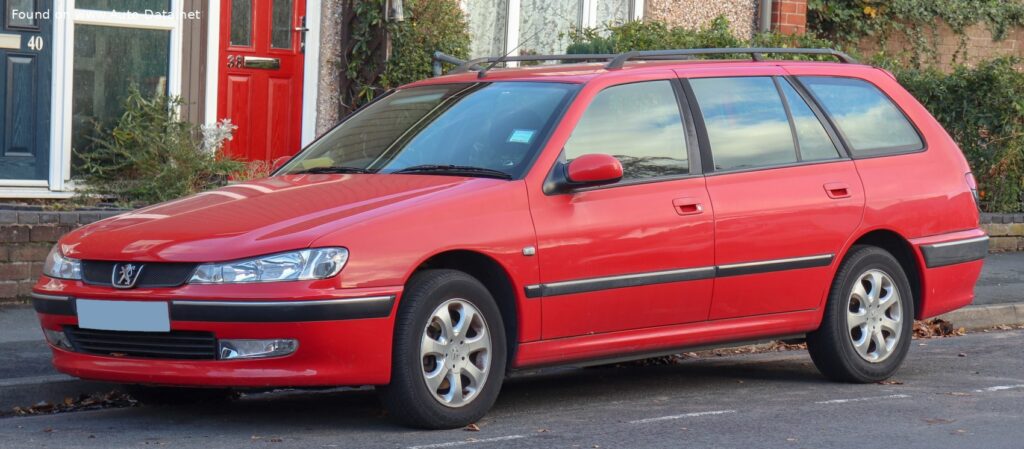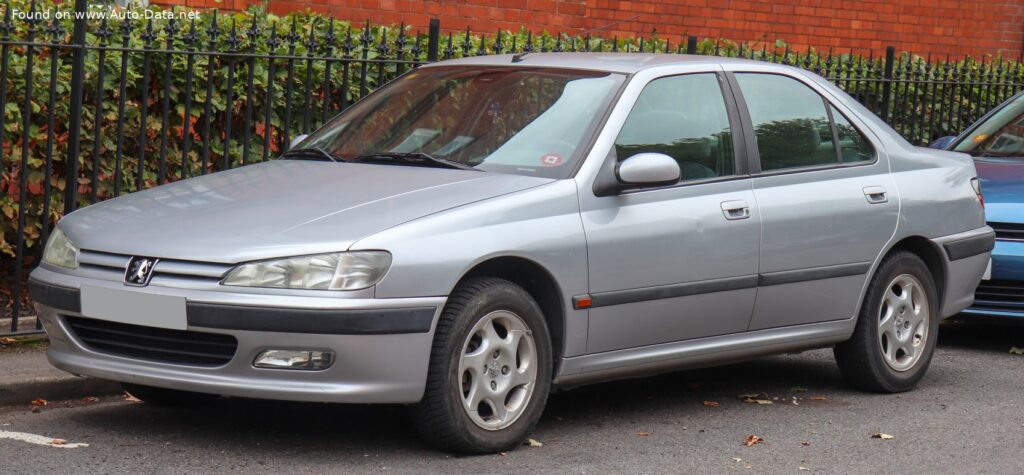
The Peugeot 406, launched in 1995, represented a significant step forward for the French automaker, replacing the aging Peugeot 405. This large family car, available in saloon, estate, and coupé body styles, was designed to compete with established rivals like the Ford Mondeo and Vauxhall/Opel Vectra. The Phase I models, produced from 1995 to 1999, established the 406’s reputation for comfort, handling, and a distinctive, Pininfarina-styled exterior. While never officially sold in the United States, the 406 was a popular choice in Europe and other international markets, offering a blend of practicality and sophistication.
Peugeot 406: A European Family Sedan
The Peugeot 406 was conceived as a modern, spacious, and well-equipped family car. It aimed to provide a more refined driving experience than its predecessor, with a focus on ride quality and interior comfort. The Phase I models, characterized by their specific front-end styling and interior appointments, laid the groundwork for the subsequent revisions of the 406. The car’s success stemmed from its ability to offer a compelling alternative to mainstream competitors, appealing to buyers seeking a touch of French flair and engineering.
Engine & Performance
The 406 2.0-liter model featured a naturally aspirated, inline-four cylinder engine, designated RFV XU10J4R. This engine produced 132 horsepower at 5500 rpm and 180 Nm (132.76 lb.-ft.) of torque at 4200 rpm. The engine’s power output translated to a 0-60 mph (0-96 km/h) acceleration time of approximately 10.5 seconds, and a top speed of 203 km/h (126.14 mph). The engine utilized multi-port fuel injection and a double overhead camshaft (DOHC) valvetrain, contributing to its relatively efficient operation. The 1998 cm³ (121.93 cu. in.) displacement provided a good balance between performance and fuel economy. Fuel consumption figures were rated at 9.1 l/100 km (25.8 US mpg) combined, 12.9 l/100 km (18.2 US mpg) in urban driving, and 6.9 l/100 km (34.1 US mpg) on the extra-urban cycle. Power delivery was smooth and predictable, making it suitable for everyday driving. The engine was paired with a 5-speed manual transmission, driving the front wheels.
Design & Features
The Peugeot 406 Phase I was a four-door sedan with a sleek, aerodynamic profile. The design, penned by Pininfarina, was notable for its flowing lines and relatively understated elegance. The interior was designed with practicality and comfort in mind, offering seating for five passengers. Standard features included power steering, central locking, and electric front windows. Safety features, while not as comprehensive as modern standards, included ventilated front disc brakes and disc brakes on the rear axle. The McPherson strut front suspension and independent multi-link rear suspension provided a comfortable ride and competent handling. The car’s trunk offered a minimum capacity of 430 liters (15.19 cu. ft.), providing ample space for luggage. The 406’s design prioritized a balance between aesthetics, functionality, and passenger comfort, making it a well-rounded family vehicle.
Technical Specifications
| Brand | Peugeot |
| Model | 406 |
| Generation | 406 (Phase I, 1995) |
| Type (Engine) | 2.0 (132 Hp) |
| Start of production | 1995 |
| End of production | 1999 |
| Powertrain Architecture | Internal Combustion engine |
| Body type | Sedan |
| Seats | 5 |
| Doors | 4 |
| Fuel consumption (urban) | 12.9 l/100 km (18.2 US mpg) |
| Fuel consumption (extra urban) | 6.9 l/100 km (34.1 US mpg) |
| Fuel consumption (combined) | 9.1 l/100 km (25.8 US mpg) |
| Fuel Type | Petrol (Gasoline) |
| Acceleration 0 – 100 km/h | 11 sec |
| Acceleration 0 – 62 mph | 11 sec |
| Acceleration 0 – 60 mph | 10.5 sec |
| Maximum speed | 203 km/h (126.14 mph) |
| Weight-to-power ratio | 10 kg/Hp |
| Weight-to-torque ratio | 7.3 kg/Nm |
| Power | 132 Hp @ 5500 rpm |
| Torque | 180 Nm @ 4200 rpm (132.76 lb.-ft. @ 4200 rpm) |
| Engine layout | Front, Transverse |
| Engine Model/Code | RFV XU10J4R |
| Engine displacement | 1998 cm3 (121.93 cu. in.) |
| Number of cylinders | 4 |
| Engine configuration | Inline |
| Cylinder Bore | 86 mm (3.39 in.) |
| Piston Stroke | 86 mm (3.39 in.) |
| Compression ratio | 11:1 |
| Number of valves per cylinder | 4 |
| Fuel injection system | Multi-port manifold injection |
| Engine aspiration | Naturally aspirated |
| Valvetrain | DOHC |
| Engine oil capacity | 4.25 l (4.49 US qt | 3.74 UK qt) |
| Coolant | 7.5 l (7.93 US qt | 6.6 UK qt) |
| Kerb Weight | 1315 kg (2899.08 lbs.) |
| Max. weight | 1915 kg (4221.85 lbs.) |
| Max load | 600 kg (1322.77 lbs.) |
| Trunk (boot) space – minimum | 430 l (15.19 cu. ft.) |
| Fuel tank capacity | 70 l (18.49 US gal | 15.4 UK gal) |
| Length | 4600 mm (181.1 in.) |
| Width | 1765 mm (69.49 in.) |
| Height | 1396 mm (54.96 in.) |
| Wheelbase | 2700 mm (106.3 in.) |
| Front track | 1500 mm (59.06 in.) |
| Rear track | 1480 mm (58.27 in.) |
| Front overhang | 937 mm (36.89 in.) |
| Rear overhang | 963 mm (37.91 in.) |
| Drivetrain Architecture | Front wheel drive |
| Number of gears | 5 gears, manual transmission |
| Front suspension | Independent, McPherson with coil spring and anti-roll bar |
| Rear suspension | Independent multi-link spring suspension with stabilizer |
| Front brakes | Ventilated discs |
| Rear brakes | Disc |
| Tires size | 195/65 R15 |