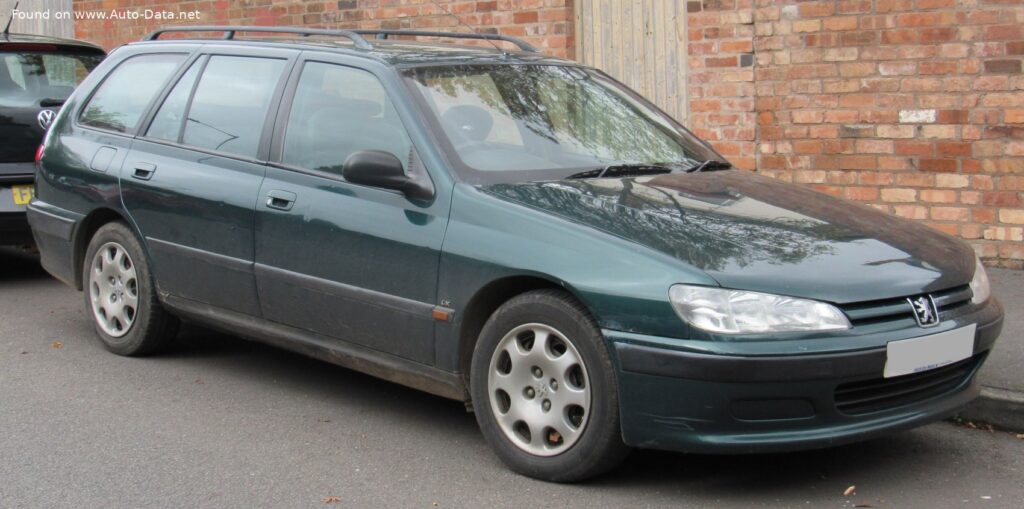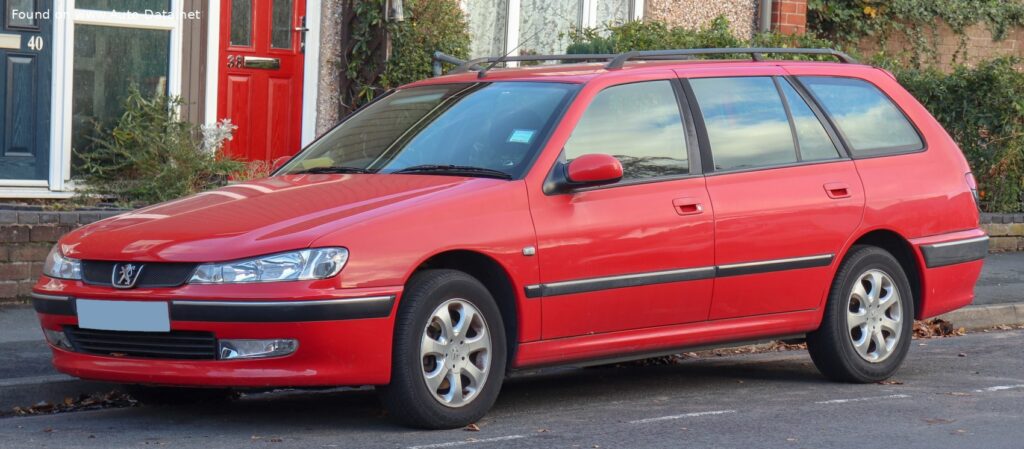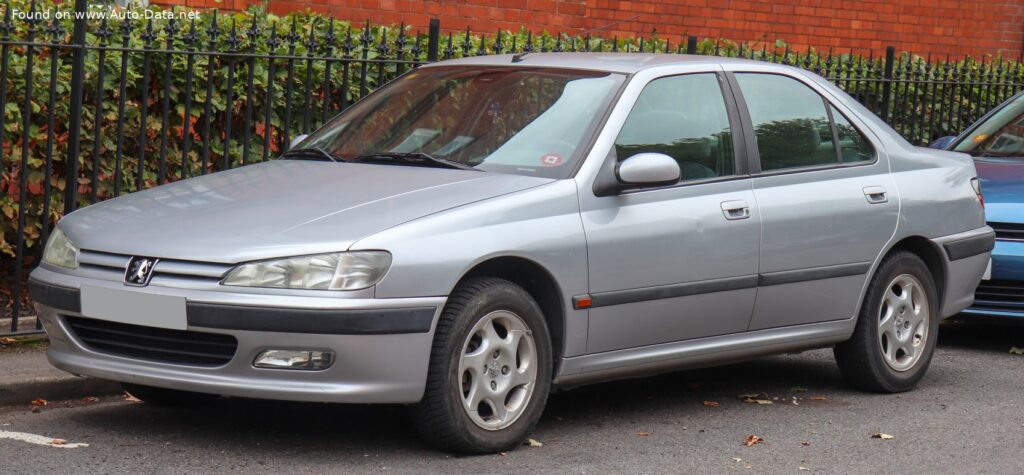
The Peugeot 406, launched in 1995, represented a significant step forward for the French automaker, aiming to compete directly with established mid-size offerings from Germany, the UK, and other European manufacturers. The 406, specifically the Phase I models produced between 1996 and 1999, was a four-door sedan designed to offer a blend of comfort, style, and performance. This generation of the 406 was not officially sold in the United States, but it achieved considerable success in Europe, becoming a popular choice for families and company car fleets. The 2.0 Turbo variant, producing 147 horsepower, was positioned as a more sporting option within the 406 range, appealing to drivers seeking a more engaging driving experience.
Peugeot 406 2.0 Turbo (Phase I) – A Detailed Overview
The Peugeot 406 Phase I, particularly the 2.0 Turbo model, was a product of Peugeot’s ambition to elevate its brand image and compete in the increasingly competitive mid-size segment. It replaced the Peugeot 405, building upon its predecessor’s strengths while introducing a more modern design and improved technology. The 406 aimed to provide a sophisticated alternative to rivals like the Ford Mondeo, Vauxhall/Opel Vectra, and Volkswagen Passat. The 2.0 Turbo engine was a key differentiator, offering a performance boost over the standard naturally aspirated engines available in the lineup.
Engine & Performance
The heart of the Peugeot 406 2.0 Turbo is its 1998cc (121.93 cubic inches) inline-four cylinder engine, designated RGX XU10J2TE. This engine utilizes a turbocharger and multi-port fuel injection to produce 147 horsepower at 5300 rpm and 235 Nm (173.33 lb.-ft.) of torque at 2500 rpm. This configuration delivers a power-to-weight ratio of 9.6 kg/Hp and a torque-to-weight ratio of 6 kg/Nm, contributing to respectable performance for its time. Acceleration from 0 to 100 km/h (0-62 mph) takes 10.3 seconds, while 0 to 60 mph is achieved in approximately 9.8 seconds. The 406 2.0 Turbo boasts a top speed of 210 km/h (130.49 mph). The engine’s transverse mounting and front-wheel-drive configuration were typical for European family cars of the era, prioritizing space efficiency and handling balance. The engine features an overhead camshaft (OHC) valvetrain with 2 valves per cylinder and a compression ratio of 8.5:1.
Design & Features
The Peugeot 406 Phase I presented a sleek and aerodynamic exterior design, penned by Pininfarina, reflecting a move towards more contemporary styling. Its four-door sedan body style offered practical space for five occupants and a trunk capacity of 430 liters (15.19 cubic feet). The interior was designed with comfort and ergonomics in mind, featuring supportive seats and a well-laid-out dashboard. While not brimming with cutting-edge technology by today’s standards, the 406 offered features considered desirable in the mid-1990s, including hydraulic power steering, ventilated front disc brakes, and an Anti-lock Braking System (ABS) for enhanced safety. The suspension system, comprising wishbones at the front and a multi-lever arrangement at the rear, aimed to provide a comfortable ride and stable handling. The car’s dimensions – 4600 mm (181.1 in) in length, 1765 mm (69.49 in) in width, and 1396 mm (54.96 in) in height – positioned it squarely within the mid-size sedan category.
Technical Specifications
| Brand | Peugeot |
| Model | 406 |
| Generation | 406 (Phase I, 1995) |
| Type (Engine) | 2.0 Turbo (147 Hp) |
| Start of production | 1996 |
| End of production | 1999 |
| Powertrain Architecture | Internal Combustion engine |
| Body type | Sedan |
| Seats | 5 |
| Doors | 4 |
| Fuel Type | Petrol (Gasoline) |
| Acceleration 0 – 100 km/h | 10.3 sec |
| Acceleration 0 – 62 mph | 10.3 sec |
| Acceleration 0 – 60 mph | 9.8 sec |
| Maximum speed | 210 km/h (130.49 mph) |
| Weight-to-power ratio | 9.6 kg/Hp |
| Weight-to-torque ratio | 6 kg/Nm |
| Power | 147 Hp @ 5300 rpm |
| Power per litre | 73.6 Hp/l |
| Torque | 235 Nm @ 2500 rpm (173.33 lb.-ft. @ 2500 rpm) |
| Engine layout | Front, Transverse |
| Engine Model/Code | RGX XU10J2TE |
| Engine displacement | 1998 cm3 (121.93 cu. in.) |
| Number of cylinders | 4 |
| Engine configuration | Inline |
| Cylinder Bore | 86 mm (3.39 in.) |
| Piston Stroke | 86 mm (3.39 in.) |
| Compression ratio | 8.5:1 |
| Number of valves per cylinder | 2 |
| Fuel injection system | Multi-port manifold injection |
| Engine aspiration | Turbocharger |
| Valvetrain | OHC |
| Engine oil capacity | 4.5 l (4.76 US qt | 3.96 UK qt) |
| Coolant | 7.5 l (7.93 US qt | 6.6 UK qt) |
| Kerb Weight | 1410 kg (3108.52 lbs.) |
| Max. weight | 1867 kg (4116.03 lbs.) |
| Max load | 457 kg (1007.51 lbs.) |
| Trunk (boot) space – minimum | 430 l (15.19 cu. ft.) |
| Fuel tank capacity | 70 l (18.49 US gal | 15.4 UK gal) |
| Length | 4600 mm (181.1 in.) |
| Width | 1765 mm (69.49 in.) |
| Height | 1396 mm (54.96 in.) |
| Wheelbase | 2700 mm (106.3 in.) |
| Front track | 1502 mm (59.13 in.) |
| Rear (Back) track | 1488 mm (58.58 in.) |
| Front overhang | 937 mm (36.89 in.) |
| Rear overhang | 963 mm (37.91 in.) |
| Drivetrain Architecture | Front wheel drive |
| Number of gears and type of gearbox | 5 gears, manual transmission |
| Front suspension | Wishbone |
| Rear suspension | Several levers and rods |
| Front brakes | Ventilated discs |
| Rear brakes | Disc |
| Assisting systems | ABS (Anti-lock braking system) |
| Steering type | Steering rack and pinion |
| Power steering | Hydraulic Steering |
| Tires size | 205/60 R15 |
The Peugeot 406 2.0 Turbo Phase I remains a fondly remembered vehicle in Europe, appreciated for its stylish design, comfortable ride, and spirited performance. While never officially available in the US market, it represents a significant chapter in Peugeot’s history and a testament to the brand’s engineering capabilities during the 1990s.