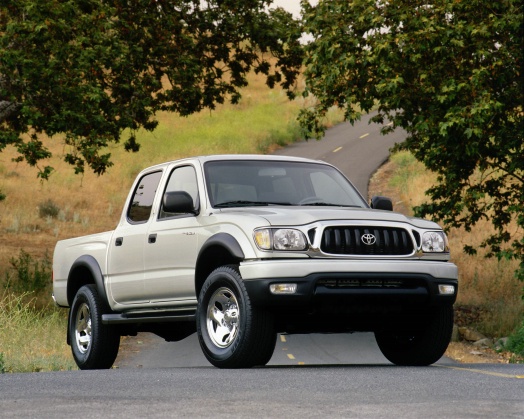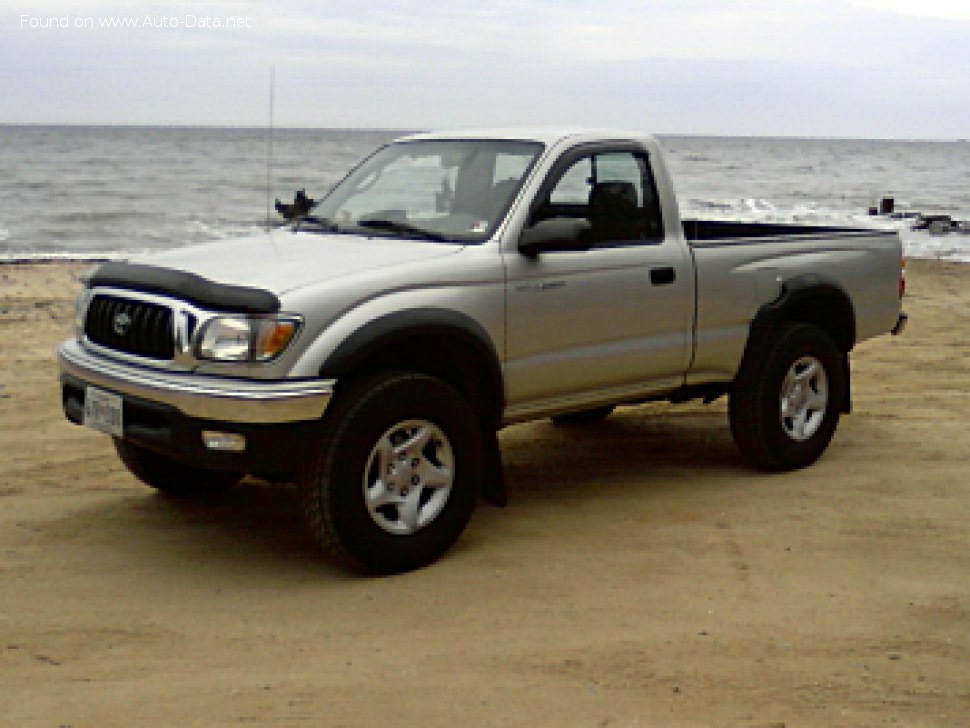
The Toyota Tacoma I Single Cab 2.7 (150 Hp) 4WD, produced between 1995 and 2000, represents the first generation of Toyota’s immensely popular compact pickup truck in the North American market. While Toyota had previously offered smaller trucks in the US, the Tacoma was specifically designed to appeal to buyers seeking a more modern, capable, and comfortable alternative to existing offerings. This initial iteration of the Tacoma established the foundation for the truck’s enduring success, becoming known for its reliability, durability, and off-road prowess. The Single Cab configuration, paired with the 2.7-liter engine and four-wheel drive, catered to buyers prioritizing functionality and affordability.
Toyota Tacoma I Single Cab: A First Generation Overview
The Tacoma I Single Cab filled a crucial gap in the American pickup truck landscape during the mid-1990s. Prior to its introduction, the compact truck segment was largely dominated by domestic manufacturers. Toyota aimed to provide a vehicle that combined Japanese engineering precision with the ruggedness expected of an American pickup. The Single Cab body style, with its two doors and three-passenger capacity, was geared towards utility and commercial use, offering a practical and economical option for individuals and businesses alike. The 2.7-liter engine, while not the most powerful in its class, provided a balance of fuel efficiency and adequate performance for everyday tasks and light-duty work.
Engine & Performance
Powering the 1995-2000 Toyota Tacoma I Single Cab 2.7 4WD is the 3RZ-FE 2.7-liter inline-four cylinder gasoline engine. This naturally aspirated engine produces 150 horsepower at 4800 rpm and 240 Newton-meters (177.01 lb.-ft.) of torque at 4000 rpm. The engine features a double overhead camshaft (DOHC) valvetrain and multi-port fuel injection, contributing to its relatively smooth operation and reasonable fuel economy for a truck of its era. The engine’s power-to-weight ratio is 9.6 kg/Hp (103.8 Hp/tonne), and the torque-to-weight ratio is 6 kg/Nm (166.1 Nm/tonne). The Tacoma I Single Cab 2.7 4WD is equipped with a five-speed manual transmission, delivering power to all four wheels. This drivetrain configuration provides enhanced traction in various conditions, making it suitable for both on-road driving and off-road adventures. Fuel economy is rated at approximately 13 liters per 100 kilometers (18.1 US mpg) in urban settings and 10.6 liters per 100 kilometers (22.2 US mpg) on the highway.
Design & Features
The Toyota Tacoma I Single Cab is a traditional pick-up truck in terms of body style. Its two-door configuration and relatively compact dimensions make it maneuverable and easy to park. The truck’s design prioritizes functionality over luxury, with a focus on durability and practicality. The interior is spartan but functional, offering basic amenities for the driver and passengers. Safety features for this generation were limited compared to modern standards, typically including seatbelts and a basic chassis structure. The Tacoma’s strength lay in its robust construction and reliable mechanical components. The truck’s bed provides ample cargo space for hauling materials, equipment, or recreational gear. The 4WD system, selectable via a transfer case, allows drivers to engage four-wheel drive when needed for improved traction in challenging terrain. Available tire sizes included 205/75 R15 and 235/55 R16, mounted on 15 or 16-inch wheels.
Technical Specifications
| Brand | Toyota |
| Model | Tacoma |
| Generation | Tacoma I Single Cab |
| Type (Engine) | 2.7 (150 Hp) 4WD |
| Start of production | 1995 |
| End of production | 2000 |
| Powertrain Architecture | Internal Combustion engine |
| Body type | Pick-up |
| Seats | 3 |
| Doors | 2 |
| Fuel consumption (urban) | 13 l/100 km (18.1 US mpg) |
| Fuel consumption (extra urban) | 10.6 l/100 km (22.2 US mpg) |
| Fuel Type | Petrol (Gasoline) |
| Weight-to-power ratio | 9.6 kg/Hp |
| Power | 150 Hp @ 4800 rpm |
| Torque | 240 Nm @ 4000 rpm (177.01 lb.-ft. @ 4000 rpm) |
| Engine layout | Front, Longitudinal |
| Engine Model/Code | 3RZ-FE |
| Engine displacement | 2694 cm3 (164.4 cu. in.) |
| Number of cylinders | 4 |
| Engine configuration | Inline |
| Cylinder Bore | 95 mm (3.74 in.) |
| Piston Stroke | 95 mm (3.74 in.) |
| Number of valves per cylinder | 4 |
| Fuel injection system | Multi-port manifold injection |
| Engine aspiration | Naturally aspirated engine |
| Valvetrain | DOHC |
| Engine oil capacity | 5.4 l (5.71 US qt | 4.75 UK qt) |
| Coolant capacity | 8.2 l (8.66 US qt | 7.21 UK qt) |
| Kerb Weight | 1445 kg (3185.68 lbs.) |
| Max. weight | 2268 kg (5000.08 lbs.) |
| Max load | 823 kg (1814.4 lbs.) |
| Fuel tank capacity | 57 l (15.06 US gal | 12.54 UK gal) |
| Length | 4585 mm (180.51 in.) |
| Width | 1689 mm (66.5 in.) |
| Height | 1549 mm (60.98 in.) |
| Wheelbase | 2624 mm (103.31 in.) |
| Front track | 1395 mm (54.92 in.) |
| Rear track | 1414 mm (55.67 in.) |
| Ride height (ground clearance) | 206 mm (8.11 in.) |
| Drive wheel | All wheel drive (4×4) |
| Number of gears | 5 |
| Gearbox type | Manual transmission |
| Front brakes | Ventilated discs |
| Rear brakes | Drum |
| Tires size | 205/75 R15; 235/55 R16 |
| Wheel rims size | 15; 16 |
The Toyota Tacoma I Single Cab 2.7 4WD laid the groundwork for the Tacoma’s continued success. Its blend of reliability, affordability, and four-wheel-drive capability resonated with buyers, establishing a loyal following that continues to this day. While subsequent generations have introduced more refinement and advanced features, the first-generation Tacoma remains a popular choice among enthusiasts and those seeking a durable and capable pickup truck.