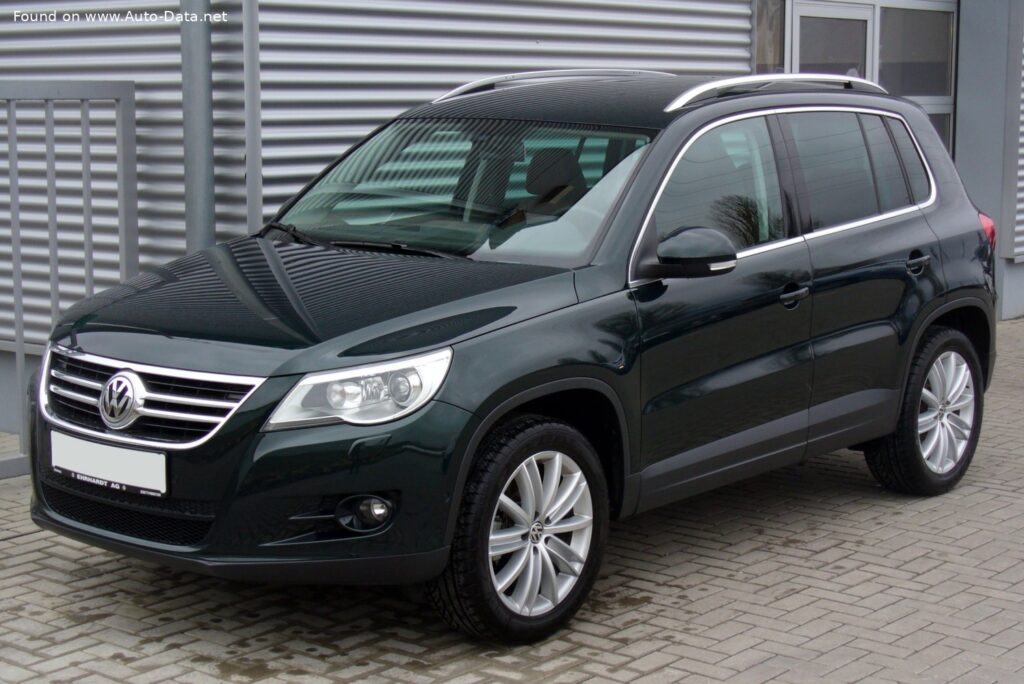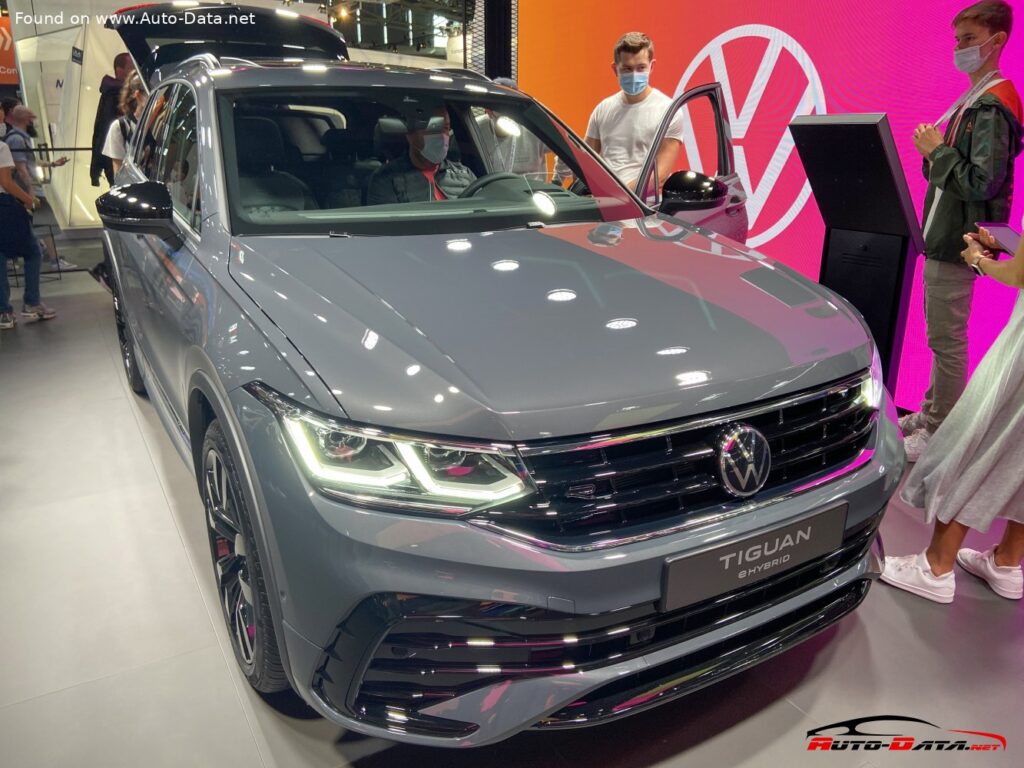
The Volkswagen Tiguan II (facelift 2020) 1.4 TSI (245 Hp) eHybrid DSG represents Volkswagen’s entry into the growing plug-in hybrid SUV market. Introduced in November 2020 and produced through June 2022, this variant of the Tiguan, a popular compact SUV globally, was primarily aimed at European markets with increasingly stringent emissions regulations. The “eHybrid” designation signifies its plug-in hybrid electric vehicle (PHEV) powertrain, combining a turbocharged gasoline engine with an electric motor and battery pack. This model offered a balance between fuel efficiency, reduced emissions, and the practicality of a traditional SUV, appealing to consumers seeking a more environmentally conscious vehicle without sacrificing versatility.
Volkswagen Tiguan II eHybrid: An Overview
The Tiguan II, launched in 2016, was a significant update to the original Tiguan, offering increased space, improved technology, and a more refined driving experience. The 2020 facelift brought further enhancements, including updated styling, advanced driver-assistance systems, and the introduction of the eHybrid powertrain. Positioned as a competitor to vehicles like the Toyota RAV4 Hybrid and Mitsubishi Outlander PHEV, the Tiguan eHybrid aimed to provide a premium feel and a sophisticated driving experience within the compact SUV segment. While not officially sold in the United States during this generation, the Tiguan is a mainstay in Volkswagen’s global lineup, and the eHybrid variant demonstrates the company’s commitment to electrification.
Engine & Performance
The Tiguan II 1.4 TSI eHybrid combines a 1.4-liter turbocharged four-cylinder gasoline engine with an electric motor. The gasoline engine produces 150 horsepower at 5000-6000 rpm and 184.39 lb-ft of torque between 1550-3500 rpm. The electric motor contributes an additional 115 horsepower and 243.4 lb-ft of torque. Combined, the system delivers a total output of 245 horsepower and 295.02 lb-ft of torque. This power is delivered to the front wheels via a six-speed dual-clutch transmission (DSG), known for its quick and smooth gear changes. Acceleration from 0 to 60 mph is achieved in approximately 7.1 seconds, and the vehicle has a top speed of 127.38 mph. The powertrain architecture allows for operation in all-electric mode for up to 31.07 miles (WLTP) or 36.66 miles (NEDC), making it suitable for short commutes and urban driving.
Design & Features
The Tiguan II maintains the classic SUV silhouette, characterized by its upright stance and practical proportions. The 2020 facelift brought subtle styling updates, including a revised front grille, new LED headlights, and updated bumpers. The interior focuses on functionality and comfort, with a well-designed dashboard, supportive seats, and ample passenger space. Key features include a digital instrument cluster, an infotainment system with touchscreen display, and a range of driver-assistance technologies such as adaptive cruise control, lane-keeping assist, and automatic emergency braking. The 13 kWh battery pack is located under the floor, beneath the rear seats, minimizing impact on cargo space. The trunk offers 16.81 cubic feet of space, which can be expanded by folding down the rear seats. Safety features were a priority, with the Tiguan II incorporating a robust suite of active and passive safety systems to protect occupants in the event of a collision.
Technical Specifications
| Brand | Volkswagen |
| Model | Tiguan |
| Generation | Tiguan II (facelift 2020) |
| Type (Engine) | 1.4 TSI (245 Hp) eHybrid DSG |
| Start of production | November, 2020 |
| End of production | June, 2022 |
| Powertrain Architecture | PHEV (Plug-in Hybrid Electric Vehicle) |
| Body type | SUV |
| Seats | 5 |
| Doors | 5 |
| Combined fuel consumption (WLTP) | 1.5 l/100 km (156.8 US mpg, 188.3 UK mpg, 66.7 km/l) |
| CO2 emissions (WLTP) | 35 g/km |
| Fuel consumption (economy) – combined (NEDC) | 1.8 l/100 km (130.7 US mpg, 156.9 UK mpg, 55.6 km/l) |
| CO2 emissions (NEDC) | 42 g/km |
| Fuel Type | Petrol / electricity |
| Acceleration 0 – 100 km/h | 7.5 sec |
| Acceleration 0 – 62 mph | 7.5 sec |
| Acceleration 0 – 60 mph | 7.1 sec |
| Maximum speed | 205 km/h (127.38 mph) |
| Emission standard | Euro 6d-ISC-FCM |
| Weight-to-power ratio | 7.1 kg/Hp, 141.1 Hp/tonne |
| Weight-to-torque ratio | 4.3 kg/Nm, 230.4 Nm/tonne |
| Gross battery capacity | 13 kWh |
| Net (usable) battery capacity | 10.4 kWh |
| Battery technology | Lithium-ion (Li-Ion) |
| Battery weight | 130 kg (286.6 lbs) |
| Battery location | Below the floor, under the rear seats |
| All-electric range (WLTP) | 50 km (31.07 mi) |
| All-electric range (NEDC) | 59 km (36.66 mi) |
| Average Energy consumption (WLTP) | 15.2 kWh/100 km (24.46 kWh/100 mi, 138 MPGe, 6.6 km/kWh, 4.1 mi/kWh) |
| Average Energy consumption (NEDC) | 13.4 kWh/100 km (21.57 kWh/100 mi, 156 MPGe, 7.5 km/kWh, 4.6 mi/kWh) |
| Max speed (electric) | 130 km/h (80.78 mph) |
| Electric motor power | 115 Hp |
| Electric motor Torque | 330 Nm (243.4 lb.-ft.) |
| Electric motor location | Between the combustion engine and the transmission |
| System power | 245 Hp |
| System torque | 400 Nm (295.02 lb.-ft.) |
| Power | 150 Hp @ 5000-6000 rpm |
| Torque | 250 Nm @ 1550-3500 rpm (184.39 lb.-ft. @ 1550-3500 rpm) |
| Engine layout | Front, Transverse |
| Engine Model/Code | DGEA |
| Engine displacement | 1395 cm3 (85.13 cu. in.) |
| Number of cylinders | 4 |
| Engine configuration | Inline |
| Cylinder Bore | 74.5 mm (2.93 in.) |
| Piston Stroke | 80 mm (3.15 in.) |
| Compression ratio | 10:1 |
| Number of valves per cylinder | 4 |
| Fuel injection system | Direct injection |
| Engine aspiration | Turbocharger, Intercooler |
| Valvetrain | DOHC |
| Engine oil capacity | 4 l (4.23 US qt | 3.52 UK qt) |
| Kerb Weight | 1736 kg (3827.22 lbs) |
| Max. weight | 2350 kg (5180.86 lbs) |
| Max load | 614 kg (1353.64 lbs) |
| Trunk (boot) space – minimum | 476 l (16.81 cu. ft.) |
| Fuel tank capacity | 45 l (11.89 US gal | 9.9 UK gal) |
| Max. roof load | 75 kg (165.35 lbs) |
| Permitted trailer load with brakes (8%) | 2000 kg (4409.25 lbs) |
| Permitted trailer load with brakes (12%) | 1800 kg (3968.32 lbs) |
| Permitted trailer load without brakes | 750 kg (1653.47 lbs) |
| Permitted towbar download | 100 kg (220.46 lbs) |
| Length | 4509 mm (177.52 in.) |
| Width | 1839 mm (72.4 in.) |
| Width including mirrors | 2099 mm (82.64 in.) |
| Height | 1681 mm (66.18 in.) |
| Wheelbase | 2680 mm (105.51 in.) |
| Front track | 1576-1586 mm (62.05 – 62.44 in.) |
| Rear (Back) track | 1567-1577 mm (61.69 – 62.09 in.) |
| Minimum turning circle (turning diameter) | 11.5 m (37.73 ft.) |
| Drivetrain Architecture | The Internal combustion engine (ICE) and electric motor drive the front wheels of the car with the ability to work in full electric or mixed mode. |
| Drive wheel | Front wheel drive |
| Number of gears and type of gearbox | 6 gears, automatic transmission DSG |
| Front suspension | Independent type McPherson, Transverse stabilizer |
| Rear suspension | Independent multi-link suspension, Transverse stabilizer |
| Front brakes | Ventilated discs |
| Rear brakes | Disc |
| Assisting systems | ABS (Anti-lock braking system) |
| Steering type | Steering rack and pinion |
| Power steering | Electric Steering |
| Tires size | 215/65 R17 |
| Wheel rims size | 7J x 17 |