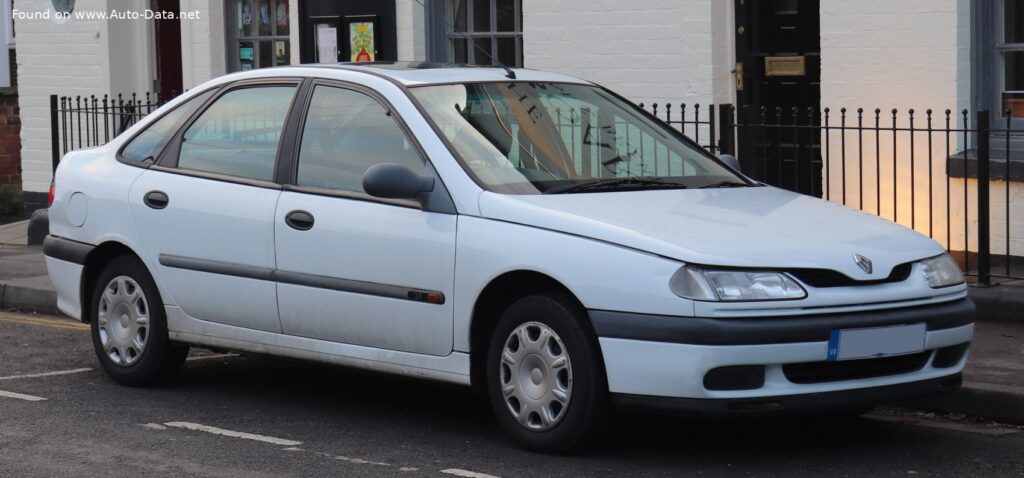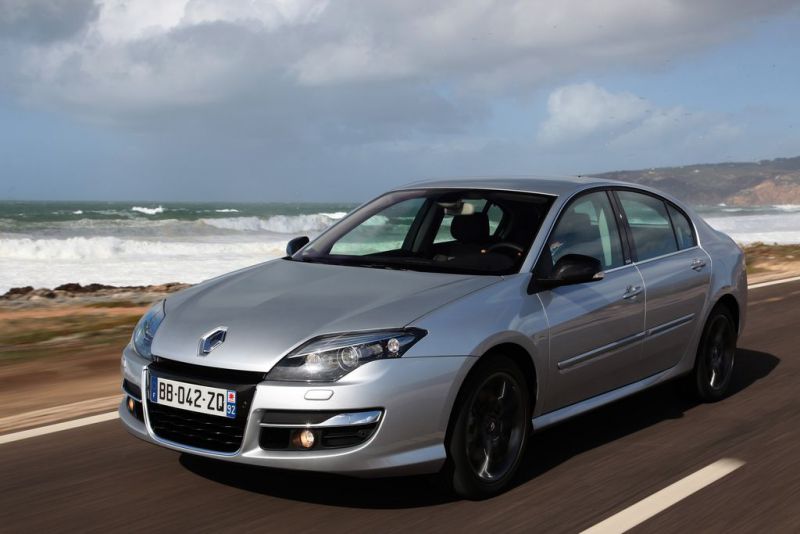
The Renault Laguna III (Phase II) 1.5 dCi (110 Hp) EDC is a compact executive car produced by the French manufacturer Renault from 2010 to 2015. Representing the second major revision of the third-generation Laguna, this model aimed to refine the original design and improve efficiency. While the Laguna was never officially sold in the United States, it was a significant competitor in the European market, vying for sales alongside vehicles like the Ford Mondeo, Volkswagen Passat, and Opel/Vauxhall Insignia. The Phase II updates brought styling tweaks, enhanced interior materials, and importantly, the introduction of more efficient engine options, including the 1.5 dCi diesel engine paired with Renault’s Efficient Dual Clutch (EDC) automatic transmission.
Renault Laguna III (Phase II): A Detailed Overview
The Laguna III, launched in 2007, was Renault’s attempt to elevate its presence in the competitive D-segment (compact executive class). The Phase II revision, beginning in 2010, focused on addressing criticisms of the original model and bolstering its appeal. The 1.5 dCi EDC variant specifically targeted buyers seeking a balance between fuel economy, reasonable performance, and the convenience of an automatic transmission. This model was primarily marketed in Europe, where diesel engines and efficient vehicles are highly valued.
Engine & Performance
The heart of the Laguna III 1.5 dCi EDC is Renault’s K9K 1.5-liter inline four-cylinder diesel engine. This engine produces 110 horsepower (Hp) and 240 Newton-meters (177 lb-ft) of torque. The engine utilizes a turbocharger with an intercooler to enhance power output and efficiency. Fuel is delivered via a diesel commonrail injection system, contributing to refined combustion and reduced emissions. The “dCi” designation stands for “Diesel Common Injection,” highlighting Renault’s advanced diesel technology.
Paired with the engine is Renault’s six-speed Efficient Dual Clutch (EDC) automatic transmission. This transmission offers quicker and smoother gear changes compared to traditional automatic transmissions, improving both performance and fuel economy. The Laguna III 1.5 dCi EDC achieves a combined fuel consumption of 4.3 liters per 100 kilometers (54.7 US mpg), and CO2 emissions of 113 grams per kilometer, placing it among the more efficient vehicles in its class. Acceleration from 0 to 100 km/h (0-62 mph) takes 12.9 seconds, with a top speed of 193 km/h (119.92 mph). While not a performance-oriented vehicle, the 1.5 dCi EDC provides adequate power for everyday driving and long-distance cruising.
Design & Features
The Renault Laguna III Phase II is a five-door hatchback, offering a practical and versatile body style. The exterior design features a revised front fascia with a larger Renault logo and updated headlights. The rear of the vehicle also received subtle styling changes. Inside, the Phase II model benefited from improved interior materials and a more refined dashboard layout. The Laguna III prioritizes passenger comfort and offers a spacious cabin for five occupants. Trunk space is a notable feature, providing 450 liters (15.89 cu ft) with the rear seats up and expanding to 1377 liters (48.63 cu ft) when the seats are folded down.
In terms of features, the Laguna III 1.5 dCi EDC typically included standard equipment such as air conditioning, power windows, central locking, and an audio system. Higher trim levels offered additional features like automatic climate control, navigation system, leather upholstery, and parking sensors. Safety features were also a priority, with the Laguna III equipped with Anti-lock Braking System (ABS), Electronic Stability Control (ESC), and multiple airbags. The inclusion of a particulate filter in the exhaust system demonstrates Renault’s commitment to reducing emissions and improving air quality.
Technical Specifications
| General Information | |
| Brand | Renault |
| Model | Laguna |
| Generation | Laguna III (Phase II) |
| Type (Engine) | 1.5 dCi (110 Hp) EDC |
| Start of production | January, 2010 |
| End of production | July, 2015 |
| Powertrain Architecture | Internal Combustion engine |
| Body type | Hatchback |
| Seats | 5 |
| Doors | 5 |
| Performance Specs | |
| Fuel consumption (urban) | 5.1 l/100 km (46.1 US mpg) |
| Fuel consumption (extra urban) | 3.9 l/100 km (60.3 US mpg) |
| Fuel consumption (combined) | 4.3 l/100 km (54.7 US mpg) |
| CO2 emissions | 113 g/km |
| Fuel Type | Diesel |
| Acceleration 0 – 100 km/h | 12.9 sec |
| Acceleration 0 – 62 mph | 12.9 sec |
| Acceleration 0 – 60 mph | 12.3 sec |
| Maximum speed | 193 km/h (119.92 mph) |
| Emission standard | Euro 5 |
| Weight-to-power ratio | 12.9 kg/Hp |
| Weight-to-torque ratio | 5.9 kg/Nm |
| Engine Specs | |
| Power | 110 Hp |
| Power per litre | 75.3 Hp/l |
| Torque | 240 Nm (177.01 lb.-ft.) |
| Engine layout | Front, Transverse |
| Engine Model/Code | K9K |
| Engine displacement | 1461 cm3 (89.16 cu. in.) |
| Engine configuration | Inline |
| Fuel injection system | Diesel Commonrail |
| Engine aspiration | Turbocharger, Intercooler |
| Engine oil capacity | 4.5 l (4.76 US qt | 3.96 UK qt) |
| Coolant | 7.2 l (7.61 US qt | 6.34 UK qt) |
| Space, Volume and Weights | |
| Kerb Weight | 1424 kg (3139.38 lbs.) |
| Max. weight | 1958 kg (4316.65 lbs.) |
| Max load | 534 kg (1177.27 lbs.) |
| Trunk (boot) space – minimum | 450 l (15.89 cu. ft.) |
| Trunk (boot) space – maximum | 1377 l (48.63 cu. ft.) |
| Fuel tank capacity | 66 l (17.44 US gal | 14.52 UK gal) |
| Dimensions | |
| Length | 4695 mm (184.84 in.) |
| Width | 1811 mm (71.3 in.) |
| Minimum turning circle | 11.05 m (36.25 ft.) |
| Drivetrain, Brakes & Suspension | |
| Drivetrain Architecture | Internal Combustion engine (ICE) drives front wheels |
| Drive wheel | Front wheel drive |
| Number of gears & gearbox type | 6 gears, automatic transmission EDC |
| Front brakes | Ventilated discs |
| Rear brakes | Disc |
| Assisting systems | ABS (Anti-lock braking system) |
| Steering type | Steering rack and pinion |
| Tires size | 215/50 R17 |
| Wheel rims size | 17 |