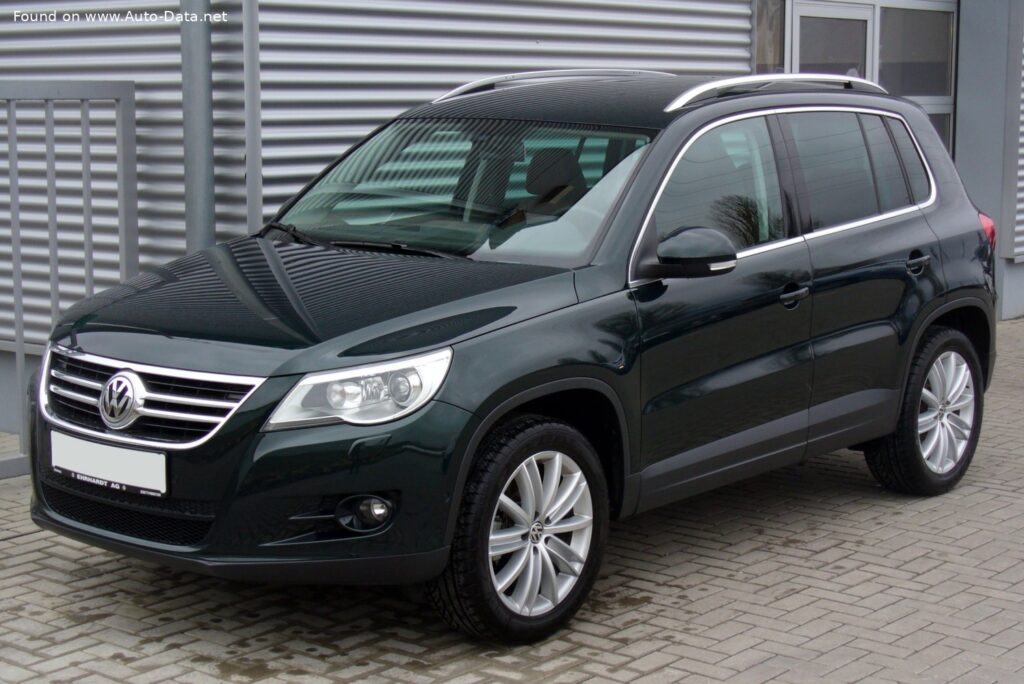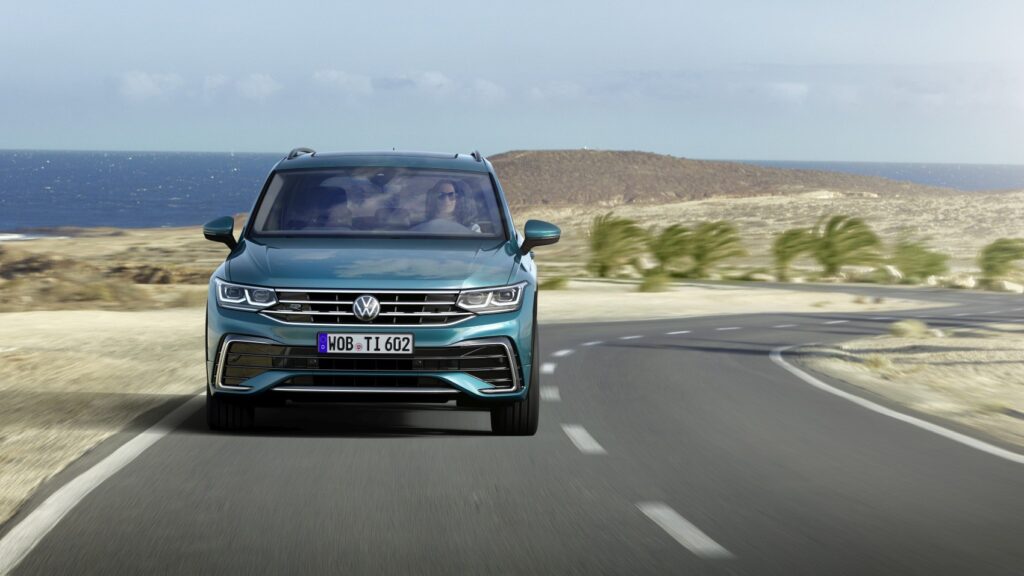
The Volkswagen Tiguan II, particularly the facelifted version introduced in 2020, represents a significant iteration of Volkswagen’s popular compact SUV. Positioned within the highly competitive C-segment, the Tiguan II aimed to offer a blend of practicality, comfort, and technology. This version, powered by the 1.5 TSI engine producing 130 horsepower, was a mainstay in European markets, offering a balance between fuel efficiency and performance. While not directly sold in the United States in this specific configuration, the Tiguan is well-established in the US market, and the Tiguan II represents a refinement of the globally successful formula.
Volkswagen Tiguan II (Facelift 2020) 1.5 TSI ACT: An Overview
The 2020 facelift brought styling updates, enhanced technology, and improved efficiency to the Tiguan II. The 1.5 TSI engine, equipped with Active Cylinder Technology (ACT), was a key component of this update. ACT allows the engine to deactivate two cylinders under light load conditions, reducing fuel consumption. This model year ran from September 2020 through November 2023, solidifying its place as a popular choice for families and individuals seeking a versatile and modern SUV.
Engine & Performance
The heart of the Tiguan II 1.5 TSI is a 1.5-liter, inline-four cylinder gasoline engine. This engine, designated DPBE, produces 130 horsepower (Hp) and 220 Newton-meters (162.26 lb.-ft.) of torque between 1750 and 3500 rpm. The engine utilizes direct fuel injection and a turbocharger with an intercooler to optimize performance and efficiency. The power-to-weight ratio is 11.1 kg/Hp (90.5 Hp/tonne), and the torque-to-weight ratio is 6.5 kg/Nm (153.1 Nm/tonne). The engine is transversely mounted at the front of the vehicle and is paired with a 6-speed manual transmission, driving the front wheels. Maximum speed is rated at 195 km/h (121.17 mph). The engine meets the stringent EURO 6d-ISC-FCM emission standard.
Design & Features
The Tiguan II is a five-door SUV with seating for five passengers. The 2020 facelift brought subtle but noticeable changes to the exterior, including a revised front grille, new headlight designs, and updated bumpers. Inside, the cabin features a modern design with a focus on ergonomics and practicality. Key features include a spacious interior, a flexible seating arrangement, and a generous cargo capacity. The trunk offers a minimum of 615 liters (21.72 cu. ft.) of space, expanding to 1655 liters (58.45 cu. ft.) with the rear seats folded down. Safety features are comprehensive, including ABS (Anti-lock Braking System) and a suite of driver-assistance systems available depending on trim level. The vehicle’s dimensions are 4509 mm (177.52 in.) in length, 1839 mm (72.4 in.) in width, and 1675 mm (65.94 in.) in height, with a wheelbase of 2678 mm (105.43 in.).
Technical Specifications
| Brand | Volkswagen |
| Model | Tiguan |
| Generation | Tiguan II (facelift 2020) |
| Type (Engine) | 1.5 TSI (130 Hp) ACT |
| Start of production | September, 2020 |
| End of production | November, 2023 |
| Powertrain Architecture | Internal Combustion engine |
| Body type | SUV |
| Seats | 5 |
| Doors | 5 |
| Fuel consumption at Low speed (WLTP) | 7.6 l/100 km (30.9 US mpg, 37.2 UK mpg, 13.2 km/l) |
| Fuel consumption at Medium speed (WLTP) | 6.1 l/100 km (38.6 US mpg, 46.3 UK mpg, 16.4 km/l) |
| Fuel consumption at high speed (WLTP) | 5.5 l/100 km (42.8 US mpg, 51.4 UK mpg, 18.2 km/l) |
| Fuel consumption at very high speed (WLTP) | 6.6 l/100 km (35.6 US mpg, 42.8 UK mpg, 15.2 km/l) |
| Combined fuel consumption (WLTP) | 6.3 l/100 km (37.3 US mpg, 44.8 UK mpg, 15.9 km/l) |
| CO2 emissions (WLTP) | 143 g/km |
| Fuel consumption (economy) – urban (NEDC) | 6.4 l/100 km (36.8 US mpg, 44.1 UK mpg, 15.6 km/l) |
| Fuel consumption (economy) – extra urban (NEDC) | 5.0 l/100 km (47 US mpg, 56.5 UK mpg, 20 km/l) |
| Fuel consumption (economy) – combined (NEDC) | 5.5 l/100 km (42.8 US mpg, 51.4 UK mpg, 18.2 km/l) |
| CO2 emissions (NEDC) | 126 g/km |
| Fuel Type | Petrol (Gasoline) |
| Maximum speed | 195 km/h (121.17 mph) |
| Emission standard | EURO 6d-ISC-FCM |
| Weight-to-power ratio | 11.1 kg/Hp, 90.5 Hp/tonne |
| Weight-to-torque ratio | 6.5 kg/Nm, 153.1 Nm/tonne |
| Power | 130 Hp |
| Power per litre | 86.8 Hp/l |
| Torque | 220 Nm @ 1750-3500 rpm (162.26 lb.-ft. @ 1750-3500 rpm) |
| Engine layout | Front, Transverse |
| Engine Model/Code | DPBE |
| Engine displacement | 1498 cm3 (91.41 cu. in.) |
| Number of cylinders | 4 |
| Engine configuration | Inline |
| Number of valves per cylinder | 4 |
| Fuel injection system | Direct injection |
| Engine aspiration | Turbocharger, Intercooler |
| Engine oil capacity | 4.3 l (4.54 US qt | 3.78 UK qt) |
| Kerb Weight | 1437 kg (3168.04 lbs.) |
| Max. weight | 1970 kg (4343.11 lbs.) |
| Max load | 533 kg (1175.06 lbs.) |
| Trunk (boot) space – minimum | 615 l (21.72 cu. ft.) |
| Trunk (boot) space – maximum | 1655 l (58.45 cu. ft.) |
| Fuel tank capacity | 58 l (15.32 US gal | 12.76 UK gal) |
| Max. roof load | 75 kg (165.35 lbs.) |
| Permitted trailer load with brakes (8%) | 1800 kg (3968.32 lbs.) |
| Permitted trailer load with brakes (12%) | 1600 kg (3527.4 lbs.) |
| Permitted trailer load without brakes | 750 kg (1653.47 lbs.) |
| Permitted towbar download | 100 kg (220.46 lbs.) |
| Length | 4509 mm (177.52 in.) |
| Width | 1839 mm (72.4 in.) |
| Height | 1675 mm (65.94 in.) |
| Wheelbase | 2678 mm (105.43 in.) |
| Front track | 1579-1589 mm (62.17 – 62.56 in.) |
| Rear (Back) track | 1569-1579 mm (61.77 – 62.17 in.) |
| Minimum turning circle (turning diameter) | 11.5 m (37.73 ft.) |
| Drivetrain Architecture | The Internal combustion engine (ICE) drives the front wheels of the vehicle. |
| Drive wheel | Front wheel drive |
| Number of gears and type of gearbox | 6 gears, manual transmission |
| Front brakes | Ventilated discs |
| Rear brakes | Disc |
| Assisting systems | ABS (Anti-lock braking system) |
| Tires size | 215/65 R17 |
| Wheel rims size | 7J x 17 |