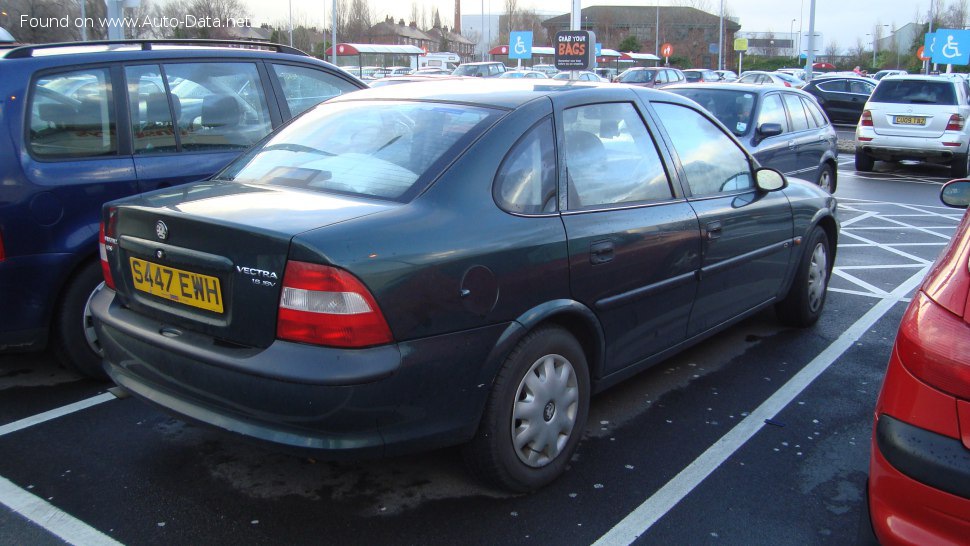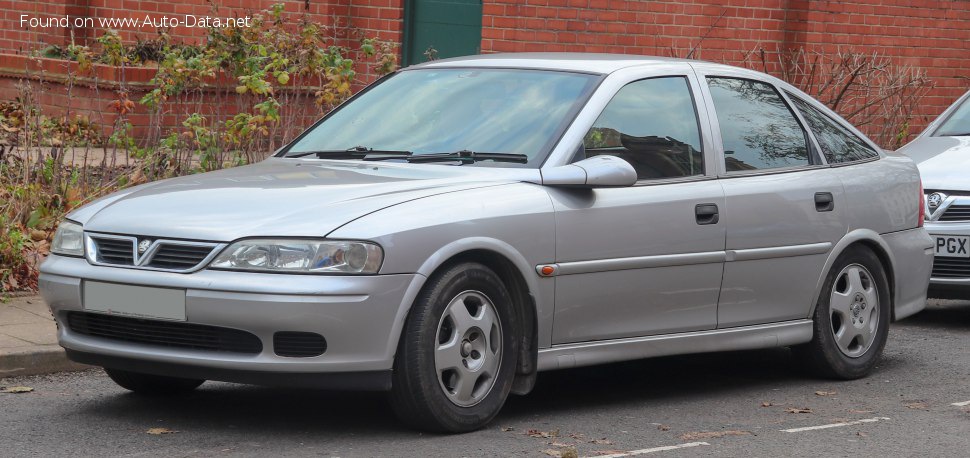
The Vauxhall Vectra B CC 2.0i 16V Automatic, produced between 1995 and 1998, represents a significant evolution in the Vectra lineage. As the second generation of the Vectra, the “B” model aimed to address criticisms of its predecessor with improved refinement, safety, and a more contemporary design. The “CC” designation denotes the ‘Comfort Coupe’ body style, a five-door hatchback configuration popular in European markets. While not directly sold in the United States, the Vectra B competed in the D-segment – a class encompassing family cars like the Ford Mondeo, Peugeot 406, and Volkswagen Passat – and served as a key model for Vauxhall (a subsidiary of General Motors) in the United Kingdom and wider European markets.
Vauxhall Vectra B CC: Overview and Market Position
The Vectra B was a crucial model for Vauxhall, intended to elevate the brand’s image and compete effectively against established rivals. The hatchback body style, particularly the CC variant, offered a practical and stylish alternative to traditional saloons (sedans). The 2.0i 16V engine, paired with an automatic transmission, was a common configuration, targeting buyers seeking a balance between performance and convenience. The Vectra B represented a move towards more sophisticated engineering and design compared to the earlier Vectra A, incorporating advancements in safety technology and interior comfort.
Engine & Performance
The heart of the Vectra B CC 2.0i 16V is the X20XEV inline-four cylinder engine, displacing 1998 cm³ (121.93 cubic inches). This naturally aspirated engine produces 136 horsepower at 5600 rpm and 188 Nm (138.66 lb.-ft.) of torque at 3200 rpm. The engine features multi-port fuel injection and a double overhead camshaft (DOHC) valvetrain, contributing to its relatively efficient operation and respectable power output for its time. Paired with a four-speed automatic transmission, the Vectra B CC achieves a 0-100 km/h (0-62 mph) acceleration time of 11 seconds, and a 0-60 mph time of approximately 10.5 seconds. Its maximum speed is rated at 212 km/h (131.73 mph). The power-to-weight ratio of 9.6 kg/Hp and torque-to-weight ratio of 6.9 kg/Nm indicate a reasonably responsive driving experience, although not overtly sporty. Fuel economy is rated at 14 l/100 km (16.8 US mpg) in urban conditions and 6.9 l/100 km (34.1 US mpg) on the open road.
Design & Features
The Vectra B CC adopted a more rounded and aerodynamic design compared to the angular styling of the Vectra A. The five-door hatchback configuration provides easy access to the cabin and a versatile cargo area. Interior features focused on comfort and practicality, with seating for five passengers. While not boasting the advanced infotainment systems of modern vehicles, the Vectra B CC offered features considered standard for its era, such as power windows, central locking, and an integrated stereo system. Safety features, while limited by the standards of today, included anti-lock brakes (ABS) as an option, and a reinforced safety cell designed to protect occupants in the event of a collision. The trunk (boot) space is a practical 480 liters (16.95 cubic feet) with the rear seats up, expanding to 790 liters (27.9 cubic feet) when folded down. The vehicle’s dimensions are 4495 mm (176.97 in) in length, 1707 mm (67.2 in) in width, and 1425 mm (56.1 in) in height.
Technical Specifications
| Brand | Vauxhall |
| Model | Vectra |
| Generation | Vectra B CC |
| Type (Engine) | 2.0i 16V (136 Hp) Automatic |
| Start of production | 1995 |
| End of production | 1998 |
| Powertrain Architecture | Internal Combustion engine |
| Body type | Hatchback |
| Seats | 5 |
| Doors | 5 |
| Fuel consumption (urban) | 14 l/100 km (16.8 US mpg) |
| Fuel consumption (extra urban) | 6.9 l/100 km (34.1 US mpg) |
| Fuel Type | Petrol (Gasoline) |
| Acceleration 0 – 100 km/h | 11 sec |
| Acceleration 0 – 62 mph | 11 sec |
| Acceleration 0 – 60 mph | 10.5 sec |
| Maximum speed | 212 km/h (131.73 mph) |
| Weight-to-power ratio | 9.6 kg/Hp |
| Weight-to-torque ratio | 6.9 kg/Nm |
| Power | 136 Hp @ 5600 rpm |
| Torque | 188 Nm @ 3200 rpm (138.66 lb.-ft. @ 3200 rpm) |
| Engine layout | Front, Transverse |
| Engine Model/Code | X20XEV |
| Engine displacement | 1998 cm³ (121.93 cu. in.) |
| Number of cylinders | 4 |
| Engine configuration | Inline |
| Cylinder Bore | 86 mm (3.39 in.) |
| Piston Stroke | 86 mm (3.39 in.) |
| Compression ratio | 10.8:1 |
| Number of valves per cylinder | 4 |
| Fuel injection system | Multi-port manifold injection |
| Engine aspiration | Naturally aspirated |
| Valvetrain | DOHC |
| Engine oil capacity | 4 l (4.23 US qt | 3.52 UK qt) |
| Coolant capacity | 7.1 l (7.5 US qt | 6.25 UK qt) |
| Kerb Weight | 1300 kg (2866.01 lbs.) |
| Max. weight | 1820 kg (4012.41 lbs.) |
| Max load | 520 kg (1146.4 lbs.) |
| Trunk (boot) space – minimum | 480 l (16.95 cu. ft.) |
| Trunk (boot) space – maximum | 790 l (27.9 cu. ft.) |
| Fuel tank capacity | 60 l (15.85 US gal | 13.2 UK gal) |
| Length | 4495 mm (176.97 in.) |
| Width | 1707 mm (67.2 in.) |
| Width including mirrors | 1841 mm (72.48 in.) |
| Height | 1425 mm (56.1 in.) |
| Wheelbase | 2637 mm (103.82 in.) |
| Front track | 1484 mm (58.43 in.) |
| Rear track | 1487 mm (58.54 in.) |
| Drivetrain Architecture | Front wheel drive |
| Number of gears and type of gearbox | 4 gears, automatic transmission |
| Front brakes | Ventilated discs |
| Rear brakes | Disc |
| Tires size | 195/65 R15 |
| Wheel rims size | 5.5J x 15 |
The Vauxhall Vectra B CC 2.0i 16V Automatic, while not a performance icon, offered a solid and reliable package for family transportation in the late 1990s. Its blend of practicality, comfort, and reasonable performance made it a popular choice in the competitive European D-segment.