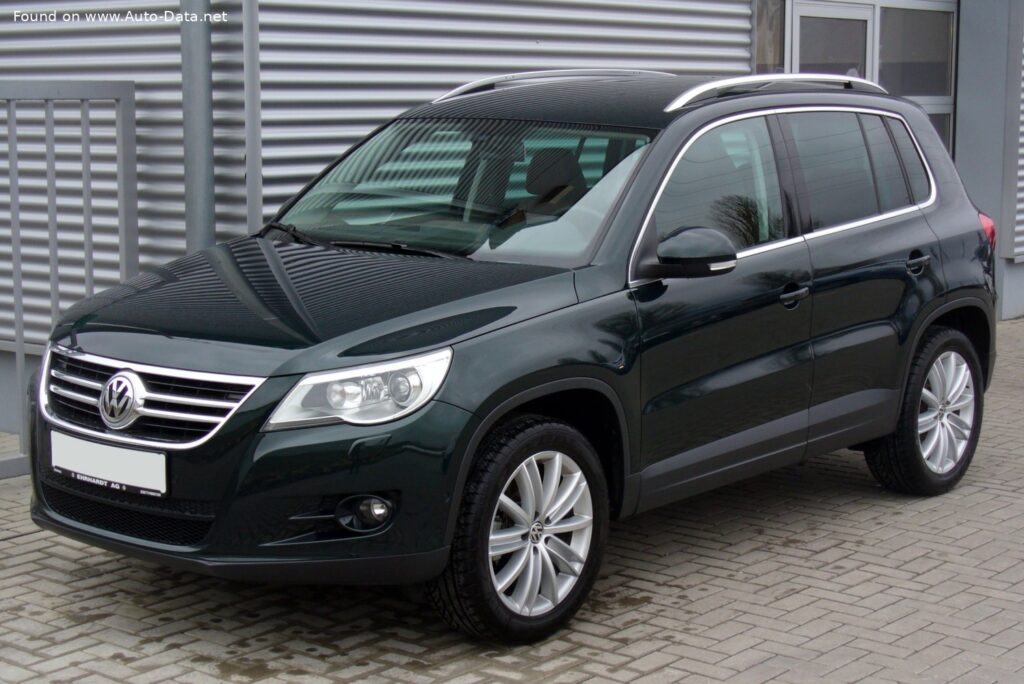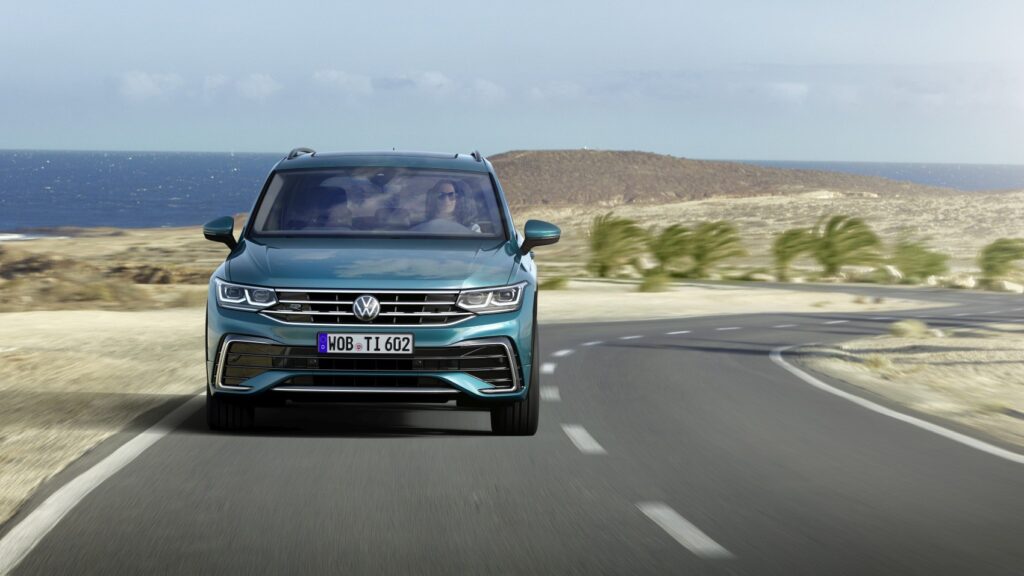
The Volkswagen Tiguan II (facelift 2020) 2.0 TDI (150 Hp) SCR represents a mid-cycle refresh of the second-generation Tiguan, a compact crossover SUV designed for the European market and increasingly popular globally. Introduced in September 2020 and continuing through November 2023, this version of the Tiguan focused on refining the existing platform with updated technology, improved efficiency, and a more contemporary aesthetic. While the Tiguan is sold in the United States, the 2.0 TDI engine is not typically offered there, with American market Tiguans primarily utilizing gasoline engines. This model occupied a crucial position in Volkswagen’s lineup, bridging the gap between the smaller T-Roc and the larger Touareg, appealing to families and individuals seeking a practical and versatile vehicle.
Volkswagen Tiguan II (Facelift 2020) 2.0 TDI: An Overview
The Tiguan II, launched initially in 2016, was a significant step forward for Volkswagen’s compact SUV offering. The 2020 facelift brought enhancements to the exterior styling, interior technology, and powertrain options. The 2.0 TDI (150 Hp) SCR variant, powered by a turbocharged diesel engine with Selective Catalytic Reduction (SCR) technology for reduced emissions, was a popular choice in Europe due to its balance of fuel economy and performance. The SCR system utilizes AdBlue, a urea-based solution, to convert harmful nitrogen oxides into less harmful substances. This model aimed to meet increasingly stringent European emission standards while providing a comfortable and capable driving experience.
Engine & Performance
At the heart of the Tiguan II (facelift 2020) 2.0 TDI is a 1,968 cc (120.09 cu. in.) inline-four cylinder diesel engine. This engine produces 150 horsepower (Hp) and 360 Nm (265.52 lb.-ft.) of torque between 1600 and 2750 rpm. The engine utilizes a turbocharger and intercooler to enhance power output and efficiency. Power is delivered to the front wheels via a six-speed manual transmission. Acceleration from 0 to 100 km/h (0-62 mph) takes 9.4 seconds, while 0 to 60 mph is achieved in 8.9 seconds. The vehicle boasts a maximum speed of 201 km/h (124.9 mph). Fuel consumption figures, measured using the WLTP cycle, range from 6.6 l/100 km (35.6 US mpg) at low speeds to 5.4 l/100 km (43.6 US mpg) at very high speeds, with a combined consumption of 5.1 l/100 km (46.1 US mpg). CO2 emissions are rated at 134 g/km (WLTP) and 121 g/km (NEDC).
Design & Features
The Tiguan II (facelift 2020) maintains the SUV body style with five doors and seating for five passengers. The facelift brought a revised front fascia with a more prominent grille, redesigned headlights (often incorporating LED technology), and a new front bumper. Interior updates included a modernized dashboard with a larger touchscreen infotainment system, digital instrument cluster options, and improved materials. Key features focused on safety and convenience, including ABS (Anti-lock Braking System), electronic stability control, and a range of driver-assistance systems. The vehicle offers a trunk (boot) space of 615 liters (21.72 cu. ft.) with the rear seats up, expanding to 1655 liters (58.45 cu. ft.) when folded down. The Tiguan also features a 58-liter (15.32 US gal) fuel tank and a 12-liter (3.17 US gal) AdBlue tank. The kerb weight of the vehicle is 1542 kg (3399.53 lbs), with a maximum permissible weight of 2170 kg (4784.03 lbs).
Technical Specifications
| Brand | Volkswagen |
| Model | Tiguan |
| Generation | Tiguan II (facelift 2020) |
| Type (Engine) | 2.0 TDI (150 Hp) SCR |
| Start of production | September, 2020 |
| End of production | November, 2023 |
| Powertrain Architecture | Internal Combustion engine |
| Body type | SUV |
| Seats | 5 |
| Doors | 5 |
| Fuel consumption at Low speed (WLTP) | 6.6 l/100 km (35.6 US mpg) |
| Fuel consumption at Medium speed (WLTP) | 4.8 l/100 km (49 US mpg) |
| Fuel consumption at high speed (WLTP) | 4.4 l/100 km (53.5 US mpg) |
| Fuel consumption at very high speed (WLTP) | 5.4 l/100 km (43.6 US mpg) |
| Combined fuel consumption (WLTP) | 5.1 l/100 km (46.1 US mpg) |
| CO2 emissions (WLTP) | 134 g/km |
| Fuel Type | Diesel |
| Acceleration 0 – 100 km/h | 9.4 sec |
| Acceleration 0 – 62 mph | 9.4 sec |
| Acceleration 0 – 60 mph | 8.9 sec |
| Maximum speed | 201 km/h (124.9 mph) |
| Emission standard | EURO 6d-ISC-FCM |
| Weight-to-power ratio | 10.3 kg/Hp |
| Power | 150 Hp |
| Torque | 360 Nm @ 1600-2750 rpm (265.52 lb.-ft. @ 1600-2750 rpm) |
| Engine displacement | 1968 cm3 (120.09 cu. in.) |
| Number of cylinders | 4 |
| Engine configuration | Inline |
| Kerb Weight | 1542 kg (3399.53 lbs.) |
| Max. weight | 2170 kg (4784.03 lbs.) |
| Trunk (boot) space – minimum | 615 l (21.72 cu. ft.) |
| Trunk (boot) space – maximum | 1655 l (58.45 cu. ft.) |
| Fuel tank capacity | 58 l (15.32 US gal) |
| Length | 4509 mm (177.52 in.) |
| Width | 1839 mm (72.4 in.) |
| Wheelbase | 2678 mm (105.43 in.) |
| Number of gears and type of gearbox | 6 gears, manual transmission |
The Volkswagen Tiguan II (facelift 2020) 2.0 TDI (150 Hp) SCR offered a compelling package for European buyers seeking a practical, efficient, and well-equipped compact SUV. Its blend of diesel power, modern technology, and spacious interior made it a popular choice in a competitive segment. While not widely available in the US market in this specific configuration, it represents a significant model within Volkswagen’s global product portfolio.