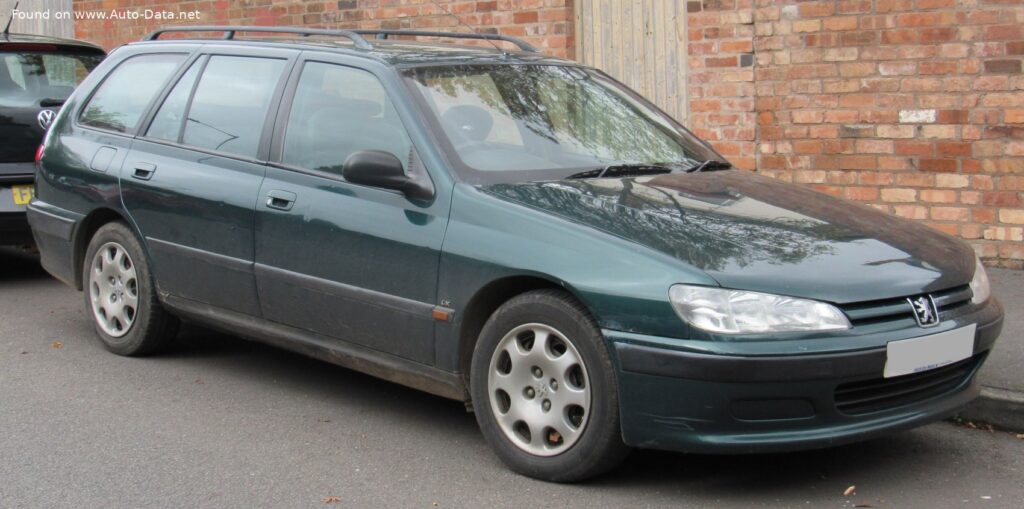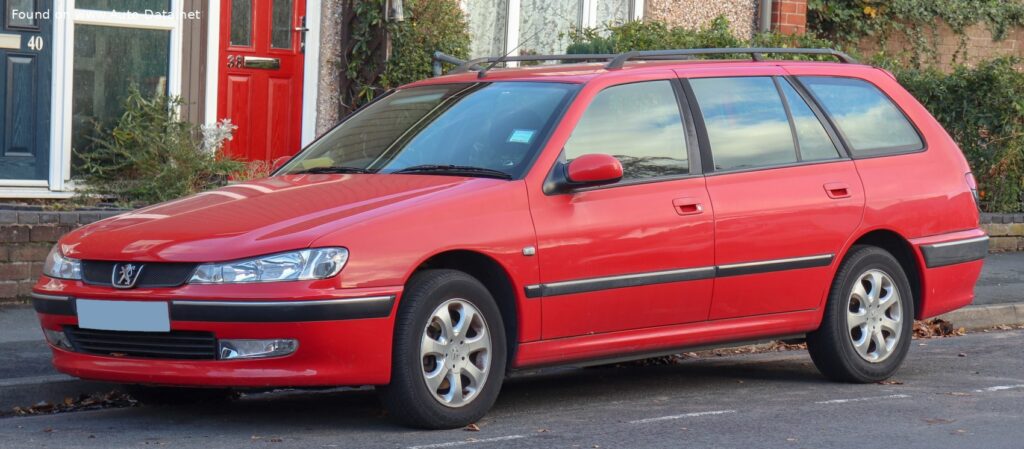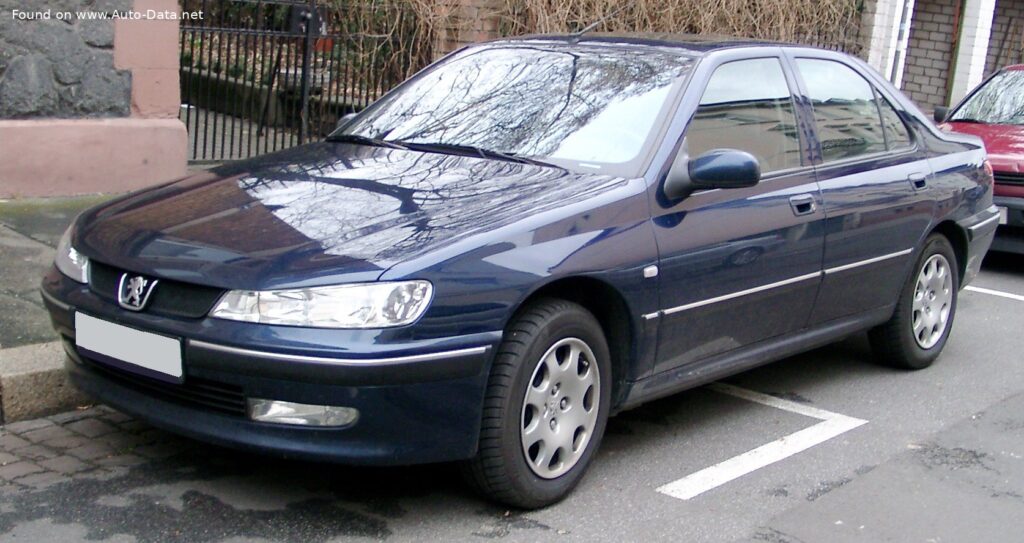
The Peugeot 406, particularly the Phase II iteration introduced in 1999, represents a significant evolution in the French manufacturer’s mid-size offerings. Positioned as a competitor to vehicles like the Ford Mondeo and Vauxhall/Opel Vectra in Europe, the 406 aimed to blend stylish design with a comfortable driving experience. While never officially sold in the United States, the 406 was a popular choice for those seeking a refined and capable family sedan in the European market. The Phase II updates brought cosmetic and mechanical refinements, solidifying the 406’s position as a strong contender in its segment.
Peugeot 406 (Phase II) 3.0 V6: An Overview
The 406 Phase II, produced between 2000 and 2004, offered a range of engine options, but the 3.0-liter V6 variant stands out for its performance and refinement. This model catered to drivers who desired a more powerful and engaging driving experience. The Phase II revisions included subtle styling changes, improved interior materials, and enhancements to the suspension and braking systems. The 406’s design, penned by Pininfarina, was lauded for its elegant lines and aerodynamic profile, contributing to its enduring appeal.
Engine & Performance
The heart of the 406 3.0 V6 is its naturally aspirated 2.946-liter (179.78 cu. in.) V6 engine, designated XFX ES9J4S. This powerplant delivers 207 horsepower at 6000 rpm and 285 Nm (210.21 lb.-ft.) of torque at 3750 rpm. The engine features a double overhead camshaft (DOHC) valvetrain with four valves per cylinder and multi-port fuel injection. This configuration provides a smooth and responsive power delivery, making it well-suited for both urban driving and long-distance cruising. The engine’s power-to-weight ratio of 7 kg/Hp and torque-to-weight ratio of 5.1 kg/Nm contribute to its spirited performance.
Performance figures for the 406 3.0 V6 are respectable for its era. Acceleration from 0 to 100 km/h (0-62 mph) takes 8.1 seconds, while the 0-60 mph sprint is achieved in approximately 7.7 seconds. The car boasts a maximum speed of 240 km/h (149.13 mph). Power is delivered to the front wheels via a five-speed manual transmission, providing drivers with precise control over the engine’s output. The front-wheel-drive layout, common for European sedans of this period, contributes to efficient packaging and reduced weight.
Design & Features
The Peugeot 406 Phase II is a four-door sedan with a spacious interior designed to comfortably accommodate five passengers. Its exterior styling is characterized by flowing lines, a sloping roofline, and a distinctive front grille. The Phase II updates included revised headlights and taillights, as well as subtle changes to the bumpers and bodywork. The car’s dimensions – 4600 mm (181.1 in) in length, 1765 mm (69.49 in) in width, and 1404 mm (55.28 in) in height – provide a generous cabin space without feeling overly large.
Inside, the 406 Phase II offers a comfortable and well-equipped cabin. Standard features typically included power windows, central locking, and an adjustable steering column. Higher trim levels offered options such as leather upholstery, air conditioning, and a premium sound system. Safety features, while not as comprehensive as those found in modern vehicles, included ABS (Anti-lock Braking System) and front disc brakes. The trunk offers a minimum capacity of 430 liters (15.19 cu. ft.), providing ample space for luggage and other cargo. The McPherson strut front suspension and independent multi-link rear suspension contribute to a comfortable ride and stable handling.
Technical Specifications
| Brand | Peugeot |
| Model | 406 |
| Generation | 406 (Phase II, 1999) |
| Type (Engine) | 3.0 V6 (207 Hp) |
| Start of production | 2000 year |
| End of production | 2004 year |
| Powertrain Architecture | Internal Combustion engine |
| Body type | Sedan |
| Seats | 5 |
| Doors | 4 |
| Fuel consumption (urban) | 13.7 l/100 km (17.2 US mpg, 20.6 UK mpg, 7.3 km/l) |
| Fuel consumption (extra urban) | 7.2 l/100 km (32.7 US mpg, 39.2 UK mpg, 13.9 km/l) |
| Fuel Type | Petrol (Gasoline) |
| Acceleration 0 – 100 km/h | 8.1 sec |
| Acceleration 0 – 62 mph | 8.1 sec |
| Acceleration 0 – 60 mph | 7.7 sec |
| Maximum speed | 240 km/h (149.13 mph) |
| Weight-to-power ratio | 7 kg/Hp |
| Weight-to-torque ratio | 5.1 kg/Nm |
| Power | 207 Hp @ 6000 rpm |
| Torque | 285 Nm @ 3750 rpm (210.21 lb.-ft. @ 3750 rpm) |
| Engine layout | Front, Transverse |
| Engine Model/Code | XFX ES9J4S |
| Engine displacement | 2946 cm3 (179.78 cu. in.) |
| Number of cylinders | 6 |
| Engine configuration | V-engine |
| Cylinder Bore | 87 mm (3.43 in.) |
| Piston Stroke | 82.6 mm (3.25 in.) |
| Compression ratio | 10.9:1 |
| Number of valves per cylinder | 4 |
| Fuel injection system | Multi-port manifold injection |
| Engine aspiration | Naturally aspirated engine |
| Valvetrain | DOHC |
| Engine oil capacity | 4.75 l (5.02 US qt | 4.18 UK qt) |
| Coolant | 9.6 l (10.14 US qt | 8.45 UK qt) |
| Kerb Weight | 1455 kg (3207.73 lbs.) |
| Max. weight | 1995 kg (4398.22 lbs.) |
| Max load | 540 kg (1190.5 lbs.) |
| Trunk (boot) space – minimum | 430 l (15.19 cu. ft.) |
| Fuel tank capacity | 70 l (18.49 US gal | 15.4 UK gal) |
| Length | 4600 mm (181.1 in.) |
| Width | 1765 mm (69.49 in.) |
| Height | 1404 mm (55.28 in.) |
| Wheelbase | 2700 mm (106.3 in.) |
| Front track | 1500 mm (59.06 in.) |
| Rear (Back) track | 1482 mm (58.35 in.) |
| Front overhang | 937 mm (36.89 in.) |
| Rear overhang | 963 mm (37.91 in.) |
| Minimum turning circle | 11.95 m (39.21 ft.) |
| Drivetrain Architecture | Front wheel drive |
| Number of gears and type of gearbox | 5 gears, manual transmission |
| Front suspension | Independent, type McPherson with coil spring and anti-roll bar |
| Rear suspension | Independent multi-link spring suspension with stabilizer |
| Front brakes | Disc |
| Rear brakes | Disc |
| Assisting systems | ABS (Anti-lock braking system) |
| Steering type | Steering rack and pinion |
| Power steering | Hydraulic Steering |
| Tires size | 205/60 R15 |
| Wheel rims size | 15 |