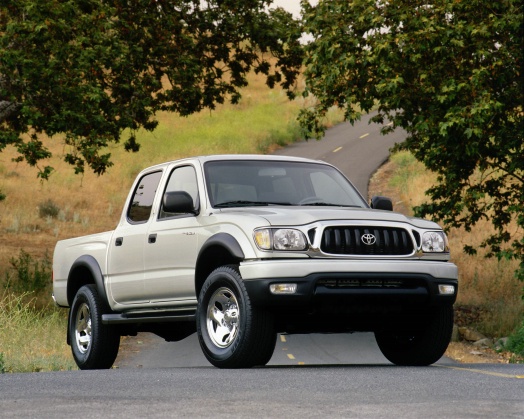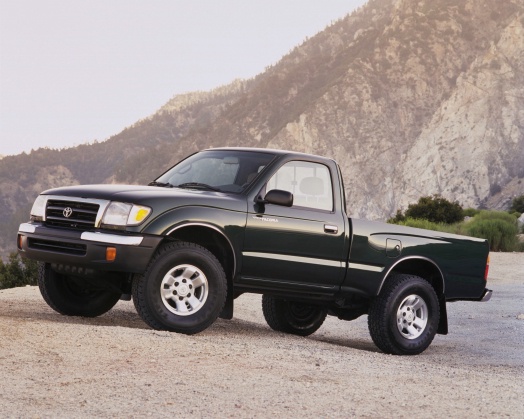
The Toyota Tacoma I Single Cab (facelift 2000) 2.4 represents a significant iteration of Toyota’s popular compact pickup truck, primarily sold in North America and select international markets. Introduced as part of the first-generation Tacoma (1995-2004), the 2000 facelift brought updated styling and refinements to an already successful formula. This model catered to buyers seeking a rugged, reliable, and affordable work truck or weekend adventurer, offering a no-frills, two-seat configuration focused on practicality. While not initially a high-volume seller compared to extended cab versions, the Single Cab Tacoma held a dedicated following for its maneuverability and straightforward functionality.
Toyota Tacoma I Single Cab (facelift 2000): A Detailed Overview
The Tacoma’s success stemmed from Toyota’s reputation for build quality and durability, coupled with a design that blended utility with a degree of comfort not typically found in the compact pickup segment. The facelifted 2000 model year saw minor cosmetic changes, primarily to the front fascia, but retained the core mechanical components that made the first-generation Tacoma so well-regarded. It occupied a niche between larger, full-size trucks and smaller, more utilitarian offerings, appealing to a broad range of customers.
Engine & Performance
Powering the 2000 Toyota Tacoma I Single Cab 2.4 is the 2RZ-FE 2.4-liter inline four-cylinder engine. This naturally aspirated powerplant produces 142 horsepower at 6000 rpm and 217 Nm (160.05 lb.-ft.) of torque at 4400 rpm. While not a performance powerhouse, the 2RZ-FE provided adequate power for typical pickup truck duties, prioritizing fuel efficiency and longevity over outright speed. The engine features a double overhead camshaft (DOHC) valvetrain and multi-port fuel injection, contributing to its relatively smooth operation and reasonable emissions for its time. The engine’s longitudinal front-engine layout and rear-wheel-drive configuration were standard for this class of vehicle. A five-speed manual transmission was the sole transmission option for this configuration, offering drivers full control over gear selection. The Tacoma’s relatively light weight, especially in the single-cab configuration, helped to maximize the engine’s performance.
Design & Features
The 2000 Toyota Tacoma I Single Cab is a classic two-door pickup truck, characterized by its utilitarian design. The body-on-frame construction provided a robust platform for hauling and off-road use. The single-cab configuration offered seating for two occupants, prioritizing cargo space over passenger capacity. The interior was functional and durable, with vinyl or cloth upholstery and minimal frills. Safety features were relatively basic by modern standards, consisting primarily of seatbelts and a reinforced cabin structure. However, the Tacoma’s solid construction and predictable handling contributed to its overall safety profile. The truck’s exterior styling was conservative but purposeful, with a squared-off front end and a relatively short wheelbase. The bed offered ample cargo capacity for its size, and the tailgate was designed for easy loading and unloading. The Tacoma’s ride height (ground clearance) of 215 mm (8.46 inches) provided reasonable off-road capability, and the rear-wheel-drive system was well-suited for both on- and off-road driving conditions.
Technical Specifications
| Brand | Toyota |
| Model | Tacoma |
| Generation | Tacoma I Single Cab (facelift 2000) |
| Type (Engine) | 2.4 (142 Hp) |
| Start of production | 2000 |
| End of production | 2004 |
| Powertrain Architecture | Internal Combustion engine |
| Body type | Pick-up |
| Seats | 2 |
| Doors | 2 |
| Fuel Type | Petrol (Gasoline) |
| Power | 142 Hp @ 6000 rpm |
| Power per litre | 59.4 Hp/l |
| Torque | 217 Nm @ 4400 rpm / 160.05 lb.-ft. @ 4400 rpm |
| Engine layout | Front, Longitudinal |
| Engine Model/Code | 2RZ-FE |
| Engine displacement | 2392 cm3 / 145.97 cu. in. |
| Number of cylinders | 4 |
| Engine configuration | Inline |
| Number of valves per cylinder | 4 |
| Fuel injection system | Multi-port manifold injection |
| Engine aspiration | Naturally aspirated engine |
| Valvetrain | DOHC |
| Engine oil capacity | 5.5 l / 5.81 US qt | 4.84 UK qt |
| Coolant | 7.8 l / 8.24 US qt | 6.86 UK qt |
| Max. weight | 1928 kg / 4250.51 lbs |
| Fuel tank capacity | 57 l / 15.06 US gal | 12.54 UK gal |
| Length | 4686 mm / 184.49 in |
| Width | 1689 mm / 66.5 in |
| Height | 1570 mm / 61.81 in |
| Wheelbase | 2624 mm / 103.31 in |
| Front track | 1395 mm / 54.92 in |
| Rear (Back) track | 1415 mm / 55.71 in |
| Ride height (ground clearance) | 215 mm / 8.46 in |
| Drivetrain Architecture | Rear wheel drive. Internal Combustion engine (ICE) drives the rear wheels. |
| Drive wheel | Rear wheel drive |
| Number of gears and type of gearbox | 5 gears, manual transmission |
| Front brakes | Ventilated discs |
| Rear brakes | Drum |
| Tires size | 205/75 R15; 235/55 R16 |
| Wheel rims size | 15; 16 |
The Toyota Tacoma I Single Cab (facelift 2000) 2.4 remains a popular choice among enthusiasts and those seeking a reliable, affordable pickup truck. Its simple design, durable construction, and readily available parts make it a practical and enjoyable vehicle to own and operate. While lacking the refinement of modern pickups, the Tacoma’s rugged character and proven reliability have cemented its place as a classic in the compact truck segment.