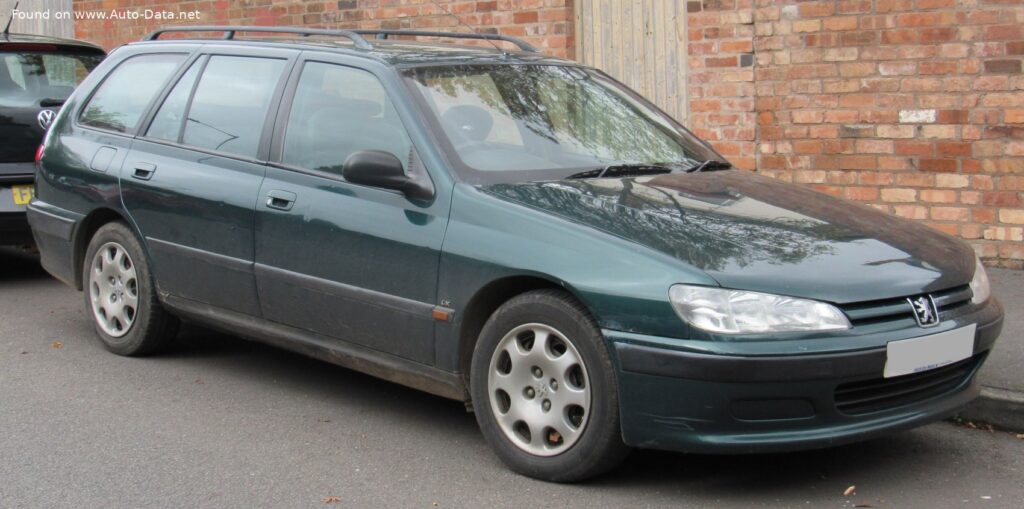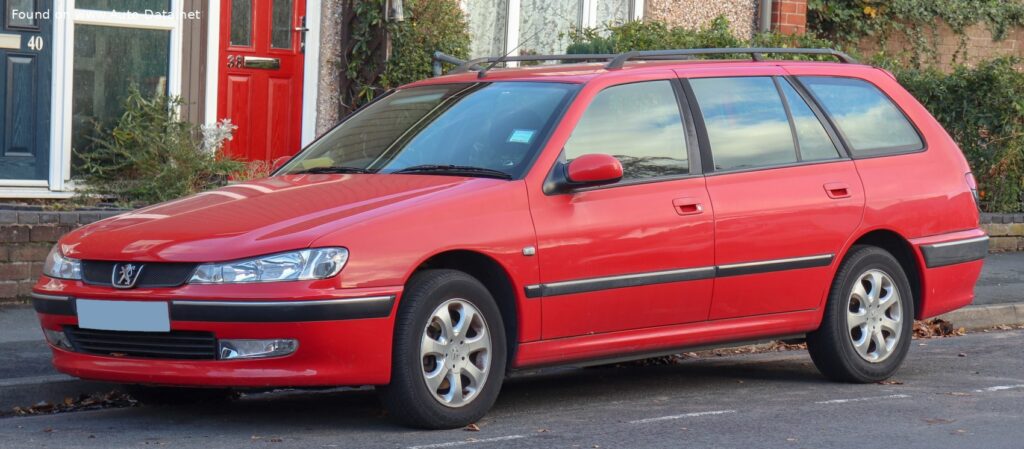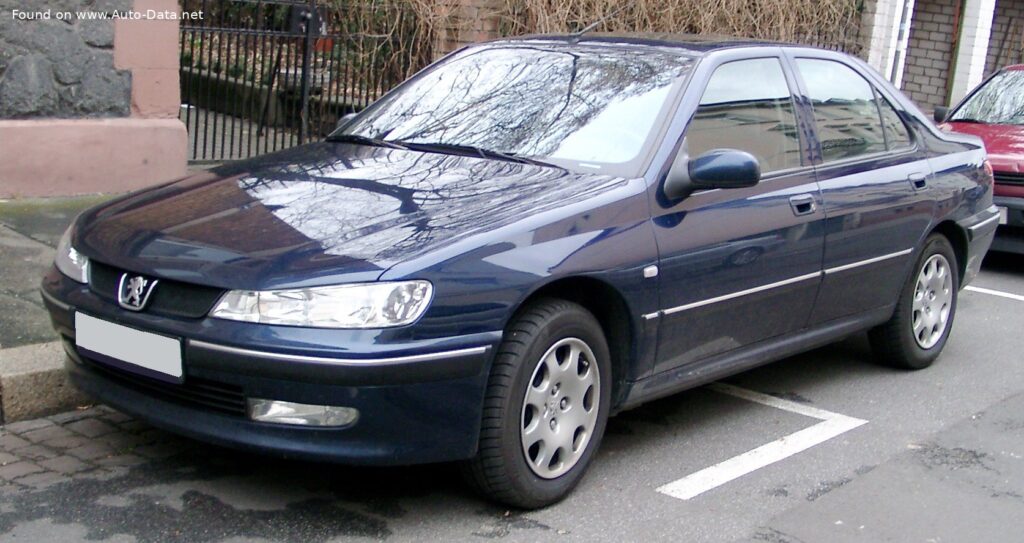
The Peugeot 406, produced between 1995 and 2004, was a large family car designed and manufactured by the French automaker Peugeot. Representing a significant step forward for the brand, the 406 aimed to compete with established rivals like the Ford Mondeo and Vauxhall/Opel Vectra. The Phase II update, introduced in 1999, brought styling refinements, improved safety features, and updated engine options. This article focuses on the 1999-2004 Peugeot 406 3.0 V6 Automatic, a model primarily sold in Europe, offering a more premium experience within the 406 range.
Peugeot 406: A Refined European Sedan
The 406 was Peugeot’s replacement for the aging 405, and it represented a move upmarket in terms of design, comfort, and technology. While never officially sold in the United States, the 406 was a popular choice in Europe, known for its comfortable ride, stylish Pininfarina-designed exterior, and a range of efficient and powerful engines. The Phase II models, like the 3.0 V6 Automatic detailed here, benefited from subtle but effective improvements to the interior and exterior, enhancing its appeal in a competitive segment.
Engine & Performance
The heart of this 406 variant is a 2.9-liter (2946 cm3) naturally aspirated V6 engine, designated XFX ES9J4S. This engine produces 207 horsepower (Hp) at 6000 rpm and 285 Newton-meters (210.21 lb.-ft.) of torque at 3750 rpm. Power delivery is smooth and refined, characteristic of a V6 configuration. The engine features a multi-port fuel injection system and a double overhead camshaft (DOHC) valvetrain with four valves per cylinder. The engine’s power-to-weight ratio is 7 kg/Hp, and it delivers 70.3 Hp per liter of displacement. This power is channeled through a four-speed automatic transmission to the front wheels, resulting in a 0-100 km/h (0-62 mph) acceleration time of 9.7 seconds, and a calculated 0-60 mph time of 9.2 seconds. The vehicle achieves a maximum speed of 232 km/h (144.16 mph). Fuel economy is rated at 13.7 l/100 km (17.2 US mpg) in urban driving and 7.2 l/100 km (32.7 US mpg) on the open road.
Design & Features
The Peugeot 406 Phase II is a four-door sedan with a sleek, aerodynamic profile. The Pininfarina-penned design emphasizes flowing lines and a relatively low-slung stance. The Phase II update included revised headlights and taillights, a redesigned front grille, and subtle alterations to the bumpers. The interior of the 406 is designed with comfort and practicality in mind. It offers seating for five passengers and a trunk capacity of 430 liters (15.19 cu. ft.). Standard features for this trim level typically included power windows, central locking, and an upgraded audio system. Safety features, improved in the Phase II models, included Anti-lock Braking System (ABS). The suspension utilizes an independent McPherson strut setup at the front and an independent multi-link system at the rear, providing a comfortable and controlled ride. Hydraulic power steering contributes to ease of maneuverability.
Technical Specifications
| Brand | Peugeot |
| Model | 406 |
| Generation | 406 (Phase II, 1999) |
| Type (Engine) | 3.0 V6 (207 Hp) Automatic |
| Start of production | 2000 |
| End of production | 2004 |
| Powertrain Architecture | Internal Combustion engine |
| Body type | Sedan |
| Seats | 5 |
| Doors | 4 |
| Fuel consumption (urban) | 13.7 l/100 km (17.2 US mpg, 20.6 UK mpg, 7.3 km/l) |
| Fuel consumption (extra urban) | 7.2 l/100 km (32.7 US mpg, 39.2 UK mpg, 13.9 km/l) |
| Fuel Type | Petrol (Gasoline) |
| Acceleration 0 – 100 km/h | 9.7 sec |
| Acceleration 0 – 62 mph | 9.7 sec |
| Acceleration 0 – 60 mph | 9.2 sec |
| Maximum speed | 232 km/h (144.16 mph) |
| Weight-to-power ratio | 7 kg/Hp |
| Weight-to-torque ratio | 5.1 kg/Nm |
| Power | 207 Hp @ 6000 rpm |
| Torque | 285 Nm @ 3750 rpm (210.21 lb.-ft. @ 3750 rpm) |
| Engine layout | Front, Transverse |
| Engine Model/Code | XFX ES9J4S |
| Engine displacement | 2946 cm3 (179.78 cu. in.) |
| Number of cylinders | 6 |
| Engine configuration | V-engine |
| Cylinder Bore | 87 mm (3.43 in.) |
| Piston Stroke | 82.6 mm (3.25 in.) |
| Compression ratio | 10.9:1 |
| Number of valves per cylinder | 4 |
| Fuel injection system | Multi-port manifold injection |
| Engine aspiration | Naturally aspirated |
| Valvetrain | DOHC |
| Engine oil capacity | 4.75 l (5.02 US qt | 4.18 UK qt) |
| Coolant capacity | 10.6 l (11.2 US qt | 9.33 UK qt) |
| Kerb Weight | 1455 kg (3207.73 lbs.) |
| Max. weight | 1995 kg (4398.22 lbs.) |
| Max load | 540 kg (1190.5 lbs.) |
| Trunk (boot) space (minimum) | 430 l (15.19 cu. ft.) |
| Fuel tank capacity | 70 l (18.49 US gal | 15.4 UK gal) |
| Length | 4600 mm (181.1 in.) |
| Width | 1765 mm (69.49 in.) |
| Height | 1404 mm (55.28 in.) |
| Wheelbase | 2700 mm (106.3 in.) |
| Front track | 1500 mm (59.06 in.) |
| Rear track | 1482 mm (58.35 in.) |
| Front overhang | 937 mm (36.89 in.) |
| Rear overhang | 963 mm (37.91 in.) |
| Minimum turning circle | 11.95 m (39.21 ft.) |
| Drivetrain | Front wheel drive |
| Number of gears | 4 |
| Gearbox type | Automatic transmission |
| Front suspension | Independent, McPherson with coil spring and anti-roll bar |
| Rear suspension | Independent multi-link with stabilizer |
| Front brakes | Disc |
| Rear brakes | Disc |
| Assisting systems | ABS (Anti-lock braking system) |
| Steering type | Steering rack and pinion |
| Power steering | Hydraulic |
| Tires size | 205/60 R15 |
| Wheel rims size | 15 |
The Peugeot 406 Phase II 3.0 V6 Automatic offered a compelling blend of style, comfort, and performance for European buyers. While not available in the US market, it remains a respected and fondly remembered vehicle, representing a high point in Peugeot’s design and engineering capabilities during the late 1990s and early 2000s.