
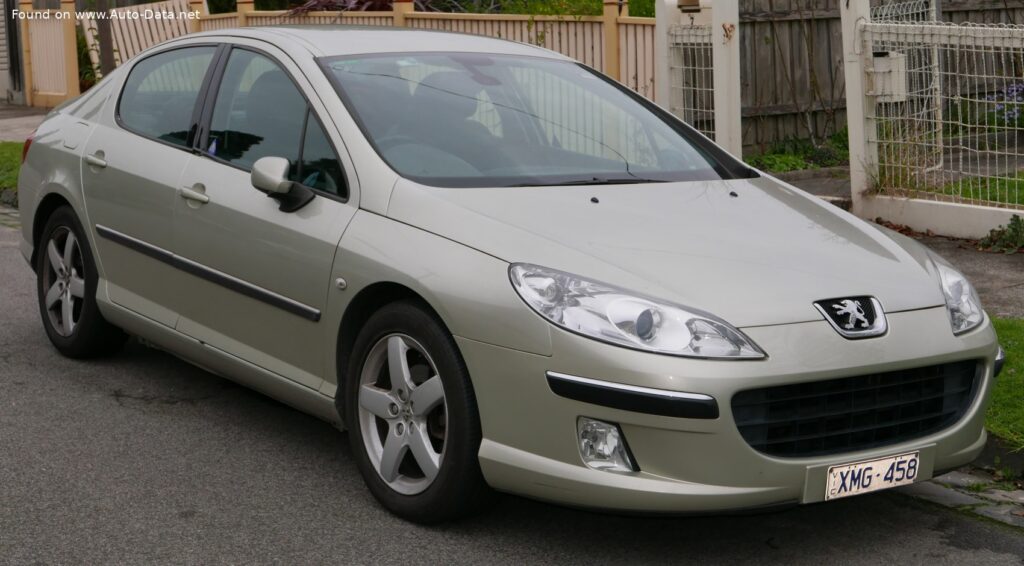
The Peugeot 407, produced between 2004 and 2008, was a large family car manufactured by the French automaker Peugeot. Positioned above the 307 and below the 607 in Peugeot’s lineup, the 407 aimed to provide a blend of comfort, style, and practicality. This article focuses on the 1.6 HDi variant, a popular choice in European markets known for its fuel efficiency and diesel power. While not officially sold in the United States, the 407 represents a significant effort by Peugeot to compete in the mid-size sedan segment against established rivals like the Ford Mondeo and Volkswagen Passat.
Peugeot 407 1.6 HDi: Overview and Market Position
The 407 was designed to replace the aging 406, offering a more modern and sophisticated package. It was available in sedan, coupe, and SW (station wagon) body styles, catering to a wide range of customer needs. The 1.6 HDi engine, a key component of the 407’s appeal, was particularly popular in Europe due to its favorable tax implications and excellent fuel economy. The HDi designation signifies a High-Pressure Diesel Injection system, a technology that improved efficiency and reduced emissions. The 407 aimed to elevate Peugeot’s brand image, offering a more premium experience compared to its predecessors.
Engine & Performance
The heart of the Peugeot 407 1.6 HDi is a 1.6-liter inline-four cylinder diesel engine, designated the 9HZ DV6TED4. This engine produces 109 horsepower at 4000 rpm and 260 Nm (191.77 lb.-ft.) of torque at 1750 rpm. The engine utilizes a turbocharger with an intercooler to enhance performance and efficiency. While not a performance-oriented engine, the 1.6 HDi provides adequate power for everyday driving and long-distance cruising. Acceleration from 0 to 100 km/h (0-62 mph) takes approximately 13.1 seconds, and 0 to 60 mph is achieved in around 12.4 seconds. The top speed is rated at 192 km/h (119.3 mph). The engine’s relatively low weight-to-power ratio of 13.2 kg/Hp and weight-to-torque ratio of 5.5 kg/Nm contribute to its responsive feel. The engine is paired with a 5-speed manual transmission, delivering power to the front wheels.
Design & Features
The Peugeot 407 boasts a sleek and modern design for its time. The sedan body style features a long wheelbase and a relatively low roofline, giving it a sporty and elegant appearance. Inside, the 407 offers a comfortable and well-equipped cabin with seating for five passengers. Key features included air conditioning, power windows, central locking, and an audio system. Higher trim levels offered options such as leather upholstery, automatic climate control, and a navigation system. Safety features, increasingly important in the mid-2000s, included ABS (Anti-lock Braking System) and front airbags. The 407’s trunk offers a practical 407 liters (14.37 cu. ft.) of storage space. The car’s dimensions – 4675 mm (184.06 in.) in length, 1811 mm (71.3 in.) in width, and 1447 mm (56.97 in.) in height – position it squarely within the mid-size sedan category.
Technical Specifications
| Brand | Peugeot |
| Model | 407 |
| Generation | 407 |
| Type (Engine) | 1.6 HDi (109 Hp) |
| Start of production | 2004 |
| End of production | 2008 |
| Powertrain Architecture | Internal Combustion engine |
| Body type | Sedan |
| Seats | 5 |
| Doors | 4 |
| Fuel consumption (urban) | 7.1 l/100 km (33.1 US mpg) |
| Fuel consumption (extra urban) | 4.6 l/100 km (51.1 US mpg) |
| Fuel Type | Diesel |
| Acceleration 0 – 100 km/h | 13.1 sec |
| Acceleration 0 – 62 mph | 13.1 sec |
| Acceleration 0 – 60 mph | 12.4 sec |
| Maximum speed | 192 km/h (119.3 mph) |
| Weight-to-power ratio | 13.2 kg/Hp |
| Weight-to-torque ratio | 5.5 kg/Nm |
| Power | 109 Hp @ 4000 rpm |
| Torque | 260 Nm @ 1750 rpm (191.77 lb.-ft. @ 1750 rpm) |
| Engine layout | Front, Transverse |
| Engine Model/Code | 9HZ DV6TED4 |
| Engine displacement | 1560 cm3 (95.2 cu. in.) |
| Number of cylinders | 4 |
| Engine configuration | Inline |
| Cylinder Bore | 75 mm (2.95 in.) |
| Piston Stroke | 88.3 mm (3.48 in.) |
| Compression ratio | 17.6:1 |
| Number of valves per cylinder | 4 |
| Fuel injection system | Diesel Commonrail |
| Engine aspiration | Turbocharger, Intercooler |
| Valvetrain | DOHC |
| Engine oil capacity | 3.75 l (3.96 US qt | 3.3 UK qt) |
| Coolant | 7.2 l (7.61 US qt | 6.34 UK qt) |
| Kerb Weight | 1440 kg (3174.66 lbs.) |
| Max. weight | 2020 kg (4453.34 lbs.) |
| Max load | 580 kg (1278.68 lbs.) |
| Trunk (boot) space – minimum | 407 l (14.37 cu. ft.) |
| Fuel tank capacity | 66 l (17.44 US gal | 14.52 UK gal) |
| Length | 4675 mm (184.06 in.) |
| Width | 1811 mm (71.3 in.) |
| Height | 1447 mm (56.97 in.) |
| Wheelbase | 2725 mm (107.28 in.) |
| Front track | 1552 mm (61.1 in.) |
| Rear (Back) track | 1518 mm (59.76 in.) |
| Drivetrain Architecture | Front wheel drive |
| Number of gears and type of gearbox | 5 gears, manual transmission |
| Front suspension | Spring Strut |
| Rear suspension | Spring Strut |
| Front brakes | Ventilated discs |
| Rear brakes | Disc |
| Assisting systems | ABS (Anti-lock braking system) |
| Steering type | Steering rack and pinion |
| Tires size | 205/60 R16 |
| Wheel rims size | 6.5 X 16 |
The Peugeot 407 1.6 HDi, while not a high-performance vehicle, offered a compelling package of fuel efficiency, comfort, and style. Its success in European markets demonstrates the appeal of diesel engines and the importance of practicality in the mid-size sedan segment. Although never officially available in the US, the 407 represents a significant chapter in Peugeot’s history and a testament to its engineering capabilities.
