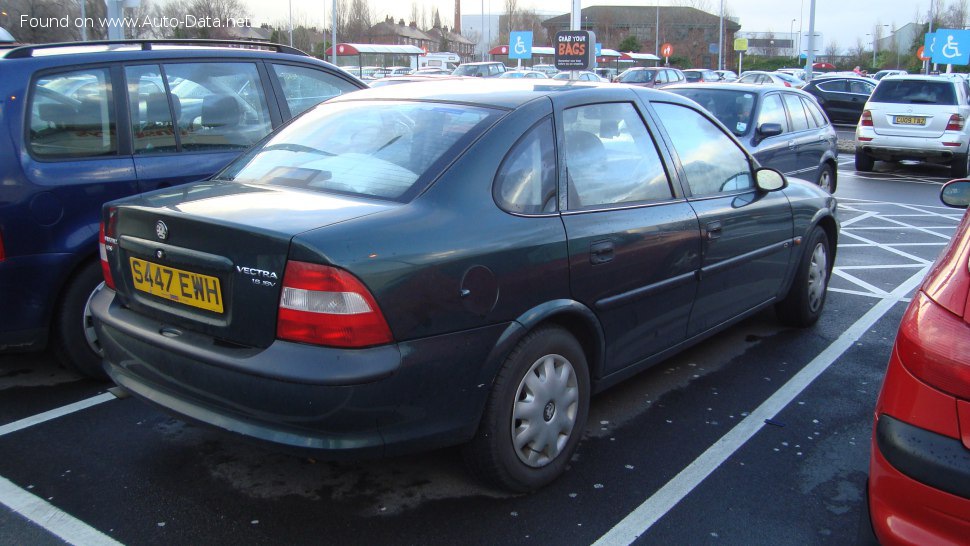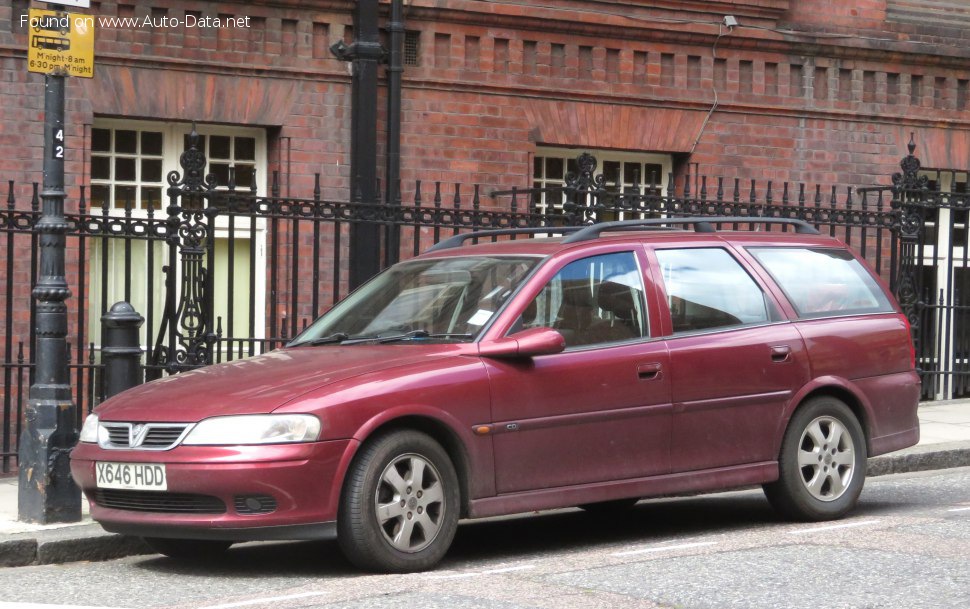
The Vauxhall Vectra B Estate 2.0 DTI 16V, produced between 1997 and 1998, represents a significant iteration in Vauxhall’s mid-size family car lineup. As part of the broader Vectra B generation (1995-2002), the Estate model – a station wagon – offered increased practicality and cargo capacity compared to the saloon and hatchback variants. While the Vectra nameplate had a history dating back to the 1980s, the B series marked a substantial leap forward in design, technology, and refinement. The 2.0 DTI 16V trim, powered by a direct injection diesel engine, was aimed at buyers prioritizing fuel efficiency and reasonable performance in a spacious, family-oriented vehicle. The Vectra, and specifically the Estate, was a popular choice in the UK and wider European markets, competing with models like the Ford Mondeo Estate, Peugeot 406 Estate, and Volkswagen Passat Variant.
Vauxhall Vectra B Estate 2.0 DTI 16V: An Overview
The Vectra B Estate was designed to appeal to families and individuals needing a versatile vehicle capable of carrying both passengers and substantial loads. It offered a blend of comfort, practicality, and relatively modern features for its time. The 2.0 DTI 16V engine was a key component of this appeal, providing a balance between fuel economy and usable power. The Estate body style, with its extended roofline and larger rear opening, significantly enhanced the vehicle’s cargo-carrying capabilities, making it a popular choice for those with active lifestyles or requiring frequent transportation of goods.
Engine & Performance
The heart of the Vectra B Estate 2.0 DTI 16V is its 1,995 cc inline-four cylinder diesel engine, designated the X20DTH. This engine utilizes a direct injection system and a turbocharger with an intercooler to deliver 101 horsepower at 4,300 rpm and 205 Nm (151.2 lb.-ft.) of torque at 1,650 rpm. The engine’s relatively high compression ratio of 18.5:1 contributes to its efficiency. Power is delivered to the front wheels via a five-speed manual transmission. Performance figures include a 0-100 km/h (0-62 mph) acceleration time of 14 seconds and a maximum speed of 187 km/h (116.2 mph). While not a sports car, the engine provides adequate power for everyday driving and comfortable cruising, particularly benefiting from the readily available torque at lower engine speeds. The weight-to-power ratio of 14.3 kg/Hp and weight-to-torque ratio of 7 kg/Nm reflect the engine’s focus on usability rather than outright performance.
Design & Features
The Vectra B Estate features a traditional station wagon body style, characterized by its elongated roofline and large rear tailgate. The design, while not groundbreaking, was considered modern for its time, with smooth lines and a relatively aerodynamic profile. Inside, the vehicle offers seating for five passengers and a spacious interior. A key selling point of the Estate model is its generous cargo capacity, ranging from 460 liters (16.24 cu. ft.) with the rear seats up to 1,490 liters (52.62 cu. ft.) with the rear seats folded down. Standard features typically included power steering, central locking, and an anti-lock braking system (ABS). Safety features, while limited by the standards of today, were considered adequate for the late 1990s. The vehicle’s dimensions – 4,490 mm (176.77 in.) in length, 1,710 mm (67.32 in.) in width, and 1,490 mm (58.66 in.) in height – positioned it squarely within the mid-size estate car segment.
Technical Specifications
| Brand | Vauxhall |
| Model | Vectra |
| Generation | Vectra B Estate |
| Type (Engine) | 2.0 DTI 16V (101 Hp) |
| Start of production | 1997 |
| End of production | 1998 |
| Powertrain Architecture | Internal Combustion engine |
| Body type | Station wagon (estate) |
| Seats | 5 |
| Doors | 5 |
| Fuel consumption (urban) | 8.1 l/100 km (29 US mpg / 34.9 UK mpg / 12.3 km/l) |
| Fuel consumption (extra urban) | 5 l/100 km (47 US mpg / 56.5 UK mpg / 20 km/l) |
| Fuel Type | Diesel |
| Acceleration 0 – 100 km/h | 14 sec |
| Acceleration 0 – 62 mph | 14 sec |
| Acceleration 0 – 60 mph | 13.3 sec |
| Maximum speed | 187 km/h (116.2 mph) |
| Weight-to-power ratio | 14.3 kg/Hp |
| Weight-to-torque ratio | 7 kg/Nm |
| Power | 101 Hp @ 4300 rpm |
| Torque | 205 Nm @ 1650 rpm (151.2 lb.-ft. @ 1650 rpm) |
| Engine layout | Front, Transverse |
| Engine Model/Code | X20DTH |
| Engine displacement | 1995 cm3 (121.74 cu. in.) |
| Number of cylinders | 4 |
| Engine configuration | Inline |
| Cylinder Bore | 84 mm (3.31 in.) |
| Piston Stroke | 90 mm (3.54 in.) |
| Compression ratio | 18.5:1 |
| Number of valves per cylinder | 4 |
| Fuel injection system | Diesel Commonrail |
| Engine aspiration | Turbocharger, Intercooler |
| Valvetrain | OHC |
| Engine oil capacity | 5.5 l (5.81 US qt | 4.84 UK qt) |
| Coolant | 7.2 l (7.61 US qt | 6.34 UK qt) |
| Kerb Weight | 1445 kg (3185.68 lbs.) |
| Max. weight | 2020 kg (4453.34 lbs.) |
| Max load | 575 kg (1267.66 lbs.) |
| Trunk (boot) space – minimum | 460 l (16.24 cu. ft.) |
| Trunk (boot) space – maximum | 1490 l (52.62 cu. ft.) |
| Fuel tank capacity | 60 l (15.85 US gal | 13.2 UK gal) |
| Length | 4490 mm (176.77 in.) |
| Width | 1710 mm (67.32 in.) |
| Height | 1490 mm (58.66 in.) |
| Wheelbase | 2637 mm (103.82 in.) |
| Front track | 1464 mm (57.64 in.) |
| Rear (Back) track | 1463 mm (57.6 in.) |
| Drivetrain Architecture | Front wheel drive |
| Number of gears and type of gearbox | 5 gears, manual transmission |
| Front brakes | Ventilated discs |
| Rear brakes | Disc |
| Assisting systems | ABS (Anti-lock braking system) |
| Tires size | 195/65 R15 |
| Wheel rims size | 15 |