
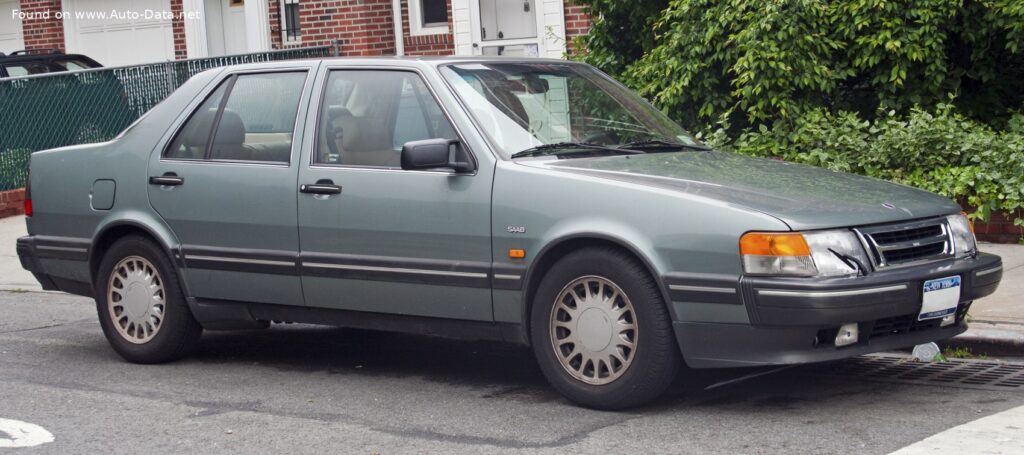
The Saab 9000 2.0 16V Turbo, produced between 1985 and 1991, represents a significant step forward for the Swedish automaker. This model, a four-door sedan, was Saab’s initial foray into the mid-size executive car segment, designed to compete with vehicles like the BMW 5 Series and the Audi 100. The 9000 aimed to combine Saab’s reputation for innovative engineering and safety with a more spacious and comfortable interior, appealing to a broader customer base. While never achieving the sales volume of its German rivals, the 9000 established Saab as a credible alternative and showcased the brand’s unique design philosophy.
The Saab 9000 2.0 16V Turbo: A Detailed Overview
The 9000 was a pivotal model for Saab, marking a departure from the smaller, more utilitarian designs of the 99 and 900 series. It was a larger, more sophisticated vehicle intended to attract buyers seeking a blend of performance, comfort, and safety. The 2.0 16V Turbo variant, equipped with a turbocharged four-cylinder engine, offered a compelling combination of power and efficiency. This model was primarily sold in Europe, where it gained a following for its distinctive styling and robust engineering. While not officially sold in the United States during this specific generation, it represents a key development in Saab’s engineering lineage.
Engine & Performance
At the heart of the Saab 9000 2.0 16V Turbo lies a 1985 cc (121.13 cubic inches) inline-four cylinder engine. This engine, designated the B202, features a turbocharger and multi-port fuel injection, producing 175 horsepower at 5500 rpm and 273 Nm (201.35 lb-ft) of torque at 3000 rpm. The turbocharger significantly enhances performance, providing a noticeable boost in power and responsiveness. The engine’s power-to-liter ratio is an impressive 88.2 hp/l. Acceleration from 0 to 100 km/h (0-62 mph) takes 8.3 seconds, while 0 to 60 mph is achieved in a calculated 7.9 seconds. The 9000 boasts a top speed of 220 km/h (136.7 mph). The engine’s transverse front-wheel-drive layout contributes to its balanced handling characteristics. The 5-speed manual transmission allows for precise control and engaging driving experience.
Design & Features
The Saab 9000’s design is characterized by its aerodynamic silhouette and distinctive front-end styling. The sedan body style offers a practical and spacious interior, accommodating five passengers comfortably. The trunk provides a generous 625 liters (22.07 cubic feet) of space, expandable to 1600 liters (56.5 cubic feet) with the rear seats folded down. Safety was a key consideration in the 9000’s design, and it was equipped with an Anti-lock Braking System (ABS) as standard, a relatively advanced feature for the time. The interior is functional and ergonomically designed, reflecting Saab’s commitment to driver comfort. Hydraulic power steering provides ease of maneuverability, while the wishbone front suspension and suspension with traction connecting levers at the rear contribute to a smooth and controlled ride. The vehicle rides on 205/55 R15 tires mounted on 15-inch wheel rims.
Technical Specifications
| Brand | Saab |
| Model | 9000 |
| Generation | 9000 |
| Type (Engine) | 2.0 16V Turbo (175 Hp) |
| Start of production | 1985 |
| End of production | 1991 |
| Powertrain Architecture | Internal Combustion engine |
| Body type | Sedan |
| Seats | 5 |
| Doors | 4 |
| Fuel consumption (urban) | 12.1 l/100 km (19.4 US mpg, 23.3 UK mpg, 8.3 km/l) |
| Fuel consumption (extra urban) | 7 l/100 km (33.6 US mpg, 40.4 UK mpg, 14.3 km/l) |
| Fuel consumption (combined) | 8.5 l/100 km (27.7 US mpg, 33.2 UK mpg, 11.8 km/l) |
| Fuel Type | Petrol (Gasoline) |
| Acceleration 0 – 100 km/h | 8.3 sec |
| Acceleration 0 – 62 mph | 8.3 sec |
| Acceleration 0 – 60 mph | 7.9 sec |
| Maximum speed | 220 km/h (136.7 mph) |
| Weight-to-power ratio | 7.7 kg/Hp, 130.6 Hp/tonne |
| Weight-to-torque ratio | 4.9 kg/Nm, 203.7 Nm/tonne |
| Power | 175 Hp @ 5500 rpm |
| Power per litre | 88.2 Hp/l |
| Torque | 273 Nm @ 3000 rpm (201.35 lb.-ft. @ 3000 rpm) |
| Engine layout | Front, Transverse |
| Engine Model/Code | B202 |
| Engine displacement | 1985 cm3 (121.13 cu. in.) |
| Number of cylinders | 4 |
| Engine configuration | Inline |
| Cylinder Bore | 90 mm (3.54 in.) |
| Piston Stroke | 78 mm (3.07 in.) |
| Compression ratio | 9:1 |
| Number of valves per cylinder | 4 |
| Fuel injection system | Multi-port manifold injection |
| Engine aspiration | Turbocharger |
| Valvetrain | DOHC |
| Engine oil capacity | 4.2 l (4.44 US qt | 3.7 UK qt) |
| Coolant | 9 l (9.51 US qt | 7.92 UK qt) |
| Kerb Weight | 1340 kg (2954.19 lbs.) |
| Max. weight | 1820 kg (4012.41 lbs.) |
| Max load | 480 kg (1058.22 lbs.) |
| Trunk (boot) space – minimum | 625 l (22.07 cu. ft.) |
| Trunk (boot) space – maximum | 1600 l (56.5 cu. ft.) |
| Fuel tank capacity | 66 l (17.44 US gal | 14.52 UK gal) |
| Length | 4794 mm (188.74 in.) |
| Width | 1764 mm (69.45 in.) |
| Height | 1420 mm (55.91 in.) |
| Wheelbase | 2672 mm (105.2 in.) |
| Front track | 1522 mm (59.92 in.) |
| Rear (Back) track | 1492 mm (58.74 in.) |
| Drivetrain Architecture | The Internal combustion engine (ICE) drives the front wheels of the vehicle. |
| Drive wheel | Front wheel drive |
| Number of gears and type of gearbox | 5 gears, manual transmission |
| Front suspension | Wishbone |
| Rear suspension | Suspension with traction connecting levers |
| Front brakes | Ventilated discs |
| Rear brakes | Disc |
| Assisting systems | ABS (Anti-lock braking system) |
| Steering type | Steering rack and pinion |
| Power steering | Hydraulic Steering |
| Tires size | 205/55 R15 |
| Wheel rims size | 15 |
The Saab 9000 2.0 16V Turbo, while not a mainstream success in terms of sales numbers, remains a significant vehicle in Saab’s history. It demonstrated the company’s ability to produce a competitive mid-size car with a unique character and a focus on safety and innovation. The model paved the way for future Saab designs and solidified the brand’s reputation for engineering excellence.
