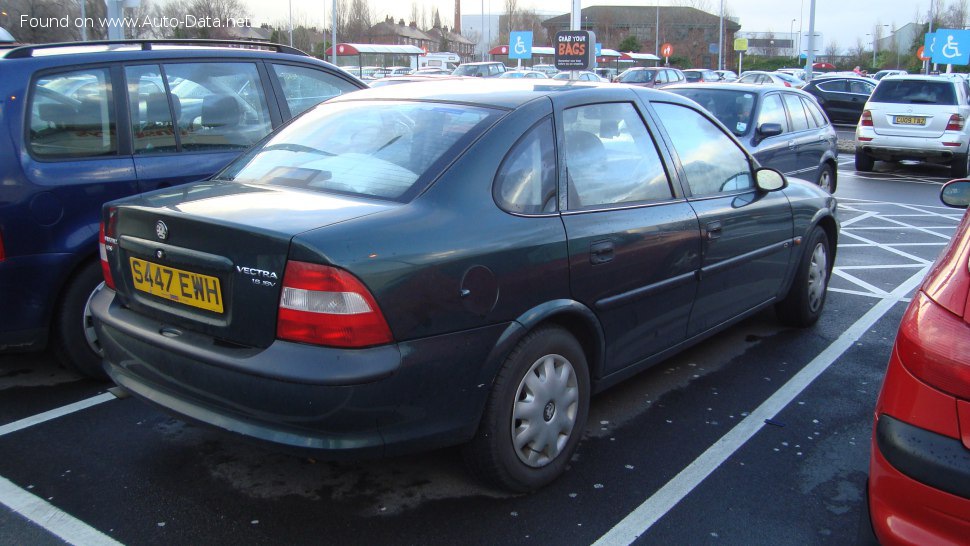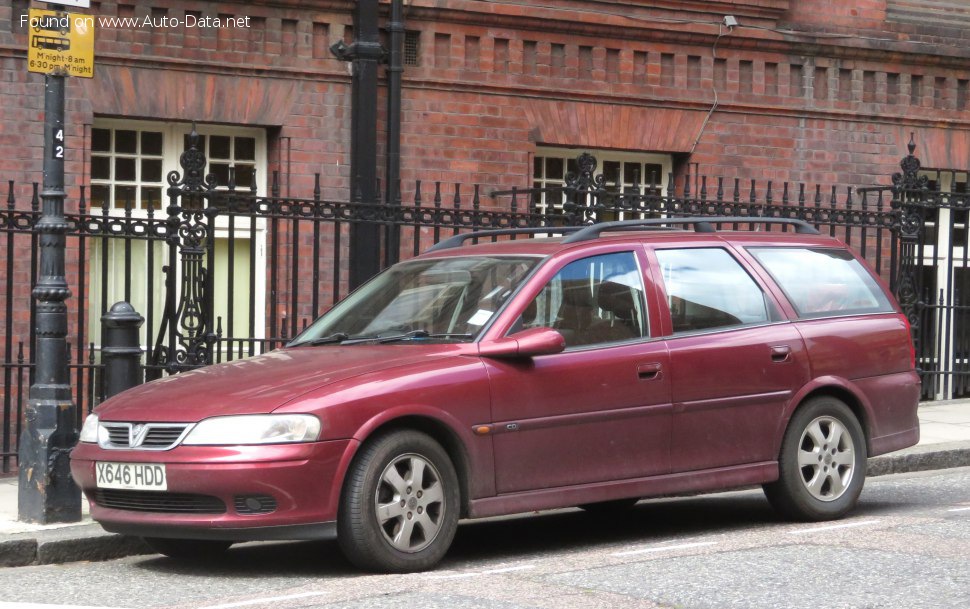
The Vauxhall Vectra B Estate 2.0i 16V, produced between 1995 and 1998, represents a significant iteration in Vauxhall’s mid-size family car lineup. As part of the B generation of the Vectra, this estate (station wagon) model offered a practical and relatively sporty option for families in the United Kingdom and Europe. While not officially sold in the United States, the Vectra B competed with vehicles like the Ford Mondeo and Peugeot 406, offering a blend of comfort, space, and performance. The 2.0i 16V variant, equipped with a 2.0-liter inline-four engine producing 136 horsepower, was a popular choice, balancing fuel economy with adequate power for everyday driving and longer journeys.
Vauxhall Vectra B Estate 2.0i 16V: An Overview
The Vectra B Estate built upon the success of its predecessor, the Vectra A, with a more refined design and improved mechanical components. The estate body style, in particular, catered to buyers needing increased cargo capacity without sacrificing the driving experience of a conventional saloon (sedan). The 2.0i 16V model aimed to provide a sweet spot in the range, offering a noticeable performance upgrade over the base engines while remaining more affordable than the V6 options. It was a common sight on European roads, serving as a reliable and versatile family vehicle.
Engine & Performance
At the heart of the Vectra B Estate 2.0i 16V lies the X20XEV engine, a 1,998 cc (121.93 cubic inches) inline-four cylinder powerplant. This naturally aspirated engine utilizes multi-port fuel injection and a double overhead camshaft (DOHC) valvetrain with four valves per cylinder, contributing to its respectable output of 136 horsepower at 5,600 rpm and 188 Nm (138.66 lb-ft) of torque at 3,400 rpm. This configuration provided a good balance between power and fuel efficiency. The engine’s power-to-weight ratio of 10.1 kg/Hp (98.7 Hp/tonne) and torque-to-weight ratio of 7.3 kg/Nm (136.4 Nm/tonne) translated to reasonably brisk performance for its time. Acceleration from 0 to 60 mph was achieved in approximately 9.5 seconds, while 0-100 km/h took 10 seconds. The vehicle boasted a maximum speed of 207 km/h (128.62 mph). The engine required 4 liters (4.23 US quarts) of engine oil and 7.1 liters (7.5 US quarts) of coolant for optimal operation.
Design & Features
The Vectra B Estate adopted a contemporary design for the mid-1990s, characterized by smooth lines and a relatively understated aesthetic. As a station wagon, its defining feature was the extended roofline and larger rear cargo area. The five-door body style provided easy access for passengers and cargo alike. Inside, the Vectra B offered seating for five occupants and a practical interior layout. While not overtly luxurious, the cabin was designed with functionality in mind. Safety features for the era included an Anti-lock Braking System (ABS), which was becoming increasingly common on vehicles in this segment. The trunk (boot) space was a key selling point, offering a minimum of 460 liters (16.24 cubic feet) with the rear seats up and expanding to a substantial 1,490 liters (52.62 cubic feet) with the seats folded down. The vehicle’s dimensions were 4,490 mm (176.77 inches) in length, 1,710 mm (67.32 inches) in width, and 1,490 mm (58.66 inches) in height, with a wheelbase of 2,637 mm (103.82 inches).
Technical Specifications
| Brand | Vauxhall |
| Model | Vectra |
| Generation | Vectra B Estate |
| Type (Engine) | 2.0i 16V (136 Hp) |
| Start of production | 1995 |
| End of production | 1998 |
| Powertrain Architecture | Internal Combustion engine |
| Body type | Station wagon (estate) |
| Seats | 5 |
| Doors | 5 |
| Fuel consumption (urban) | 12.4 l/100 km (19 US mpg, 22.8 UK mpg) |
| Fuel consumption (extra urban) | 6.6 l/100 km (35.6 US mpg, 42.8 UK mpg) |
| Fuel Type | Petrol (Gasoline) |
| Acceleration 0 – 100 km/h | 10 sec |
| Acceleration 0 – 62 mph | 10 sec |
| Acceleration 0 – 60 mph | 9.5 sec |
| Maximum speed | 207 km/h (128.62 mph) |
| Weight-to-power ratio | 10.1 kg/Hp |
| Weight-to-torque ratio | 7.3 kg/Nm |
| Power | 136 Hp @ 5600 rpm |
| Torque | 188 Nm @ 3400 rpm (138.66 lb.-ft. @ 3400 rpm) |
| Engine layout | Front, Transverse |
| Engine Model/Code | X20XEV |
| Engine displacement | 1998 cm3 (121.93 cu. in.) |
| Number of cylinders | 4 |
| Engine configuration | Inline |
| Cylinder Bore | 86 mm (3.39 in.) |
| Piston Stroke | 86 mm (3.39 in.) |
| Compression ratio | 10.8:1 |
| Number of valves per cylinder | 4 |
| Fuel injection system | Multi-port manifold injection |
| Engine aspiration | Naturally aspirated |
| Valvetrain | DOHC |
| Engine oil capacity | 4 l (4.23 US qt | 3.52 UK qt) |
| Coolant | 7.1 l (7.5 US qt | 6.25 UK qt) |
| Kerb Weight | 1378 kg (3037.97 lbs.) |
| Max. weight | 1960 kg (4321.06 lbs.) |
| Max load | 582 kg (1283.09 lbs.) |
| Trunk (boot) space – minimum | 460 l (16.24 cu. ft.) |
| Trunk (boot) space – maximum | 1490 l (52.62 cu. ft.) |
| Fuel tank capacity | 60 l (15.85 US gal | 13.2 UK gal) |
| Length | 4490 mm (176.77 in.) |
| Width | 1710 mm (67.32 in.) |
| Height | 1490 mm (58.66 in.) |
| Wheelbase | 2637 mm (103.82 in.) |
| Front track | 1464 mm (57.64 in.) |
| Rear track | 1463 mm (57.6 in.) |
| Drivetrain | Front wheel drive |
| Number of gears | 5 gears, manual transmission |
| Front brakes | Ventilated discs |
| Rear brakes | Disc |
| Tires size | 195/65 R15 |
| Wheel rims size | 15 |
The Vauxhall Vectra B Estate 2.0i 16V, while not a performance icon, offered a compelling package for families seeking a practical, reliable, and reasonably efficient vehicle. Its blend of space, comfort, and moderate performance ensured its popularity in the European market during its production run.