
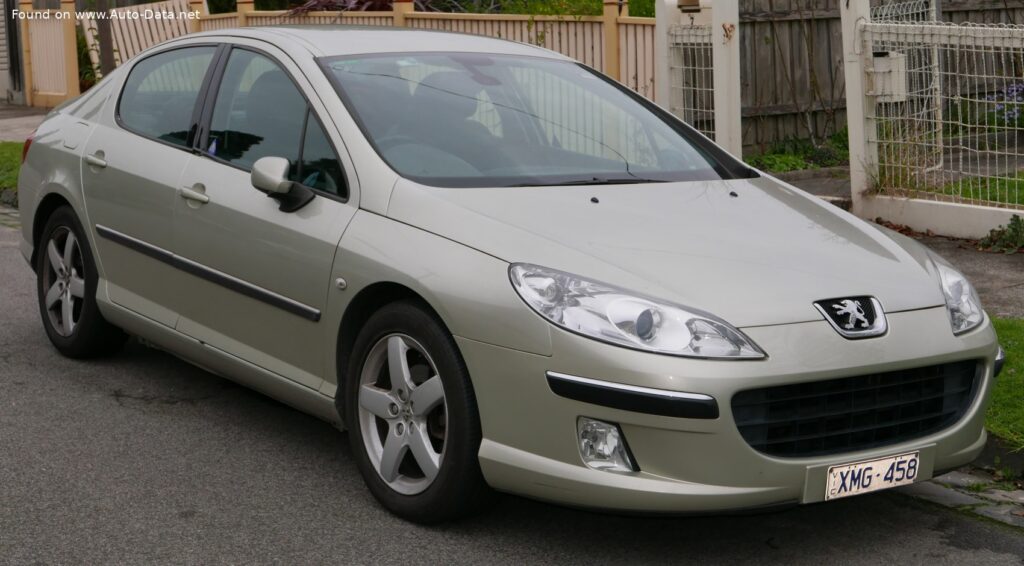
The Peugeot 407 2.0i 16V, produced between April 2004 and August 2005, represents a significant step forward for the French automaker in the mid-size family car segment. Designed as a replacement for the popular 406, the 407 aimed to offer a more modern and sophisticated driving experience, blending European styling with practical functionality. While not initially a major seller in the United States – Peugeot withdrew from the US market in the early 1990s – the 407 was a key model for Peugeot in Europe, competing with vehicles like the Ford Mondeo, Volkswagen Passat, and Opel Vectra. This particular variant, the 2.0i 16V, was a mainstay of the lineup, offering a balance of performance and fuel economy.
Peugeot 407 2.0i 16V: An Overview
The 407 was positioned as a comfortable and refined sedan, emphasizing ride quality and interior space. It marked a departure from the more utilitarian designs of some of its predecessors, adopting a more flowing and contemporary aesthetic. The 2.0i 16V model specifically targeted buyers seeking a responsive and efficient engine without sacrificing everyday usability. Its focus was on providing a smooth and enjoyable driving experience for both commuting and longer journeys.
Engine & Performance
At the heart of the Peugeot 407 2.0i 16V lies a 1.997-liter (121.86 cubic inches) inline-four cylinder gasoline engine. This naturally aspirated engine, designated RFN EW10J4, produces 136 horsepower at 6000 rpm and 190 Nm (140.14 lb.-ft.) of torque at 4100 rpm. The engine utilizes a multi-port fuel injection system and a compression ratio of 10.8:1. Power is delivered to the front wheels via a five-speed manual transmission. Performance figures include a 0-100 km/h (0-62 mph) acceleration time of 10.3 seconds and a 0-60 mph time of approximately 9.8 seconds. The vehicle boasts a maximum speed of 212 km/h (131.73 mph). The engine’s power-to-weight ratio is 96.1 horsepower per tonne, and the torque-to-weight ratio is 134.3 Nm per tonne, contributing to a reasonably spirited driving experience.
Design & Features
The Peugeot 407 is a four-door sedan with a sleek and aerodynamic profile. Its design language, penned under the direction of Gilles Vidal, was characterized by a distinctive front end with a prominent grille and elongated headlights. The interior was designed with comfort and practicality in mind, offering seating for five passengers. Standard features included ABS (Anti-lock Braking System) for enhanced safety, and a relatively spacious trunk with a minimum capacity of 407 liters (14.37 cubic feet). The suspension utilizes a spring strut setup for both the front and rear axles, providing a comfortable ride. The 407’s dimensions are as follows: length 4675 mm (184.06 in), width 1811 mm (71.3 in), and height 1447 mm (56.97 in). The wheelbase measures 2725 mm (107.28 in), and it rides on a track of 1552 mm (61.1 in) at the front and 1518 mm (59.76 in) at the rear. The vehicle is equipped with 205/60 R16 tires mounted on 6.5 x 16 inch wheel rims.
Technical Specifications
| Brand | Peugeot |
| Model | 407 |
| Generation | 407 |
| Type (Engine) | 2.0i 16V (136 Hp) |
| Start of production | April, 2004 |
| End of production | August, 2005 |
| Powertrain Architecture | Internal Combustion engine |
| Body type | Sedan |
| Seats | 5 |
| Doors | 4 |
| Fuel consumption (urban) | 11.4 l/100 km (20.6 US mpg, 24.8 UK mpg, 8.8 km/l) |
| Fuel consumption (extra urban) | 6.4 l/100 km (36.8 US mpg, 44.1 UK mpg, 15.6 km/l) |
| Fuel consumption (combined) | 8.2 l/100 km (28.7 US mpg, 34.4 UK mpg, 12.2 km/l) |
| Fuel Type | Petrol (Gasoline) |
| Acceleration 0 – 100 km/h | 10.3 sec |
| Acceleration 0 – 62 mph | 10.3 sec |
| Acceleration 0 – 60 mph | 9.8 sec |
| Maximum speed | 212 km/h (131.73 mph) |
| Weight-to-power ratio | 10.4 kg/Hp |
| Weight-to-torque ratio | 7.4 kg/Nm |
| Power | 136 Hp @ 6000 rpm |
| Torque | 190 Nm @ 4100 rpm (140.14 lb.-ft. @ 4100 rpm) |
| Engine layout | Front, Transverse |
| Engine Model/Code | RFN EW10J4 |
| Engine displacement | 1997 cm3 (121.86 cu. in.) |
| Number of cylinders | 4 |
| Engine configuration | Inline |
| Cylinder Bore | 85 mm (3.35 in.) |
| Piston Stroke | 88 mm (3.46 in.) |
| Compression ratio | 10.8:1 |
| Number of valves per cylinder | 4 |
| Fuel injection system | Multi-port manifold injection |
| Engine aspiration | Naturally aspirated |
| Engine oil capacity | 4.25 l (4.49 US qt | 3.74 UK qt) |
| Coolant capacity | 7.3 l (7.71 US qt | 6.42 UK qt) |
| Kerb Weight | 1415 kg (3119.54 lbs.) |
| Max. weight | 1998 kg (4404.84 lbs.) |
| Max load | 583 kg (1285.29 lbs.) |
| Trunk (boot) space – minimum | 407 l (14.37 cu. ft.) |
| Fuel tank capacity | 66 l (17.44 US gal | 14.52 UK gal) |
| Length | 4675 mm (184.06 in.) |
| Width | 1811 mm (71.3 in.) |
| Height | 1447 mm (56.97 in.) |
| Wheelbase | 2725 mm (107.28 in.) |
| Front track | 1552 mm (61.1 in.) |
| Rear track | 1518 mm (59.76 in.) |
| Drivetrain Architecture | Front wheel drive |
| Number of gears | 5 |
| Gearbox type | Manual transmission |
The Peugeot 407 2.0i 16V, while not a performance icon, offered a compelling package for buyers seeking a comfortable, stylish, and reasonably efficient mid-size sedan. Its blend of European design and engineering made it a popular choice in its target markets, and it remains a recognizable and respected vehicle today.
