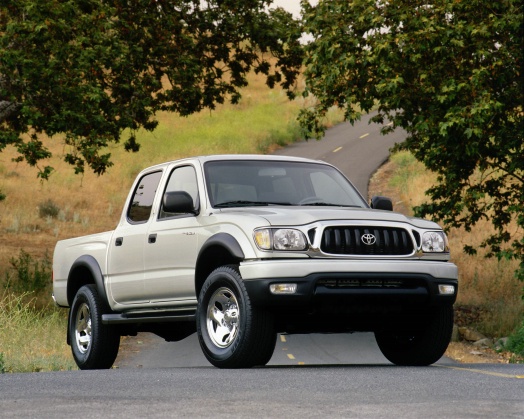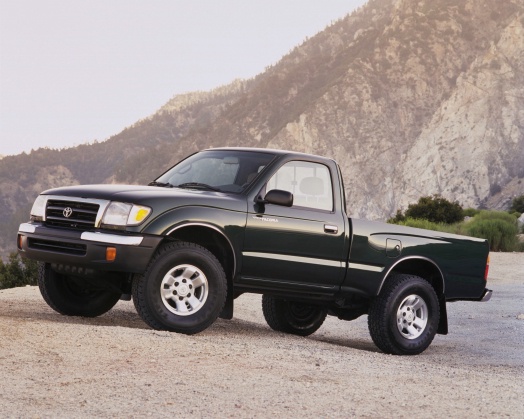
The Toyota Tacoma I Single Cab (facelift 2000) 2.7 4WD represents a significant iteration of Toyota’s popular compact pickup truck, designed primarily for the North American market. Introduced as part of the first-generation Tacoma (1995-2004), the 2000 facelift brought updated styling and refinements to an already successful formula. This model catered to buyers seeking a rugged, reliable, and versatile vehicle for both work and recreational purposes. While not initially designed for the European or Asian markets in this specific configuration, the Tacoma’s reputation for durability and off-road capability resonated globally, influencing Toyota’s pickup truck strategy worldwide. The Single Cab configuration, with its two-door layout, prioritized practicality and cargo space over passenger comfort, making it a popular choice for tradespeople and outdoor enthusiasts.
Toyota Tacoma I Single Cab (Facelift 2000): A Detailed Overview
The facelifted 2000 Toyota Tacoma Single Cab 2.7 4WD built upon the foundation laid by the original Tacoma, addressing some early criticisms and enhancing its overall appeal. This generation Tacoma was a departure from the smaller, more utilitarian trucks of the past, offering a more refined driving experience and a wider range of features. The 4WD system, a key selling point, provided enhanced traction and capability in challenging conditions, solidifying the Tacoma’s reputation as a capable off-road vehicle. The 2.7-liter engine, while not the most powerful option available in the Tacoma lineup, offered a balance of fuel efficiency and adequate performance for most everyday tasks.
Engine & Performance
Powering the 2000 Toyota Tacoma Single Cab 2.7 4WD is the 3RZ-FE 2.7-liter inline-four cylinder gasoline engine. This naturally aspirated engine produces 182 horsepower at 4800 rpm and 240 Newton-meters (177.01 lb.-ft.) of torque at 4000 rpm. The engine features a double overhead camshaft (DOHC) valvetrain with four valves per cylinder and utilizes a multi-port fuel injection system. This configuration delivers a power-to-weight ratio of 146 horsepower per tonne and a torque-to-weight ratio of 192.5 Nm per tonne. The engine’s longitudinal front-engine layout contributes to balanced handling. The Tacoma is equipped with a 5-speed manual transmission, providing drivers with direct control over gear selection. The 4WD system allows for on-demand engagement, enhancing traction in off-road or inclement weather conditions. The engine’s relatively modest output, combined with the truck’s weight of 1247 kg (2749.16 lbs), results in a practical and efficient powertrain suitable for a variety of applications.
Design & Features
The 2000 Toyota Tacoma Single Cab is a two-door, two-seat pickup truck characterized by its rugged and functional design. The facelift brought subtle styling updates to the front fascia, including a revised grille and headlights. The body-on-frame construction provides a robust and durable platform, capable of handling demanding workloads and off-road terrain. The truck’s dimensions – 4686 mm (184.49 in) in length, 1689 mm (66.5 in) in width, and 1570 mm (61.81 in) in height – provide a compact footprint while still offering a usable cargo bed. Ground clearance is a respectable 215 mm (8.46 in), further enhancing its off-road capability. Safety features for the era were relatively basic, typically including seatbelts and a driver’s side airbag. The focus was more on providing a durable and reliable work truck than on advanced safety technologies. The interior is spartan but functional, prioritizing durability and ease of cleaning over luxury. The Single Cab configuration offers limited passenger space, but maximizes cargo capacity. The Tacoma’s design reflects its intended purpose: a tough, dependable truck capable of tackling a wide range of tasks.
Technical Specifications
| Brand | Toyota |
| Model | Tacoma |
| Generation | Tacoma I Single Cab (facelift 2000) |
| Type (Engine) | 2.7 (182 Hp) 4WD |
| Start of production | 2000 |
| End of production | 2004 |
| Powertrain Architecture | Internal Combustion engine |
| Body type | Pick-up |
| Seats | 2 |
| Doors | 2 |
| Fuel Type | Petrol (Gasoline) |
| Weight-to-power ratio | 6.9 kg/Hp |
| Hp/tonne | 146 Hp/tonne |
| Weight-to-torque ratio | 5.2 kg/Nm |
| Nm/tonne | 192.5 Nm/tonne |
| Power | 182 Hp @ 4800 rpm |
| Power per litre | 67.6 Hp/l |
| Torque | 240 Nm @ 4000 rpm / 177.01 lb.-ft. @ 4000 rpm |
| Engine layout | Front, Longitudinal |
| Engine Model/Code | 3RZ-FE |
| Engine displacement | 2694 cm3 / 164.4 cu. in. |
| Number of cylinders | 4 |
| Engine configuration | Inline |
| Cylinder Bore | 95 mm / 3.74 in. |
| Piston Stroke | 95 mm / 3.74 in. |
| Compression ratio | 9.5:1 |
| Number of valves per cylinder | 4 |
| Fuel injection system | Multi-port manifold injection |
| Engine aspiration | Naturally aspirated engine |
| Valvetrain | DOHC |
| Engine oil capacity | 5.4 l / 5.71 US qt | 4.75 UK qt |
| Coolant | 8.2 l / 8.66 US qt | 7.21 UK qt |
| Kerb Weight | 1247 kg / 2749.16 lbs |
| Max. weight | 1928 kg / 4250.51 lbs |
| Max load | 681 kg / 1501.35 lbs |
| Fuel tank capacity | 57 l / 15.06 US gal | 12.54 UK gal |
| Length | 4686 mm / 184.49 in |
| Width | 1689 mm / 66.5 in |
| Height | 1570 mm / 61.81 in |
| Wheelbase | 2624 mm / 103.31 in |
| Front track | 1395 mm / 54.92 in |
| Rear (Back) track | 1415 mm / 55.71 in |
| Ride height (ground clearance) | 215 mm / 8.46 in |
| Drive wheel | All wheel drive (4×4) |
| Number of gears and type of gearbox | 5 gears, manual transmission |
| Front brakes | Ventilated discs |
| Rear brakes | Drum |
| Tires size | 205/75 R15; 235/55 R16 |
| Wheel rims size | 15; 16 |