
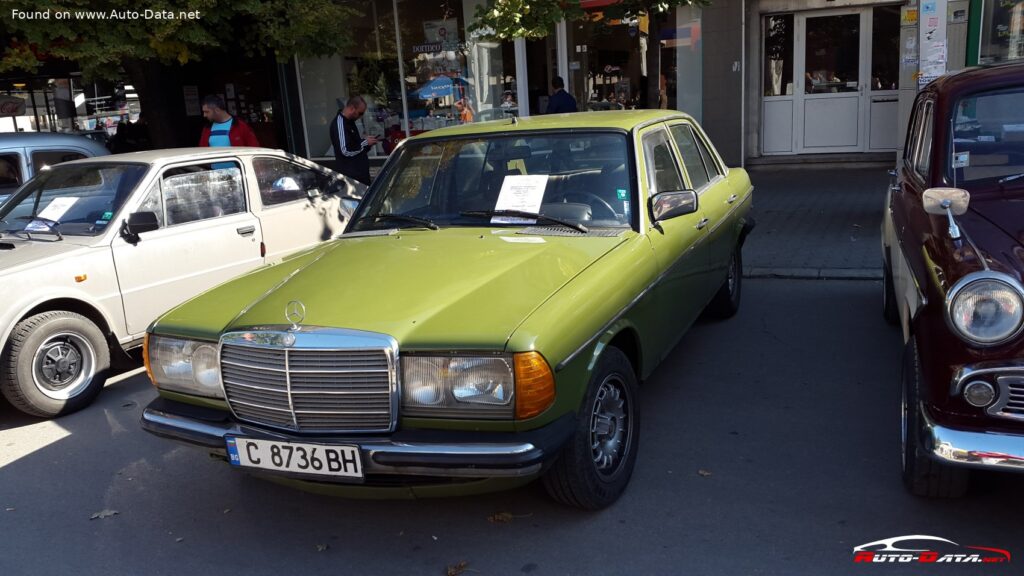
The Mercedes-Benz W123, produced from July 1975 to April 1978, represents a pivotal generation in the lineage of the Mercedes-Benz E-Class. Positioned as a mid-size luxury sedan, the W123 succeeded the W114 and W115 models, establishing a new benchmark for safety, build quality, and refinement in its segment. The 280 E variant, powered by a 2.8-liter inline-six engine, was a flagship model offering a blend of performance and comfort. The W123 was not initially a major seller in the United States, but its reputation for durability and engineering excellence gradually gained traction, laying the groundwork for Mercedes-Benz’s future success in the American market.
Mercedes-Benz W123 280 E: A Detailed Overview
The W123 series was a significant departure from its predecessors, incorporating advancements in crumple zone technology and overall structural integrity. It was available in sedan, coupe (CE), and estate (T) body styles, catering to a diverse range of customer needs. The 280 E, specifically, was aimed at buyers seeking a more powerful and refined experience than the four-cylinder models. Its robust engine and sophisticated suspension made it a capable grand tourer, equally at home on autobahns and winding country roads.
Engine & Performance
The heart of the 280 E is the M 110 E 28 inline-six engine, a 2746 cc (167.57 cu. in.) naturally aspirated powerplant. This engine produces 177 horsepower at 6000 rpm and 234 Nm (172.59 lb.-ft.) of torque at 4500 rpm, delivering a power-to-weight ratio of 8.3 kg/Hp. The engine features multi-port manifold fuel injection and a double overhead camshaft (DOHC) valvetrain, contributing to its smooth operation and responsive performance. Acceleration from 0 to 100 km/h (0-62 mph) takes 9.9 seconds, while 0 to 60 mph is achieved in approximately 9.4 seconds. The 280 E boasts a top speed of 200 km/h (124.27 mph). The engine’s longitudinal front-engine layout and rear-wheel drive configuration provide a balanced driving experience. The engine requires 7.5 liters (7.93 US qt) of oil and 10 liters (10.57 US qt) of coolant.
Design & Features
The W123 280 E is a classic example of 1970s Mercedes-Benz design – understated elegance and functional practicality. The sedan body style offers seating for five passengers and features four doors for easy access. The exterior is characterized by clean lines, a prominent grille with the three-pointed star, and relatively modest chrome accents. Inside, the cabin is well-appointed with high-quality materials, offering a comfortable and refined environment. Safety was a key consideration in the W123’s design, with features like crumple zones, reinforced passenger cell, and disc brakes on all four wheels. The hydraulic power steering provides ease of maneuverability, and the suspension – featuring a double wishbone front setup and a trailing arm rear setup – delivers a comfortable ride. The 280 E came standard with 195/70 R14 tires mounted on 6J x 14 inch wheel rims.
Technical Specifications
| Brand | Mercedes-Benz |
| Model | W123 |
| Generation | W123 |
| Type (Engine) | 280 E (177 Hp) |
| Start of production | July, 1975 |
| End of production | April, 1978 |
| Powertrain Architecture | Internal Combustion engine |
| Body type | Sedan |
| Seats | 5 |
| Doors | 4 |
| Fuel consumption (urban) | 18.3 l/100 km (12.9 US mpg, 15.4 UK mpg, 5.5 km/l) |
| Fuel consumption (extra urban) | 9.5 l/100 km (24.8 US mpg, 29.7 UK mpg, 10.5 km/l) |
| Fuel Type | Petrol (Gasoline) |
| Acceleration 0 – 100 km/h | 9.9 sec |
| Acceleration 0 – 62 mph | 9.9 sec |
| Acceleration 0 – 60 mph | 9.4 sec |
| Maximum speed | 200 km/h (124.27 mph) |
| Weight-to-power ratio | 8.3 kg/Hp |
| Weight-to-torque ratio | 6.3 kg/Nm |
| Power | 177 Hp @ 6000 rpm |
| Power per litre | 64.5 Hp/l |
| Torque | 234 Nm @ 4500 rpm (172.59 lb.-ft. @ 4500 rpm) |
| Engine layout | Front, Longitudinal |
| Engine Model/Code | M 110 E 28 / 110.984 |
| Engine displacement | 2746 cm3 (167.57 cu. in.) |
| Number of cylinders | 6 |
| Engine configuration | Inline |
| Cylinder Bore | 86 mm (3.39 in.) |
| Piston Stroke | 78.8 mm (3.1 in.) |
| Compression ratio | 8.7:1 |
| Number of valves per cylinder | 2 |
| Fuel injection system | Multi-port manifold injection |
| Engine aspiration | Naturally aspirated engine |
| Valvetrain | DOHC |
| Engine oil capacity | 7.5 l (7.93 US qt | 6.6 UK qt) |
| Coolant | 10 l (10.57 US qt | 8.8 UK qt) |
| Kerb Weight | 1475 kg (3251.82 lbs.) |
| Max. weight | 1995 kg (4398.22 lbs.) |
| Max load | 520 kg (1146.4 lbs.) |
| Fuel tank capacity | 80 l (21.13 US gal | 17.6 UK gal) |
| Length | 4725 mm (186.02 in.) |
| Width | 1786 mm (70.31 in.) |
| Height | 1438 mm (56.61 in.) |
| Wheelbase | 2795 mm (110.04 in.) |
| Front track | 1488 mm (58.58 in.) |
| Rear track | 1446 mm (56.93 in.) |
| Drivetrain Architecture | Rear wheel drive |
| Drive wheel | Rear wheel drive |
| Number of gears | 4 gears, manual transmission |
| Front suspension | Double wishbone |
| Rear suspension | Trailing arm |
| Front brakes | Disc |
| Rear brakes | Disc |
| Steering type | Cone worm with recirculation balls |
| Power steering | Hydraulic Steering |
| Tires size | 195/70 R14 |
| Wheel rims size | 6J x 14 |
The Mercedes-Benz W123 280 E remains a highly sought-after classic car, appreciated for its robust engineering, timeless design, and comfortable driving experience. Its enduring appeal is a testament to the quality and innovation that defined Mercedes-Benz during this era.
