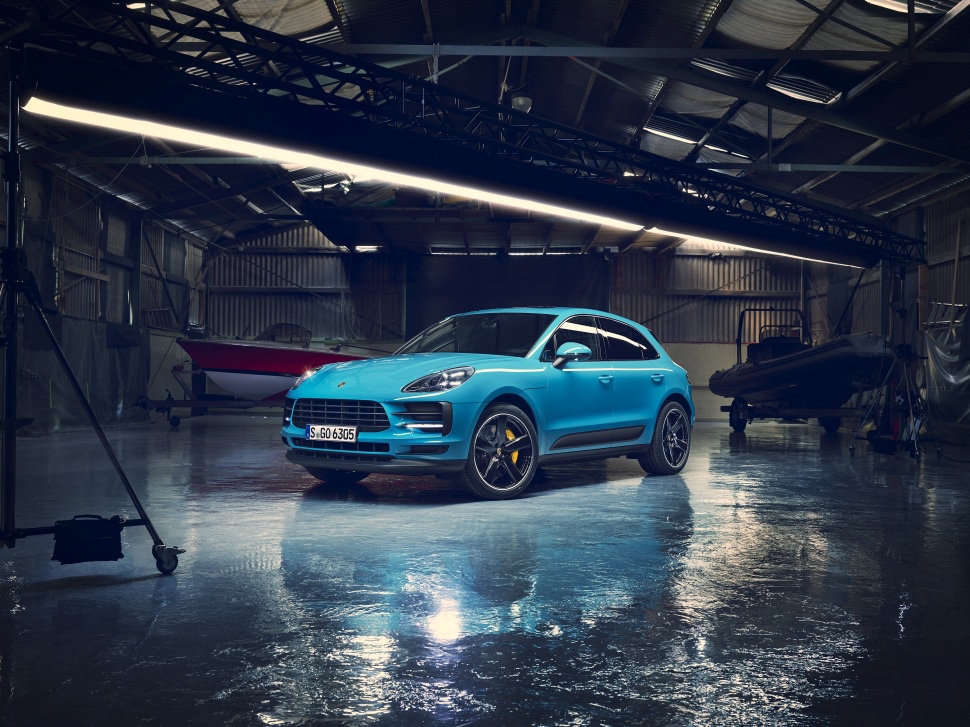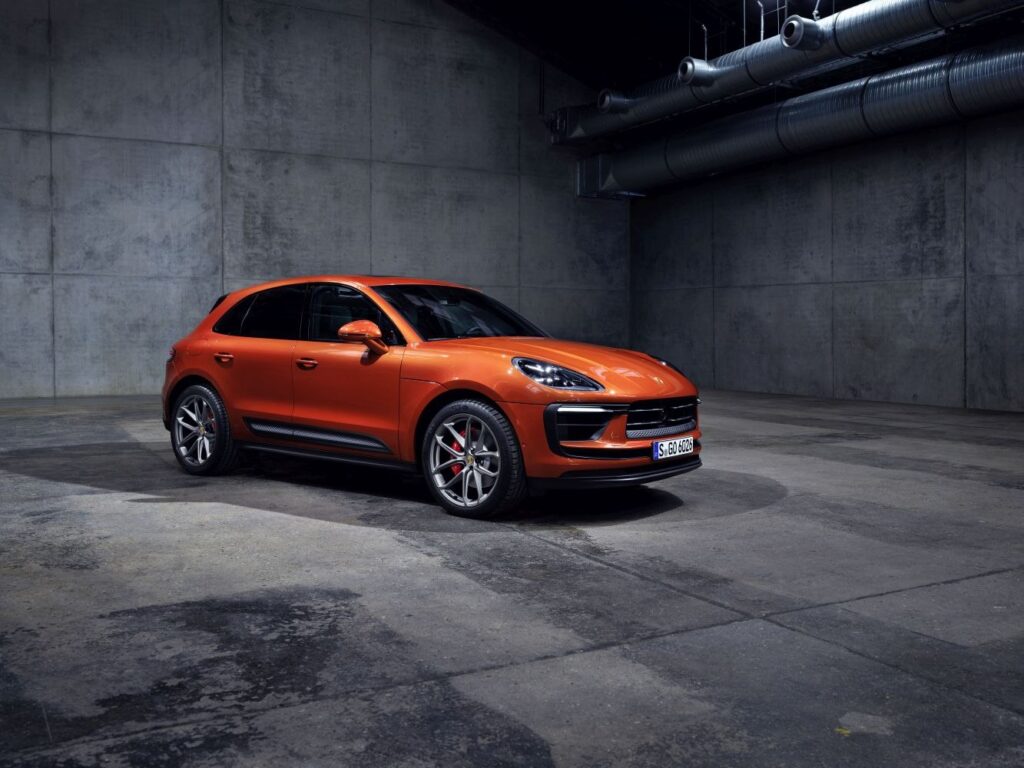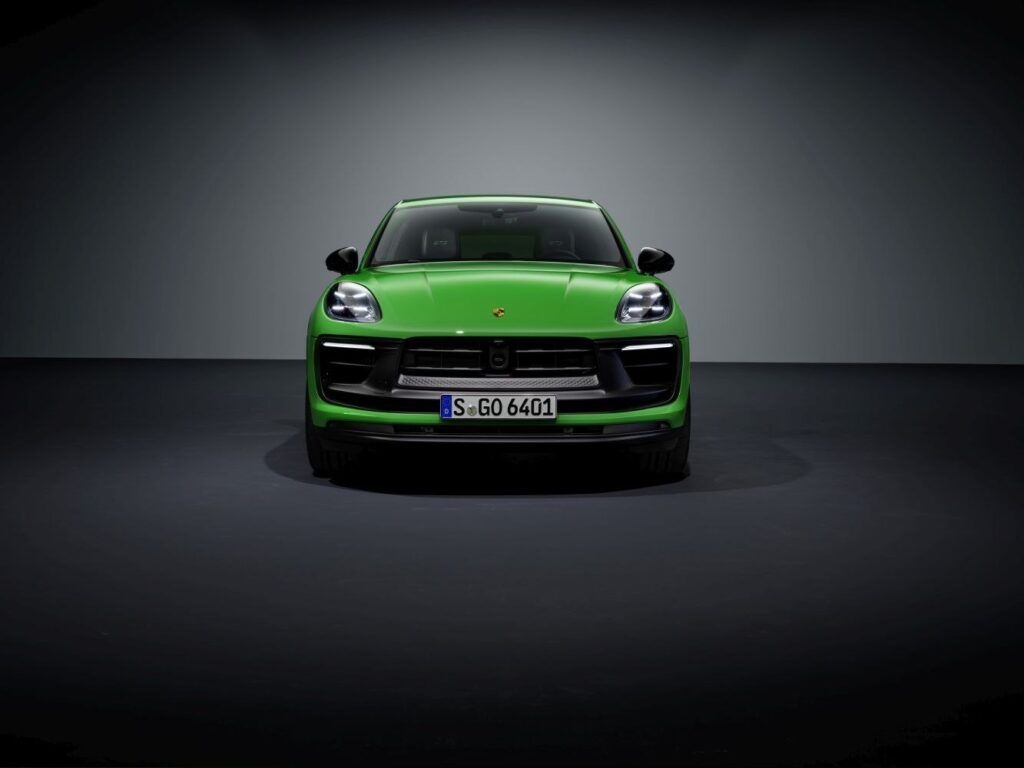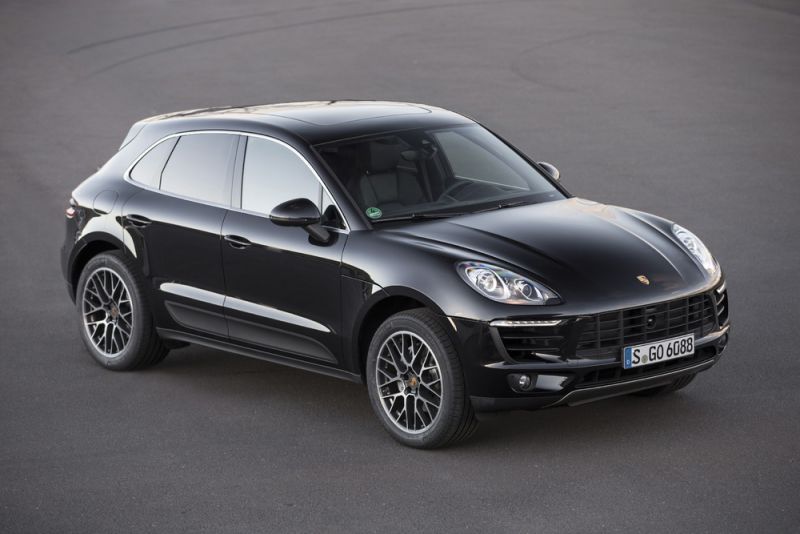
The Porsche Macan I (95B) Turbo, produced from April 2014 to August 2018, represents Porsche’s entry into the burgeoning compact luxury SUV segment. Positioned below the Cayenne in Porsche’s lineup, the Macan aimed to deliver the brand’s signature driving dynamics in a more accessible and practical package. The first generation Macan, designated the 95B, quickly gained recognition for its engaging handling, powerful engine options, and high-quality interior. The Turbo model, equipped with a 3.6-liter twin-turbocharged V6 engine, served as the performance flagship of the range, offering a compelling blend of luxury and sportiness. While primarily sold in global markets, including Europe and Asia, the Macan found a significant customer base in North America, appealing to buyers seeking a dynamic and refined SUV.
Porsche Macan I (95B) Turbo: A Detailed Overview
The Macan Turbo distinguished itself through its focus on driver engagement. Unlike some competitors prioritizing comfort above all else, the Macan Turbo prioritized a responsive and connected driving experience. This was achieved through a combination of a powerful engine, a sophisticated all-wheel-drive system (Porsche Traction Management or PTM), and a finely tuned chassis. The vehicle’s relatively compact size and lower center of gravity, compared to the Cayenne, further contributed to its agile handling characteristics. The Macan Turbo was not simply an SUV; it was a Porsche designed to deliver a sporting experience in a versatile body style.
Engine & Performance
At the heart of the Macan Turbo lies a 3.6-liter twin-turbocharged V6 engine, designated the CTLA. This powerplant produces 400 horsepower at 6000 rpm and 550 Newton-meters (405.66 lb.-ft.) of torque between 1350 and 4500 rpm. The engine utilizes direct fuel injection and an intercooler to maximize efficiency and power output. This robust engine is paired with Porsche’s seven-speed PDK (Porsche Doppelkupplung) dual-clutch automatic transmission, which provides incredibly quick and smooth gear changes. The combination results in impressive acceleration figures: 0 to 100 km/h (0-62 mph) in 4.6 to 4.8 seconds, and 0 to 60 mph in 4.6 seconds. The Macan Turbo achieves a maximum speed of 266 km/h (165.28 mph). Fuel consumption is rated at 9.2 – 8.9 liters per 100 kilometers (25.6 – 26.4 US mpg), with CO2 emissions ranging from 216 to 208 g/km, meeting Euro 6 emission standards.
Design & Features
The Porsche Macan I (95B) Turbo is a five-door SUV with seating for five passengers. Its exterior design embodies Porsche’s design language, featuring a sleek profile, sculpted lines, and a sporty stance. The front fascia is characterized by large air intakes and distinctive headlights, while the rear features a sloping roofline and integrated spoiler. The interior is meticulously crafted with high-quality materials and a driver-focused layout. Standard features included leather upholstery, a touchscreen infotainment system, and a comprehensive suite of safety technologies. The Macan Turbo also offered a range of optional extras, allowing buyers to personalize their vehicle to their specific preferences. Trunk space is a practical 500 liters (17.66 cu. ft.) with the rear seats up, expanding to 1500 liters (52.97 cu. ft.) when folded down. The vehicle’s dimensions are: length 4699 mm (185 in), width 1923 mm (75.71 in), and height 1624 mm (63.94 in), with a wheelbase of 2807 mm (110.51 in).
Technical Specifications
| Brand | Porsche |
| Model | Macan |
| Generation | Macan I (95B) |
| Type (Engine) | Turbo 3.6 V6 (400 Hp) PDK |
| Start of production | April, 2014 |
| End of production | August, 2018 |
| Powertrain Architecture | Internal Combustion engine |
| Body type | SUV |
| Seats | 5 |
| Doors | 5 |
| Fuel consumption (urban) | 11.8 – 11.5 l/100 km (19.9 – 20.5 US mpg) |
| Fuel consumption (extra urban) | 7.8 – 7.5 l/100 km (30.2 – 31.4 US mpg) |
| Fuel consumption (combined) | 9.2 – 8.9 l/100 km (25.6 – 26.4 US mpg) |
| CO2 emissions | 216 – 208 g/km |
| Fuel Type | Petrol (Gasoline) |
| Acceleration 0 – 100 km/h | 4.8 – 4.6 sec |
| Acceleration 0 – 62 mph | 4.8 – 4.6 sec |
| Acceleration 0 – 60 mph | 4.6 sec |
| Maximum speed | 266 km/h (165.28 mph) |
| Emission standard | Euro 6 |
| Weight-to-power ratio | 4.8 kg/Hp, 207.8 Hp/tonne |
| Weight-to-torque ratio | 3.5 kg/Nm, 285.7 Nm/tonne |
| Power | 400 Hp @ 6000 rpm |
| Power per litre | 111 Hp/l |
| Torque | 550 Nm @ 1350-4500 rpm (405.66 lb.-ft. @ 1350-4500 rpm) |
| Engine layout | Front, Longitudinal |
| Engine Model/Code | CTLA |
| Engine displacement | 3604 cm3 (219.93 cu. in.) |
| Number of cylinders | 6 |
| Engine configuration | V-engine |
| Cylinder Bore | 96 mm (3.78 in.) |
| Piston Stroke | 83 mm (3.27 in.) |
| Compression ratio | 10.5:1 |
| Number of valves per cylinder | 4 |
| Fuel injection system | Direct injection |
| Engine aspiration | BiTurbo, Intercooler |
| Engine oil capacity | 7 l (7.4 US qt | 6.16 UK qt) |
| Kerb Weight | 1925 kg (4243.9 lbs.) |
| Max. weight | 2550 kg (5621.79 lbs.) |
| Max load | 625 kg (1377.89 lbs.) |
| Trunk (boot) space – minimum | 500 l (17.66 cu. ft.) |
| Trunk (boot) space – maximum | 1500 l (52.97 cu. ft.) |
| Fuel tank capacity | 75 l (19.81 US gal | 16.5 UK gal) |
| Length | 4699 mm (185 in.) |
| Width | 1923 mm (75.71 in.) |
| Height | 1624 mm (63.94 in.) |
| Wheelbase | 2807 mm (110.51 in.) |
| Front track | 1655 mm (65.16 in.) |
| Rear (Back) track | 1651 mm (65 in.) |
| Drag coefficient (Cd) | 0.37 |
| Drive wheel | All wheel drive (4×4) |
| Number of gears and type of gearbox | 7 gears, automatic transmission PDK |
| Front suspension | Independent multi-link suspension |
| Rear suspension | Independent on trapezoidal lever |
| Front brakes | Ventilated discs |
| Rear brakes | Ventilated discs |
| Assisting systems | ABS (Anti-lock braking system) |
| Steering type | Steering rack and pinion |
| Tires size | 235/55 R19 101Y; 255/50 R19 103Y |
| Wheel rims size | 8J x 19; 9J x 19 |
The Porsche Macan I (95B) Turbo established a benchmark in the compact luxury SUV segment, offering a compelling combination of performance, luxury, and practicality. Its success paved the way for subsequent generations and cemented Porsche’s position as a leader in the SUV market.