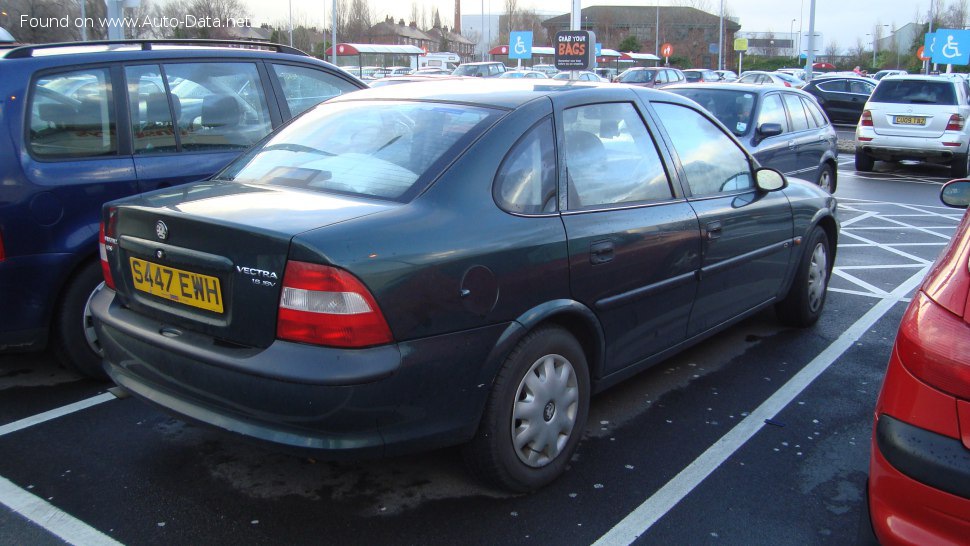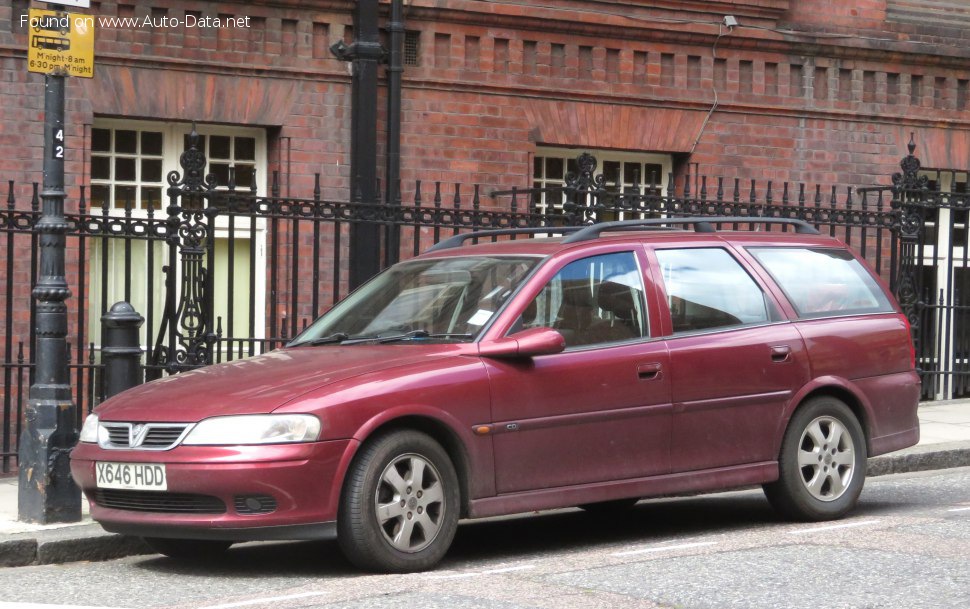
The Vauxhall Vectra B Estate 2.5i V6 was a station wagon produced by Vauxhall, the British marque then under General Motors ownership, between 2000 and 2002. Part of the B generation of the Vectra, this model aimed to provide a practical and relatively sporty option within the mid-size family car segment in the United Kingdom and other European markets. While not officially sold in the United States, understanding the Vectra B Estate provides insight into the European automotive landscape of the early 2000s, where station wagons remained a popular choice for families.
Vauxhall Vectra B Estate 2.5i V6: Overview
The Vectra B Estate, and specifically the 2.5i V6 variant, represented a step up in terms of performance and refinement compared to the more common four-cylinder models. It catered to buyers who needed the space of a station wagon but didn’t want to compromise on driving enjoyment. The Vectra B generation itself was a significant update over its predecessor, offering improved styling, interior quality, and technology. The estate version, or “Tourer” as it was sometimes called, further enhanced the practicality with a generous cargo capacity.
Engine & Performance
The heart of the Vectra B Estate 2.5i V6 is its 2.5-liter, naturally aspirated V6 engine, designated the Y26SE. This engine produced 170 horsepower at 5800 rpm and 230 Nm (169.64 lb.-ft.) of torque at 3200 rpm. The power output translates to a 0-60 mph acceleration time of approximately 8.6 seconds and a top speed of 222 km/h (137.94 mph). The engine’s configuration – a transverse-mounted V6 – was relatively uncommon at the time, contributing to a more balanced weight distribution. Power is delivered to the front wheels via a five-speed manual transmission. The engine’s specific output is 68.1 horsepower per liter, a respectable figure for a naturally aspirated engine of this era. The weight-to-power ratio of 8.2 kg/Hp and weight-to-torque ratio of 6.1 kg/Nm further highlight the vehicle’s performance capabilities.
Design & Features
The Vectra B Estate featured a contemporary design for the early 2000s, characterized by smooth lines and a relatively understated aesthetic. As a station wagon, its primary focus was practicality. The five-door body style provided easy access to the spacious interior, which comfortably seated five passengers. A key selling point was the large cargo area, offering a minimum of 460 liters (16.24 cu. ft.) with the rear seats up and expanding to a substantial 1490 liters (52.62 cu. ft.) with the seats folded down.
Safety features for the time included ABS (Anti-lock Braking System) as standard. While lacking the advanced safety systems found in modern vehicles, the Vectra B Estate offered a reasonable level of protection for its occupants. Other features included ventilated disc brakes on the front and disc brakes on the rear, providing adequate stopping power. The vehicle rode on 7J x 16 inch wheel rims fitted with 205/55 R16 tires.
Technical Specifications
| Brand | Vauxhall |
| Model | Vectra |
| Generation | Vectra B Estate |
| Type (Engine) | 2.5i V6 (170 Hp) |
| Start of production | 2000 |
| End of production | 2002 |
| Powertrain Architecture | Internal Combustion engine |
| Body type | Station wagon (estate) |
| Seats | 5 |
| Doors | 5 |
| Fuel consumption (urban) | 14.3 l/100 km (16.4 US mpg / 19.8 UK mpg) |
| Fuel consumption (extra urban) | 7.5 l/100 km (31.4 US mpg / 37.7 UK mpg) |
| Fuel Type | Petrol (Gasoline) |
| Acceleration 0 – 100 km/h | 9 sec |
| Acceleration 0 – 62 mph | 9 sec |
| Acceleration 0 – 60 mph | 8.6 sec |
| Maximum speed | 222 km/h (137.94 mph) |
| Weight-to-power ratio | 8.2 kg/Hp |
| Weight-to-torque ratio | 6.1 kg/Nm |
| Power | 170 Hp @ 5800 rpm |
| Power per litre | 68.1 Hp/l |
| Torque | 230 Nm @ 3200 rpm (169.64 lb.-ft. @ 3200 rpm) |
| Engine layout | Front, Transverse |
| Engine Model/Code | Y26SE |
| Engine displacement | 2498 cm3 (152.44 cu. in.) |
| Number of cylinders | 6 |
| Engine configuration | V-engine |
| Compression ratio | 10:1 |
| Number of valves per cylinder | 4 |
| Fuel injection system | Multi-port manifold injection |
| Engine aspiration | Naturally aspirated engine |
| Valvetrain | DOHC |
| Engine oil capacity | 4.75 l (5.02 US qt | 4.18 UK qt) |
| Coolant capacity | 7.7 l (8.14 US qt | 6.78 UK qt) |
| Kerb Weight | 1397 kg (3079.86 lbs.) |
| Max. weight | 1965 kg (4332.08 lbs.) |
| Max load | 568 kg (1252.23 lbs.) |
| Trunk (boot) space – minimum | 460 l (16.24 cu. ft.) |
| Trunk (boot) space – maximum | 1490 l (52.62 cu. ft.) |
| Fuel tank capacity | 60 l (15.85 US gal | 13.2 UK gal) |
| Length | 4490 mm (176.77 in.) |
| Width | 1710 mm (67.32 in.) |
| Height | 1490 mm (58.66 in.) |
| Wheelbase | 2637 mm (103.82 in.) |
| Front track | 1464 mm (57.64 in.) |
| Rear track | 1463 mm (57.6 in.) |
| Drivetrain Architecture | Front wheel drive |
| Number of gears | 5 |
| Gearbox type | Manual transmission |
The Vauxhall Vectra B Estate 2.5i V6, while not a high-volume seller, offered a compelling combination of practicality, performance, and refinement for European buyers in the early 2000s. It represents a significant example of the station wagon’s enduring appeal in a market increasingly focused on SUVs and crossovers.