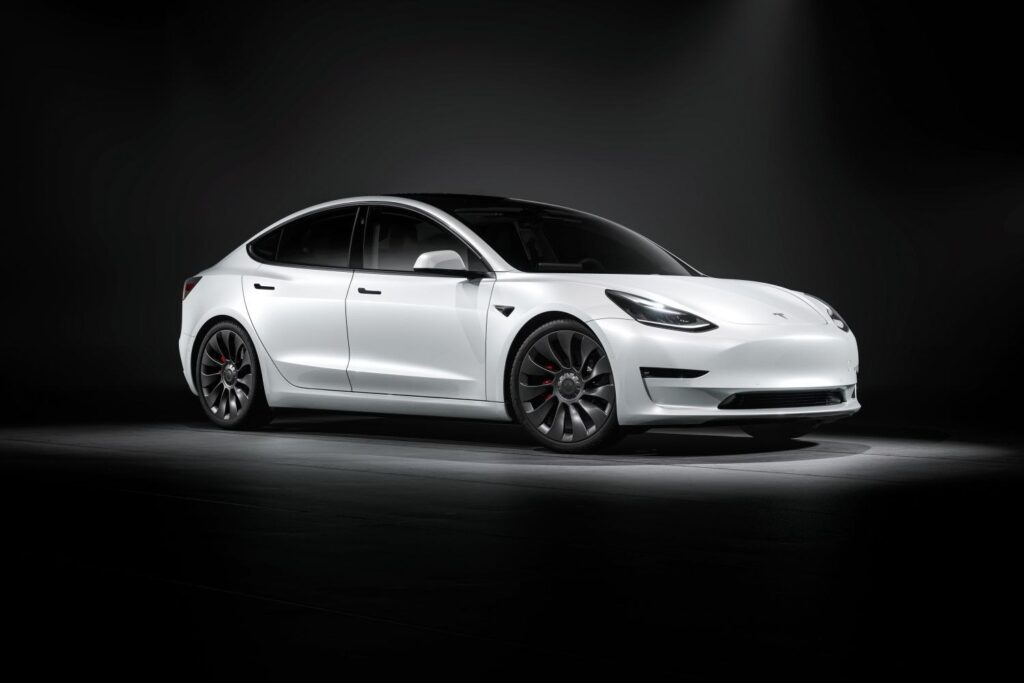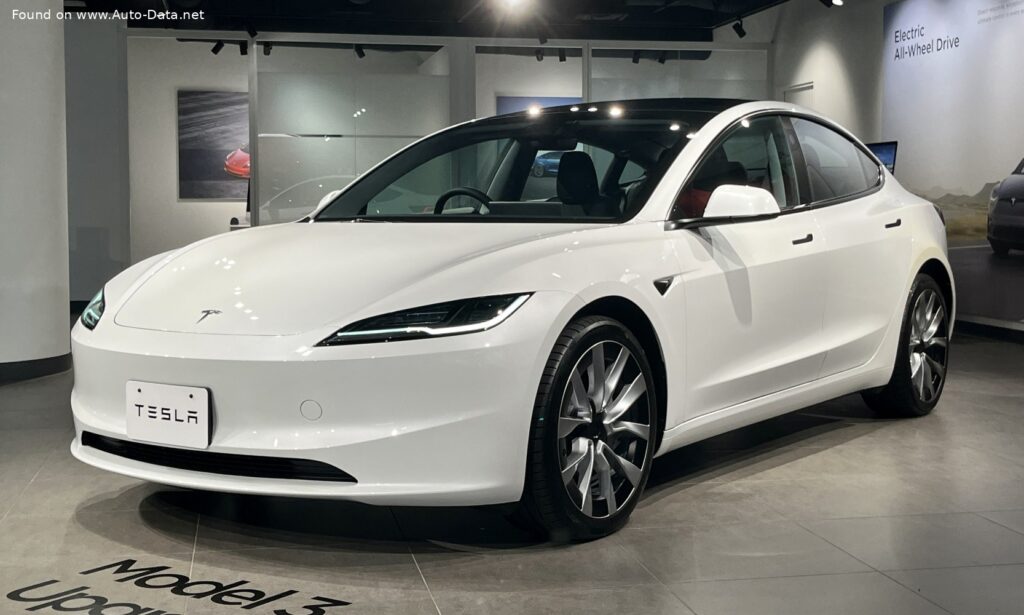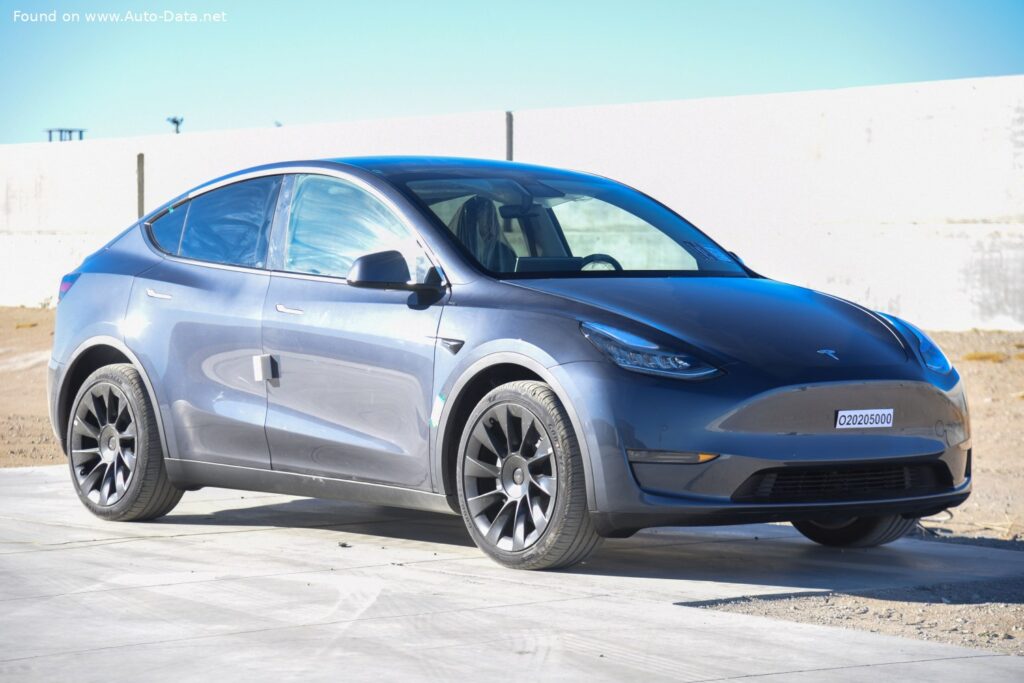
The Tesla Model Y Standard Range 50 kWh, produced from 2021 to 2025, represents Tesla’s entry-level offering in the highly competitive compact SUV/Crossover segment. Positioned below the Long Range and Performance variants, the Standard Range model aimed to broaden the appeal of the Model Y by offering a more accessible price point while still delivering the core Tesla experience of electric performance and advanced technology. This vehicle was primarily sold in North America, Europe, and parts of Asia, contributing significantly to Tesla’s global sales volume and solidifying its position as a leader in the electric vehicle market.
Tesla Model Y Standard Range: An Overview
The Model Y, launched in 2020, quickly became one of Tesla’s best-selling vehicles. The Standard Range variant, equipped with a 50 kWh battery pack, was designed for daily commuting and urban driving. It offered a balance between range, performance, and affordability, making it an attractive option for consumers transitioning to electric vehicles. While Tesla frequently updates its model lineup, the Standard Range version played a crucial role in establishing the Model Y as a mainstream success.
Engine & Performance
The Tesla Model Y Standard Range is powered by a single electric motor located on the rear axle, delivering 204 horsepower (Hp) and 350 Nm (258.15 lb.-ft.) of torque. This configuration provides rear-wheel drive, contributing to a sporty driving experience. Acceleration from 0 to 100 km/h (0-62 mph) takes 6.9 seconds, while 0 to 60 mph is achieved in a calculated 6.6 seconds. The vehicle boasts a maximum speed of 217 km/h (134.84 mph). The powertrain’s efficiency is notable, with an energy consumption of 16.2 kWh per 100 km (26.07 kWh per 100 miles), translating to 129 MPGe and a range of 6.2 km/kWh (3.8 miles/kWh). The weight-to-power ratio is 9 kg/Hp, and the weight-to-torque ratio is 5.3 kg/Nm.
Design & Features
The Tesla Model Y Standard Range features a sleek, modern SUV/Crossover body style. It offers seating for up to five passengers, with an optional seven-seat configuration available. The interior is minimalist and technologically advanced, centered around a large touchscreen display that controls most vehicle functions. Key features include Tesla’s Autopilot system, over-the-air software updates, and a spacious cargo area. The trunk offers a minimum capacity of 854 liters (30.16 cu. ft.), expanding to 2041 liters (72.08 cu. ft.) with the rear seats folded down. Safety features are comprehensive, including ABS (Anti-lock Braking System) and a suite of active safety technologies. The vehicle’s drag coefficient of 0.23 contributes to its aerodynamic efficiency and range.
Technical Specifications
| Brand | Tesla |
| Model | Model Y |
| Generation | Model Y |
| Type (Engine) | Standard Range 50 kWh (204 Hp) |
| Start of production | January, 2021 |
| End of production | 2025 |
| Powertrain Architecture | BEV (Electric Vehicle) |
| Body type | SUV, Crossover |
| Seats | 5-7 |
| Doors | 5 |
| Fuel Type | Electricity |
| Acceleration 0 – 100 km/h | 6.9 sec |
| Acceleration 0 – 62 mph | 6.9 sec |
| Acceleration 0 – 60 mph | 6.6 sec |
| Maximum speed | 217 km/h (134.84 mph) |
| Weight-to-power ratio | 9 kg/Hp |
| Weight-to-torque ratio | 5.3 kg/Nm |
| Gross battery capacity | 50 kWh |
| Battery voltage | 360 V |
| Battery technology | Lithium-ion (Li-Ion) |
| Battery location | Below the floor |
| All-electric range (WLTP) | 455 km (282.72 mi) |
| All-electric range | 393 km (244.2 mi) |
| Average Energy consumption | 16.2 kWh/100 km (26.07 kWh/100 mi) |
| Electric motor power | 204 Hp |
| Electric motor Torque | 350 Nm (258.15 lb.-ft.) |
| Electric motor location | Rear axle, Transverse |
| System power | 204 Hp |
| System torque | 350 Nm (258.15 lb.-ft.) |
| Kerb Weight | 1844 kg (4065.32 lbs.) |
| Max. weight | 2369 kg (5222.75 lbs.) |
| Max load | 525 kg (1157.43 lbs.) |
| Trunk (boot) space – minimum | 854 l (30.16 cu. ft.) |
| Trunk (boot) space – maximum | 2041 l (72.08 cu. ft.) |
| Permitted trailer load with brakes (12%) | 1588 kg (3500.94 lbs.) |
| Permitted trailer load without brakes | 750 kg (1653.47 lbs.) |
| Length | 4750 mm (187.01 in.) |
| Width | 1920 mm (75.59 in.) |
| Width with mirrors folded | 1978 mm (77.87 in.) |
| Width including mirrors | 2129 mm (83.82 in.) |
| Height | 1624 mm (63.94 in.) |
| Wheelbase | 2890 mm (113.78 in.) |
| Front track | 1636 mm (64.41 in.) |
| Rear (Back) track | 1636 mm (64.41 in.) |
| Front overhang | 874 mm (34.41 in.) |
| Rear overhang | 986 mm (38.82 in.) |
| Ride height (ground clearance) | 167 mm (6.57 in.) |
| Drag coefficient (Cd) | 0.23 |
| Minimum turning circle (turning diameter) | 12.1 m (39.7 ft.) |
| Drivetrain Architecture | One electric motor drives the rear wheels. |
| Drive wheel | Rear wheel drive |
| Number of gears and type of gearbox | 1 gears, automatic transmission |
| Front suspension | Double wishbone, Transverse stabilizer |
| Rear suspension | Independent multi-link suspension, Transverse stabilizer |
| Front brakes | Ventilated discs, 355×25 mm |
| Rear brakes | Ventilated discs, 335×20 mm |
| Steering type | Steering rack and pinion |
| Power steering | Electric Steering |
| Tires size Front | 255/45 R19; 255/40 R20; 255/35 R21 |
| Tires size Rear | 255/45 R19; 255/40 R20; 275/35 R21 |
| Wheel rims size Front | 9.5J x 19; 9.5J x 20; 9.5J x 21 |
| Wheel rims size Rear | 9.5J x 19; 9.5J x 20; 10.5J x 21 |
The Tesla Model Y Standard Range 50 kWh, despite being discontinued in 2025, remains a significant vehicle in the evolution of electric mobility. It demonstrated that electric SUVs could be both practical and desirable, paving the way for the widespread adoption of EVs in the mainstream automotive market.