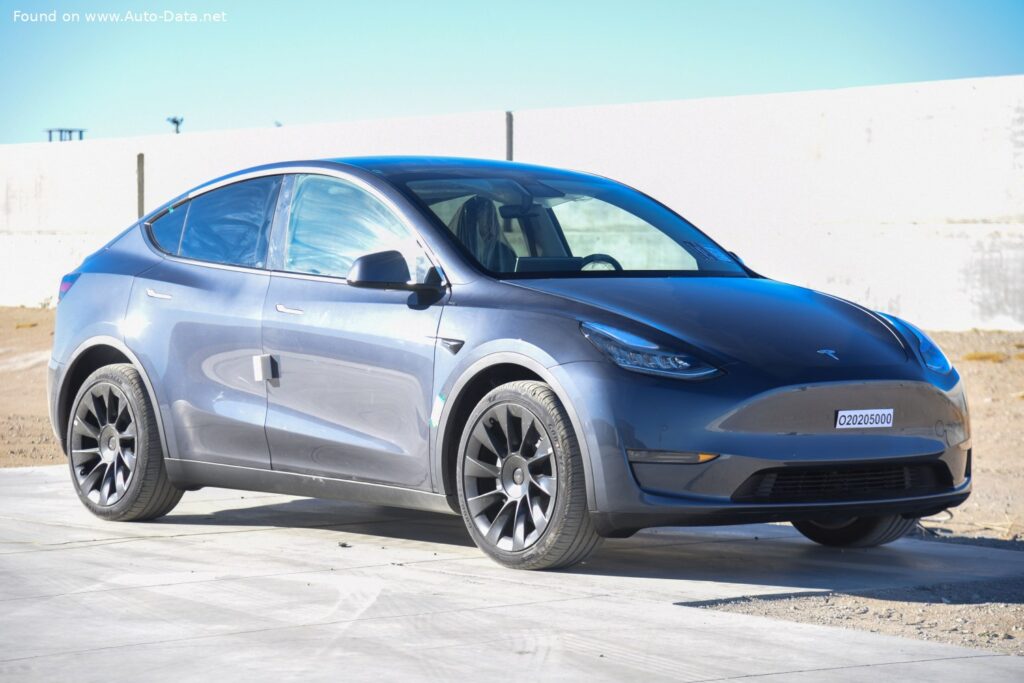
The Tesla Model Y Standard Range 60 kWh, produced from November 2022 to January 2025, represents Tesla’s entry-level offering in the highly competitive compact SUV/Crossover segment. Positioned below the Long Range and Performance variants, the Standard Range Model Y aimed to broaden Tesla’s appeal by offering a more accessible price point while retaining the core technological advantages associated with the brand. This model is primarily sold in markets where Tesla has a direct presence, including North America, Europe, and parts of Asia-Pacific. It serves as a crucial volume model for Tesla, contributing significantly to the company’s overall sales figures and furthering the adoption of electric vehicles.
Tesla Model Y Standard Range: An Overview
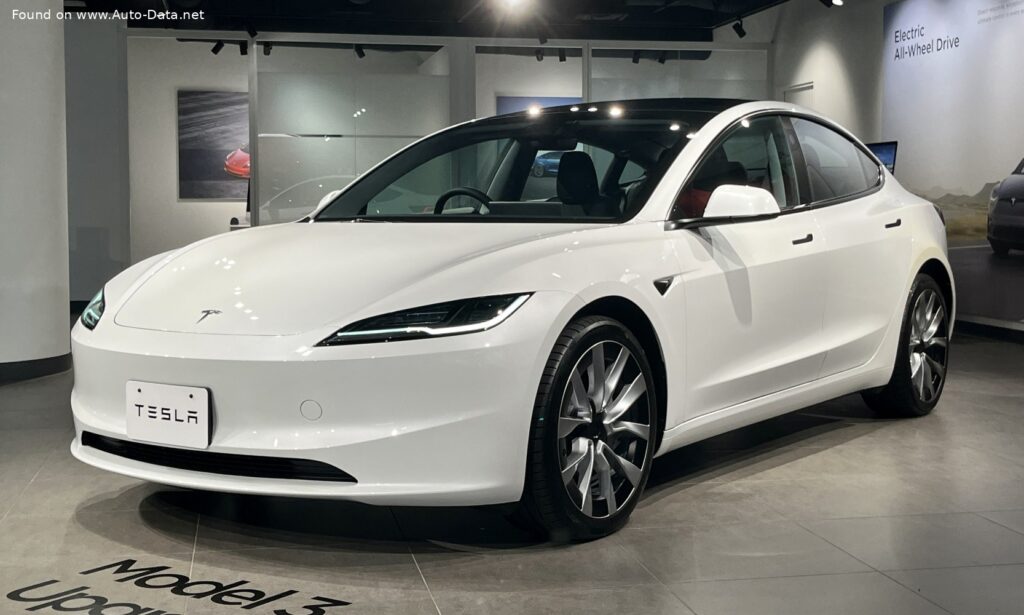
The Model Y builds upon the foundation laid by the Tesla Model 3, sharing a significant portion of its components and technology. However, the Model Y distinguishes itself with a taller, more spacious interior, a liftback design offering increased cargo capacity, and optional seven-seat configuration (though not available on all trims). The Standard Range version specifically targets buyers prioritizing affordability and efficiency, making it a compelling option for daily commuting and family transportation. It’s important to note that Tesla frequently adjusts its model lineup, and the Standard Range variant was eventually discontinued, replaced by updated configurations.
Engine & Performance
The Tesla Model Y Standard Range is powered by a single electric motor located on the rear axle. This motor delivers a peak power output of 299 horsepower (Hp) and 420 Newton-meters (309.78 lb.-ft.) of torque. The powertrain utilizes a synchronous electric motor, known for its efficiency and smooth power delivery. The single-speed automatic transmission provides seamless acceleration. Performance figures include a 0-60 mph (0-97 km/h) acceleration time of approximately 6.6 seconds, and a 0-100 km/h (0-62 mph) time of 6.9 seconds. The vehicle boasts a maximum speed of 217 km/h (134.84 mph). The weight-to-power ratio is 6.4 kg/Hp, and the weight-to-torque ratio is 4.5 kg/Nm, indicating a respectable power-to-weight balance for its class. The rear-wheel-drive configuration contributes to a balanced driving experience, though it may offer less traction in adverse weather conditions compared to all-wheel-drive models.
Design & Features
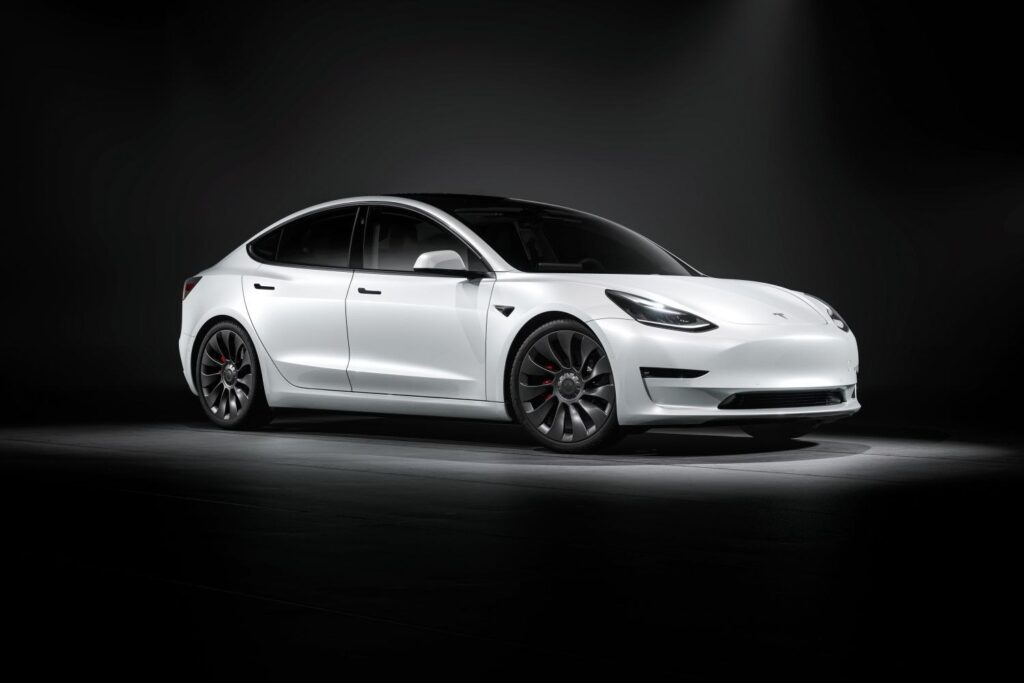
The Tesla Model Y is a five-door SUV/Crossover with a sleek, aerodynamic design. Its minimalist exterior styling is characterized by smooth lines, a panoramic glass roof, and distinctive LED lighting. The interior is equally minimalist, dominated by a large central touchscreen that controls most vehicle functions. Key features include Tesla’s Autopilot system, offering advanced driver-assistance features such as adaptive cruise control and lane keeping assist. The Standard Range model typically includes a standard audio system, premium interior materials, and over-the-air software updates that continuously improve the vehicle’s functionality. Safety features are paramount, with a comprehensive suite of active and passive safety systems, including automatic emergency braking, forward collision warning, and side collision avoidance. The spacious interior offers seating for five passengers and a generous cargo capacity of 854 liters (30.16 cu. ft.) with the rear seats up, expanding to 2158 liters (76.21 cu. ft.) with the rear seats folded down.
Technical Specifications
| Brand | Tesla |
| Model | Model Y |
| Generation | Model Y |
| Type (Engine) | Standard Range 60 kWh (299 Hp) |
| Start of production | November, 2022 |
| End of production | January, 2025 |
| Powertrain Architecture | BEV (Electric Vehicle) |
| Body type | SUV, Crossover |
| Seats | 5 |
| Doors | 5 |
| Fuel Type | Electricity |
| Acceleration 0 – 100 km/h | 6.9 sec |
| Acceleration 0 – 62 mph | 6.9 sec |
| Acceleration 0 – 60 mph | 6.6 sec |
| Maximum speed | 217 km/h (134.84 mph) |
| Weight-to-power ratio | 6.4 kg/Hp |
| Weight-to-torque ratio | 4.5 kg/Nm |
| Gross battery capacity | 60 kWh |
| Net (usable) battery capacity | 57.5 kWh |
| Battery technology | Lithium iron phosphate (LiFePO4) |
| Battery location | Below the floor |
| All-electric range (WLTP) | 430-455 km (267.19 – 282.72 mi) |
| Average Energy consumption (WLTP) | 15.7 kWh/100 km (25.27 kWh/100 mi) |
| Electric motor power | 299 Hp |
| Electric motor Torque | 420 Nm (309.78 lb.-ft.) |
| Electric motor model/code | 3D6 |
| Electric motor location | Rear axle, Transverse |
| Electric motor type | Synchronous |
| System power | 299 Hp |
| System torque | 420 Nm (309.78 lb.-ft.) |
| Kerb Weight | 1909 kg (4208.62 lbs.) |
| Max. weight | 2549 kg (5619.58 lbs.) |
| Max load | 640 kg (1410.96 lbs.) |
| Trunk (boot) space – minimum | 854 l (30.16 cu. ft.) |
| Trunk (boot) space – maximum | 2158 l (76.21 cu. ft.) |
| Max. roof load | 75 kg (165.35 lbs.) |
| Permitted trailer load with brakes (12%) | 1600 kg (3527.4 lbs.) |
| Permitted trailer load without brakes | 750 kg (1653.47 lbs.) |
| Permitted towbar download | 100 kg (220.46 lbs.) |
| Length | 4751 mm (187.05 in.) |
| Width | 1921 mm (75.63 in.) |
| Width with mirrors folded | 1978 mm (77.87 in.) |
| Width including mirrors | 2129 mm (83.82 in.) |
| Height | 1624 mm (63.94 in.) |
| Wheelbase | 2890 mm (113.78 in.) |
| Front track | 1636-1646 mm (64.41 – 64.8 in.) |
| Rear (Back) track | 1630-1636 mm (64.17 – 64.41 in.) |
| Front overhang | 875 mm (34.45 in.) |
| Rear overhang | 986 mm (38.82 in.) |
| Ride height (ground clearance) | 172 mm (6.77 in.) |
| Minimum turning circle (turning diameter) | 12.13 m (39.8 ft.) |
| Drivetrain Architecture | One electric motor drives the rear wheels. |
| Drive wheel | Rear wheel drive |
| Number of gears and type of gearbox | 1 gears, automatic transmission |
| Front suspension | Coil spring, Double wishbone, Transverse stabilizer |
| Rear suspension | Independent multi-link spring suspension with stabilizer |
| Front brakes | Ventilated discs, 355×25 mm |
| Rear brakes | Ventilated discs, 335×20 mm |
| Assisting systems | ABS (Anti-lock braking system) |
| Steering type | Steering rack and pinion |
| Power steering | Electric Steering |
| Tires size | 255/45 R19; 255/40 R20 |
| Wheel rims size | 9.5J x 19; 9.5J x 20 |
The Tesla Model Y Standard Range 60 kWh played a significant role in accelerating the adoption of electric vehicles by offering a compelling combination of performance, practicality, and technology at a more accessible price point. While its production run was relatively short, it remains a notable model in Tesla’s history and a testament to the company’s commitment to innovation in the automotive industry.