
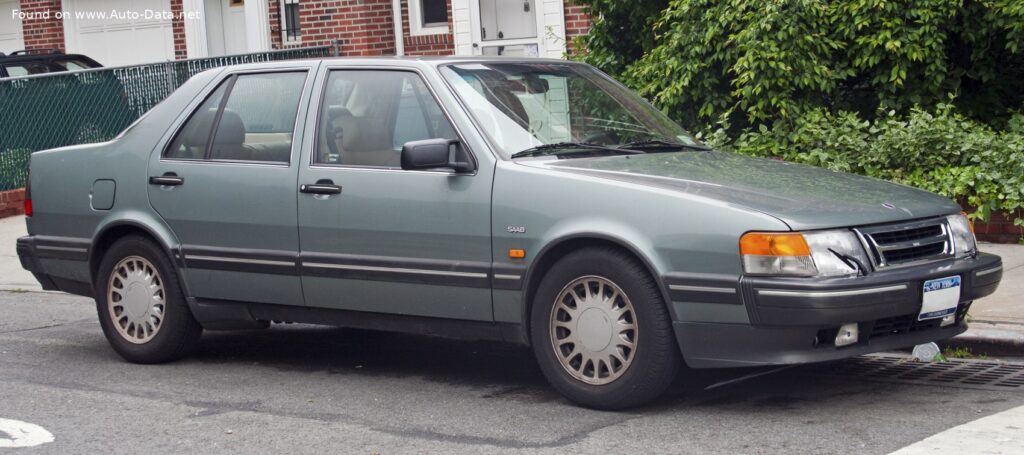
The Saab 9000 2.0 16V Turbo CD, produced from 1990 to 1998, represents a significant evolution in Saab’s model lineup. Positioned as a larger, more sophisticated alternative to the popular 900, the 9000 aimed to compete in the executive car segment, offering a blend of Scandinavian design, innovative engineering, and turbocharged performance. While never achieving the same sales volume as its German rivals, the 9000 cultivated a loyal following, particularly among those seeking a distinctive and driver-focused vehicle. The “CD” designation typically indicated a higher trim level with additional comfort and convenience features. This model, with its 185 horsepower 2.0-liter turbocharged engine, was a mainstay of the 9000 range throughout its production run.
Saab 9000 2.0 16V Turbo CD: A Detailed Overview
The Saab 9000 was a pivotal model for the Swedish automaker, marking a departure from the more compact offerings that had previously defined the brand. It was designed to appeal to a broader audience, including families and business professionals, while retaining the core Saab values of safety, innovation, and a unique driving experience. The 2.0 16V Turbo CD variant, specifically, offered a compelling combination of performance and fuel efficiency, thanks to its sophisticated engine technology. The car’s design, while distinctly Saab, incorporated elements of contemporary styling, resulting in a vehicle that was both functional and aesthetically pleasing.
Engine & Performance
At the heart of the Saab 9000 2.0 16V Turbo CD lies the B202L engine, a 2.0-liter (1985 cm3 or 121.13 cubic inches) inline-four cylinder powerplant. This engine is characterized by its 16-valve dual overhead camshaft (DOHC) configuration and, crucially, a turbocharger. The turbocharger significantly boosts power output, allowing the engine to produce 185 horsepower at 5500 rpm and 263 Nm (193.98 lb.-ft.) of torque at 2100 rpm. This torque figure, available at relatively low engine speeds, provides strong acceleration and effortless cruising. The engine utilizes multi-port fuel injection for precise fuel delivery and efficient combustion. The compression ratio of 8.8:1 is a compromise between performance and reliability, optimized for use with the turbocharger. The engine’s transverse mounting within the front-wheel-drive layout contributes to the car’s balanced handling characteristics. Power per liter is rated at 93.2 hp/l, a respectable figure for a turbocharged engine of this era. The engine requires 4.2 liters (4.44 US quarts or 3.7 UK quarts) of engine oil and 9 liters (9.51 US quarts or 7.92 UK quarts) of coolant.
Design & Features
The Saab 9000 is a four-door sedan, offering comfortable seating for five passengers. Its body design is characterized by clean lines, a relatively low-slung profile, and a distinctive Saab grille. The car’s aerodynamic shape contributes to reduced drag and improved fuel efficiency. The interior of the 9000 is known for its ergonomic design and comfortable seating. The dashboard layout is typically functional and driver-focused, with well-placed controls and clear instrumentation. The “CD” trim level included features such as power windows, central locking, and upgraded upholstery. Safety was a key consideration in the 9000’s design, with features such as anti-lock brakes (ABS) becoming increasingly common in later models. The car’s robust construction and well-engineered chassis contribute to a secure and stable driving experience. While not boasting the advanced safety systems of modern vehicles, the Saab 9000 represented a significant step forward in automotive safety during its time. The car’s dimensions are 4620 mm (181.89 inches) in length, 1763 mm (69.41 inches) in width, and 1420 mm (55.91 inches) in height.
Technical Specifications
| Brand | Saab |
| Model | 9000 |
| Generation | 9000 |
| Type (Engine) | 2.0 16V Turbo CD (185 Hp) |
| Start of production | 1990 |
| End of production | 1998 |
| Powertrain Architecture | Internal Combustion engine |
| Body type | Sedan |
| Seats | 5 |
| Doors | 4 |
| Fuel Type | Petrol (Gasoline) |
| Power | 185 Hp @ 5500 rpm |
| Power per litre | 93.2 Hp/l |
| Torque | 263 Nm @ 2100 rpm / 193.98 lb.-ft. @ 2100 rpm |
| Engine layout | Front, Transverse |
| Engine Model/Code | B202L |
| Engine displacement | 1985 cm3 / 121.13 cu. in. |
| Number of cylinders | 4 |
| Engine configuration | Inline |
| Cylinder Bore | 90 mm / 3.54 in. |
| Piston Stroke | 78 mm / 3.07 in. |
| Compression ratio | 8.8:1 |
| Number of valves per cylinder | 4 |
| Fuel injection system | Multi-port manifold injection |
| Engine aspiration | Turbocharger |
| Valvetrain | DOHC |
| Engine oil capacity | 4.2 l / 4.44 US qt | 3.7 UK qt |
| Coolant | 9 l / 9.51 US qt | 7.92 UK qt |
| Length | 4620 mm / 181.89 in. |
| Width | 1763 mm / 69.41 in. |
| Height | 1420 mm / 55.91 in. |
| Drivetrain Architecture | The Internal combustion engine (ICE) drives the front wheels of the vehicle. |
| Drive wheel | Front wheel drive |
The Saab 9000 2.0 16V Turbo CD, while discontinued in 1998, remains a fondly remembered vehicle for its unique character and blend of performance, comfort, and safety. It represents a high point in Saab’s engineering and design capabilities, and continues to be appreciated by enthusiasts worldwide.
