
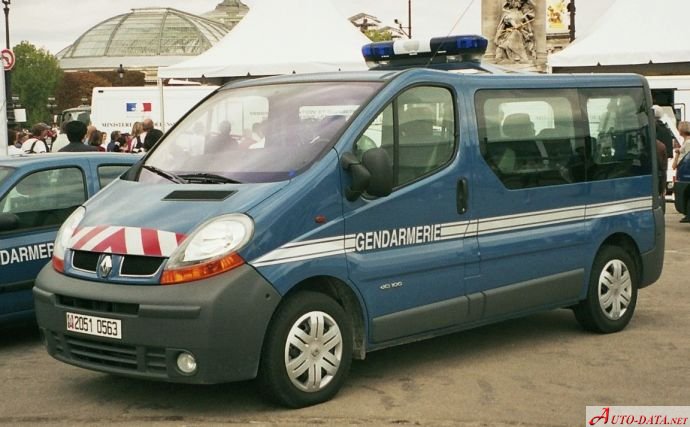
The Renault Trafic II (Phase I), produced from 2001 to 2006, represents the second generation of Renault’s popular light commercial vehicle. Positioned within the mid-size van segment, the Trafic II was designed to compete with vehicles like the Volkswagen Transporter and the Ford Transit. This generation marked a significant step forward in terms of design, comfort, and mechanical refinement compared to its predecessor. The 1.9 dCi 100 Hp L1H1 variant, specifically, was a common configuration offering a balance between fuel efficiency and practicality for commercial and family use, particularly in European markets. While not officially sold in the United States, the Trafic and its platform-sharing siblings (Opel/Vauxhall Vivaro and Nissan Primastar) gained a following among those seeking a versatile and relatively affordable van.
Renault Trafic II: A European Workhorse
The Trafic II was a key model for Renault in the European light commercial vehicle (LCV) market. Unlike the American van market dominated by full-size options, Europe favors more compact and fuel-efficient vans suitable for navigating narrow city streets and offering lower operating costs. The Trafic II catered to this demand, serving as a popular choice for businesses requiring a reliable delivery vehicle, as well as for private individuals needing a spacious and adaptable vehicle for leisure activities or family transport. The “L1H1” designation refers to the body length (L1 – short wheelbase) and roof height (H1 – standard roof), indicating a relatively compact version within the Trafic II range.
Engine & Performance
The 1.9 dCi engine powering this variant of the Trafic II is a 1870cc inline four-cylinder diesel engine. This engine, designated F9Q by Renault, produces 100 horsepower at 3500 rpm and 240 Nm (177 lb-ft) of torque at 2000 rpm. The engine utilizes a turbocharger with an intercooler to enhance performance and efficiency. While not a performance-oriented vehicle, the 1.9 dCi provides adequate power for typical commercial duties and offers reasonable fuel economy. Acceleration from 0 to 100 km/h (0-62 mph) takes approximately 14.9 seconds, and the vehicle has a top speed of 155 km/h (96.31 mph). The engine is paired with a six-speed manual transmission, delivering power to the front wheels. The weight-to-power ratio of 17.9 kg/Hp and weight-to-torque ratio of 7.5 kg/Nm reflect the van’s utilitarian focus rather than outright speed.
Design & Features
The Renault Trafic II (Phase I) features a functional and practical design. Its body style is a traditional minivan configuration with four doors and seating for up to nine passengers, although configurations with fewer seats were also available. The L1H1 variant offers a good balance between interior space and exterior dimensions, making it relatively easy to maneuver in urban environments. Key features of this generation include a relatively spacious cabin, a practical cargo area (depending on seating configuration), and a focus on durability. Safety features for the time included ABS (Anti-lock Braking System), although modern safety technologies like electronic stability control and airbags were not as prevalent as in contemporary passenger vehicles. The interior design is straightforward and utilitarian, prioritizing functionality over luxury. The Trafic II’s design represented a move towards more car-like comfort and ergonomics compared to earlier generations of commercial vans.
Technical Specifications
| Brand | Renault |
| Model | Trafic |
| Generation | Trafic II (Phase I) |
| Type (Engine) | 1.9 dCi (100 Hp) L1H1 |
| Start of production | 2001 |
| End of production | 2006 |
| Powertrain Architecture | Internal Combustion engine |
| Body type | Minivan |
| Seats | 9 |
| Doors | 4 |
| Fuel consumption (urban) | 9.8 l/100 km (24 US mpg, 28.8 UK mpg, 10.2 km/l) |
| Fuel consumption (extra urban) | 7.1 l/100 km (33.1 US mpg, 39.8 UK mpg, 14.1 km/l) |
| Fuel consumption (combined) | 8 l/100 km (29.4 US mpg, 35.3 UK mpg, 12.5 km/l) |
| Fuel Type | Diesel |
| Acceleration 0 – 100 km/h | 14.9 sec |
| Acceleration 0 – 62 mph | 14.9 sec |
| Acceleration 0 – 60 mph | 14.2 sec |
| Maximum speed | 155 km/h (96.31 mph) |
| Weight-to-power ratio | 17.9 kg/Hp |
| Weight-to-torque ratio | 7.5 kg/Nm |
| Power | 100 Hp @ 3500 rpm |
| Torque | 240 Nm @ 2000 rpm (177.01 lb.-ft. @ 2000 rpm) |
| Engine layout | Front, Transverse |
| Engine Model/Code | F9Q |
| Engine displacement | 1870 cm3 (114.11 cu. in.) |
| Engine configuration | Inline |
| Number of valves per cylinder | 2 |
| Fuel injection system | Diesel Commonrail |
| Engine oil capacity | 4.6 l (4.86 US qt | 4.05 UK qt) |
| Coolant capacity | 6.5 l (6.87 US qt | 5.72 UK qt) |
| Kerb Weight | 1791 kg (3948.48 lbs.) |
| Max. weight | 2760 kg (6084.76 lbs.) |
| Max load | 969 kg (2136.28 lbs.) |
| Fuel tank capacity | 90 l (23.78 US gal | 19.8 UK gal) |
| Length | 4782 mm (188.27 in.) |
| Width | 1904 mm (74.96 in.) |
| Height | 1940 mm (76.38 in.) |
| Wheelbase | 3098 mm (121.97 in.) |
| Front track | 1615 mm (63.58 in.) |
| Rear track | 1630 mm (64.17 in.) |
| Drivetrain | Front wheel drive |
| Number of gears | 6 gears, manual transmission |
| Front brakes | Ventilated discs |
| Rear brakes | Disc |
| Assisting systems | ABS (Anti-lock braking system) |
| Steering type | Steering rack and pinion |
| Tires size | 195/65 R16 |
| Wheel rims size | 16 |
The Renault Trafic II (Phase I) 1.9 dCi L1H1 remains a popular choice in the used van market, particularly in Europe, due to its reliability, practicality, and relatively low running costs. Its simple mechanical design and readily available parts contribute to its continued appeal as a workhorse vehicle for businesses and individuals alike.
