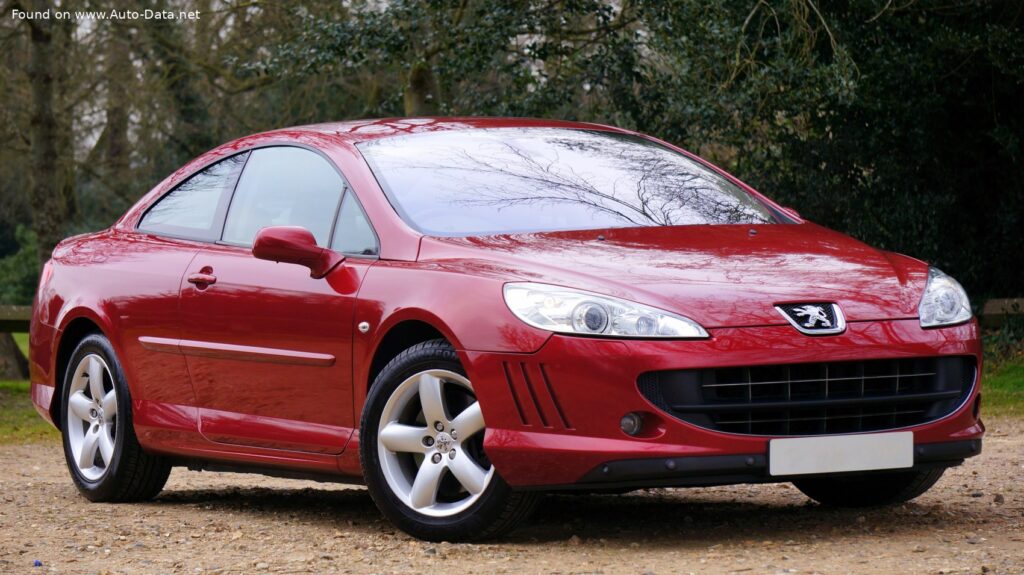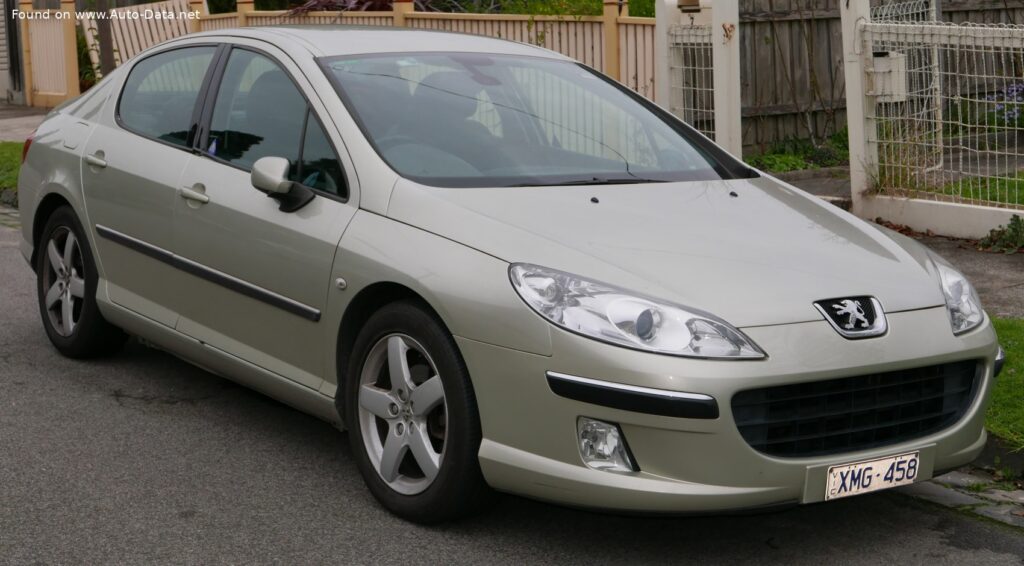
The Peugeot 407 is a large family car produced by the French manufacturer Peugeot from 2004 to 2011. Positioned above the 307 and below the 607 in Peugeot’s lineup, the 407 aimed to provide a more sophisticated and spacious alternative to traditional family saloons. This article focuses on the early model, specifically the 2.2i 16V variant with an automatic transmission, produced between April 2004 and August 2005. While not officially sold in the United States, the 407 was a significant model for Peugeot in Europe, competing with vehicles like the Ford Mondeo, Vauxhall/Opel Vectra, and Renault Laguna.
Peugeot 407: Overview and Market Position
The 407 represented a departure for Peugeot in terms of design and engineering. It moved away from the more rounded styling of its predecessor, the 406, adopting a more angular and modern aesthetic. The 407 was praised for its comfortable ride, spacious interior, and relatively refined driving experience. The 2.2i 16V model, equipped with a naturally aspirated four-cylinder engine and an automatic gearbox, was a popular choice for buyers seeking a balance between performance and fuel economy. It was designed to appeal to families and business users alike, offering a practical and comfortable mode of transport.
Engine & Performance
The Peugeot 407 2.2i 16V is powered by a 2.2-liter (2230 cm3) inline four-cylinder gasoline engine, designated the 3FY EW12J4. This engine produces 160 horsepower (Hp) at 5650 rpm and 217 Newton-meters (160.05 lb.-ft.) of torque at 3900 rpm. The engine features multi-port fuel injection and a double overhead camshaft (DOHC) valvetrain with four valves per cylinder. Power is delivered to the front wheels via a four-speed automatic transmission. Performance figures include a 0-100 km/h (0-62 mph) acceleration time of 12.1 seconds, and a 0-60 mph time of approximately 11.5 seconds. The vehicle has a maximum speed of 212 km/h (131.73 mph). The engine’s power-to-weight ratio is 9.5 kg/Hp, and the torque-to-weight ratio is 7 kg/Nm. Fuel economy is rated at 9.4 liters per 100 kilometers (25 US mpg or 30.1 UK mpg) on a combined cycle.
Design & Features
The Peugeot 407 is a four-door sedan with a five-seat configuration. Its design was characterized by its sharp lines, prominent front grille, and distinctive rear light clusters. The interior was designed with practicality and comfort in mind, offering ample space for passengers and luggage. Standard features included air conditioning, power windows, central locking, and an anti-lock braking system (ABS). The 407’s suspension utilizes a spring strut setup for both the front and rear axles, providing a comfortable ride quality. The vehicle rides on 215/55 R17 tires mounted on 7J x 17 inch wheel rims. Safety features, while standard for the time, included ABS and driver/passenger airbags. The trunk (boot) offers a minimum capacity of 407 liters (14.37 cubic feet). The 407’s design represented a significant step forward for Peugeot, moving the brand towards a more contemporary and sophisticated image.
Technical Specifications
| Brand | Peugeot |
| Model | 407 |
| Generation | 407 |
| Type (Engine) | 2.2i 16V (160 Hp) Automatic |
| Start of production | April, 2004 |
| End of production | August, 2005 |
| Powertrain Architecture | Internal Combustion engine |
| Body type | Sedan |
| Seats | 5 |
| Doors | 4 |
| Fuel consumption (urban) | 13.9 l/100 km (16.9 US mpg, 20.3 UK mpg, 7.2 km/l) |
| Fuel consumption (extra urban) | 6.9 l/100 km (34.1 US mpg, 40.9 UK mpg, 14.5 km/l) |
| Fuel consumption (combined) | 9.4 l/100 km (25 US mpg, 30.1 UK mpg, 10.6 km/l) |
| Fuel Type | Petrol (Gasoline) |
| Acceleration 0 – 100 km/h | 12.1 sec |
| Acceleration 0 – 62 mph | 12.1 sec |
| Acceleration 0 – 60 mph | 11.5 sec |
| Maximum speed | 212 km/h (131.73 mph) |
| Weight-to-power ratio | 9.5 kg/Hp |
| Weight-to-torque ratio | 7 kg/Nm |
| Power | 160 Hp @ 5650 rpm |
| Torque | 217 Nm @ 3900 rpm (160.05 lb.-ft. @ 3900 rpm) |
| Engine layout | Front, Transverse |
| Engine Model/Code | 3FY EW12J4 |
| Engine displacement | 2230 cm3 (136.08 cu. in.) |
| Number of cylinders | 4 |
| Engine configuration | Inline |
| Cylinder Bore | 86 mm (3.39 in.) |
| Piston Stroke | 96 mm (3.78 in.) |
| Compression ratio | 10.8:1 |
| Number of valves per cylinder | 4 |
| Fuel injection system | Multi-port manifold injection |
| Engine aspiration | Naturally aspirated engine |
| Valvetrain | DOHC |
| Engine oil capacity | 4.25 l (4.49 US qt | 3.74 UK qt) |
| Coolant capacity | 8.4 l (8.88 US qt | 7.39 UK qt) |
| Kerb Weight | 1516 kg (3342.21 lbs.) |
| Max. weight | 2075 kg (4574.59 lbs.) |
| Max load | 559 kg (1232.38 lbs.) |
| Trunk (boot) space – minimum | 407 l (14.37 cu. ft.) |
| Fuel tank capacity | 66 l (17.44 US gal | 14.52 UK gal) |
| Length | 4675 mm (184.06 in.) |
| Width | 1811 mm (71.3 in.) |
| Height | 1447 mm (56.97 in.) |
| Wheelbase | 2725 mm (107.28 in.) |
| Front track | 1552 mm (61.1 in.) |
| Rear track | 1518 mm (59.76 in.) |
| Drivetrain Architecture | Front wheel drive |
| Number of gears and type of gearbox | 4 gears, automatic transmission |
| Front suspension | Spring Strut |
| Rear suspension | Spring Strut |
| Front brakes | Ventilated discs |
| Rear brakes | Disc |
| Assisting systems | ABS (Anti-lock braking system) |
| Steering type | Steering rack and pinion |
| Tires size | 215/55 R17 |
| Wheel rims size | 7J x 17 |