
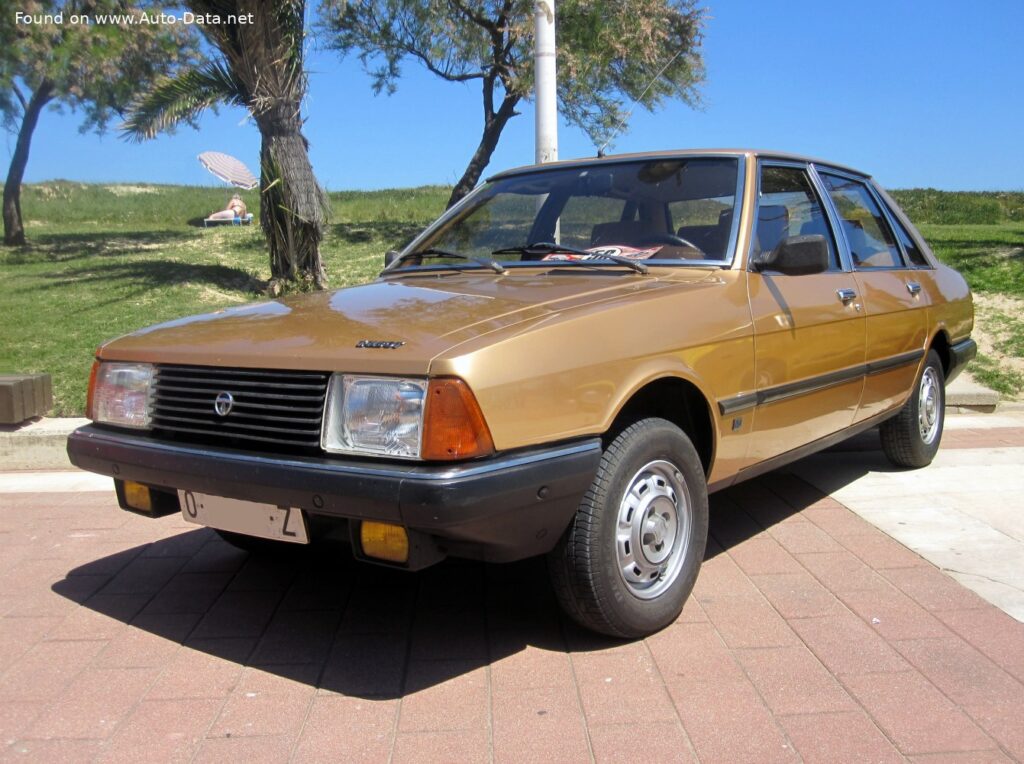
The Talbot Solara, specifically the facelifted version introduced in 1980, represents a somewhat obscure but significant chapter in the history of British automotive manufacturing. Produced between 1981 and 1986, the Solara was essentially a rebadged and refined version of the Simca 1307/1501, itself a product of the Chrysler Europe era. Following Peugeot’s acquisition of Chrysler Europe in 1978, the Simca models were rebranded as Talbots, aiming to establish a distinct identity within the newly formed group. The Solara occupied the mid-size family sedan segment, competing with vehicles like the Ford Cortina, Vauxhall Cavalier (Opel Ascona), and Austin Ambassador. While never achieving widespread popularity, particularly outside of the UK and a limited number of export markets, the Solara offered a comfortable ride, decent performance, and a relatively well-equipped interior for its time. It stands as a transitional vehicle, bridging the gap between the Simca heritage and Peugeot’s future direction.
The Talbot Solara: A Detailed Overview
The Talbot Solara’s story is inextricably linked to the complex corporate maneuvering within the European automotive industry of the 1970s and 80s. Originally conceived as the Simca 1307/1501, the car was designed to replace the aging Simca 1100 and offer a more modern and spacious alternative. Chrysler’s acquisition of Simca in 1970 led to further development and refinement, but the oil crisis and economic downturn of the decade hampered sales. When Peugeot took over Chrysler Europe, the decision was made to rebrand the existing models under the Talbot name, honoring the historic British marque. The Solara, along with the Rapide coupe and Estate versions, became part of the Talbot lineup, representing Peugeot’s attempt to establish a foothold in the British market and leverage the existing production facilities and engineering expertise.
Engine & Performance
The 1980 facelifted Talbot Solara 1.6, the focus of this article, was powered by a 1.6-liter, naturally aspirated inline-four cylinder gasoline engine. This engine produced 90 horsepower, providing adequate, though not exceptional, performance for the time. The engine was a relatively simple design, utilizing a single overhead camshaft and a two-barrel carburetor. While not particularly innovative, it proved to be reliable and relatively easy to maintain. Power was delivered to the front wheels via a four-speed manual gearbox, although a three-speed automatic transmission was also available as an option. The Solara 1.6 offered a respectable 0-60 mph time of around 12 seconds and a top speed of approximately 95 mph. Fuel economy was typical for the era, averaging around 28-32 mpg depending on driving conditions. The engine’s characteristics were geared towards providing smooth, usable power rather than outright acceleration, making it well-suited for everyday driving and long-distance cruising. The engine bay layout was fairly conventional, allowing for relatively easy access for servicing and repairs.
Design & Features
The Talbot Solara’s design was a product of its Simca origins, with the 1980 facelift bringing subtle but noticeable changes to the exterior. The body style is a traditional three-box sedan, characterized by clean lines and a relatively understated appearance. The facelift included a revised front grille, new headlights, and updated trim, giving the car a more modern and refined look. Inside, the Solara offered a comfortable and spacious cabin for its class. The interior was well-equipped for the early 1980s, featuring comfortable seats, a comprehensive dashboard layout, and a decent level of sound insulation. Standard features included power-assisted steering, a four-speed heater/demister, and a basic instrument panel. Higher trim levels offered additional features such as a sunroof, upgraded upholstery, and a more sophisticated stereo system. Safety features were relatively basic by modern standards, consisting primarily of seat belts and a collapsible steering column. The Solara’s suspension system was designed to prioritize ride comfort, utilizing independent front suspension and a torsion beam rear axle. This setup provided a smooth and compliant ride, even on rough road surfaces. The car’s handling was generally considered to be safe and predictable, although not particularly sporty.
Technical Specifications
| Brand | Talbot |
| Model | Solara |
| Generation | Solara (facelift 1980) |
| Type (Engine) | 1.6 (90 Hp) |
| Start of production | 1981 |
| End of production | 1986 |
| Powertrain Architecture | Internal Combustion engine |
| Body type | Sedan |
| Fuel Type | Petrol (Gasoline) |
| Power | 90 Hp |
| Engine aspiration | Naturally aspirated engine |
The Talbot Solara, despite its relatively short production run, represents an interesting case study in automotive rebranding and the challenges of navigating a turbulent economic climate. While it didn’t achieve the sales success of its competitors, it offered a comfortable, reliable, and reasonably well-equipped package for buyers seeking a mid-size family sedan. The Solara’s legacy is perhaps more significant as a symbol of the changing landscape of the European automotive industry, and a reminder of the brands and models that have faded into obscurity over time. The car’s reliance on Simca technology, combined with Peugeot’s efforts to establish the Talbot brand, created a unique and somewhat unconventional vehicle that continues to hold a niche appeal among enthusiasts and collectors. The Solara’s relatively simple mechanical design and readily available parts make it a viable option for those interested in classic car restoration and ownership. Ultimately, the Talbot Solara stands as a testament to the ingenuity and resilience of British automotive engineering, even in the face of significant challenges.
