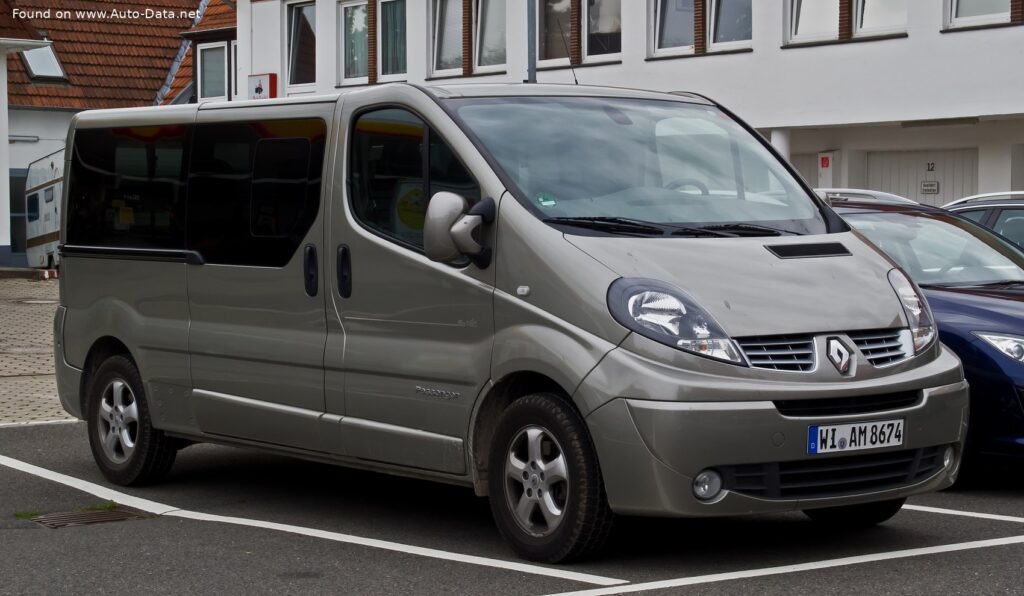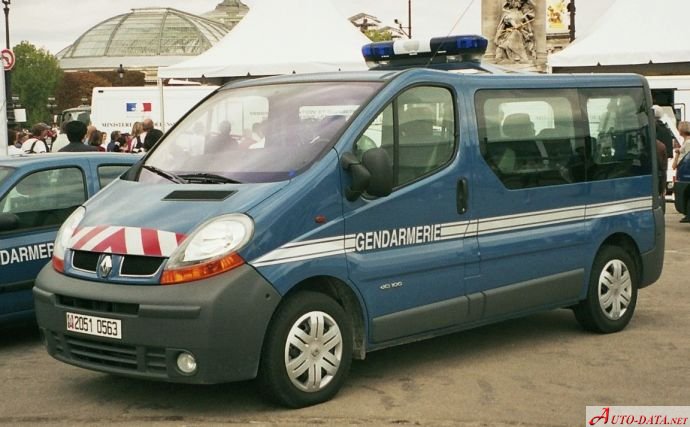
The Renault Trafic II (Phase I) is a light commercial vehicle produced by the French manufacturer Renault from 2001 to 2006. Representing the second generation of the Trafic line, this model was a popular choice in Europe as a versatile van catering to both commercial and passenger transport needs. The “Phase I” designation refers to the initial iteration of the second generation, receiving updates in later years. The Trafic II was often sold as a direct competitor to vehicles like the Volkswagen Transporter, Ford Transit, and Mercedes-Benz Vito, offering a balance of practicality, affordability, and reliability. This article focuses on the 1.9 dCi 100 Hp L2H1 variant, a common configuration within the range.
Renault Trafic II (Phase I): Overview and Market Position
The Renault Trafic II, and specifically the 1.9 dCi variant, was primarily marketed in Europe as a workhorse vehicle. Unlike many American vans focused on passenger comfort, the Trafic prioritized cargo capacity and durability. The L2H1 designation indicates a specific body length (L2 – long wheelbase) and roof height (H1 – standard roof). This configuration offered a good compromise between interior space and maneuverability, making it suitable for a wide range of applications, from delivery services to mobile workshops. While not officially sold in the United States, the Trafic II represents a significant segment of the European light commercial vehicle market, known for its robust construction and relatively low running costs.
Engine & Performance
The Renault Trafic II (Phase I) 1.9 dCi (100 Hp) L2H1 is powered by Renault’s F9Q 1.9-liter inline four-cylinder diesel engine. This engine, equipped with a turbocharger and intercooler, produces 100 horsepower at 3500 rpm and 240 Nm (177 lb-ft) of torque at 2000 rpm. The engine utilizes a diesel commonrail fuel injection system, contributing to improved fuel efficiency and reduced emissions compared to earlier diesel designs. Power is delivered to the front wheels via a six-speed manual transmission. Performance is geared towards utility rather than speed; acceleration from 0 to 100 km/h (0-62 mph) takes approximately 14.9 seconds, and 0 to 60 mph is achieved in around 14.2 seconds. The top speed is limited to 155 km/h (96.31 mph). The engine’s 53.5 horsepower per liter demonstrates a focus on extracting reasonable power from a relatively small displacement. The weight-to-power ratio of 18.5 kg/Hp and weight-to-torque ratio of 7.7 kg/Nm reflect the vehicle’s utilitarian nature.
Design & Features
The Renault Trafic II (Phase I) is a traditional, boxy minivan design, prioritizing internal volume over aerodynamic styling. It features a four-door configuration and a seating capacity of up to nine passengers, although many were configured as cargo vans with limited or no rear seating. The L2H1 variant measures 5182 mm (204.02 in) in length, 1904 mm (74.96 in) in width, and 1940 mm (76.38 in) in height. The wheelbase is 3498 mm (137.72 in).
Features were largely functional, reflecting its commercial focus. Standard equipment typically included ABS (Anti-lock Braking System), ventilated front disc brakes, and rear disc brakes. The steering system utilizes a rack and pinion setup. The interior is designed for durability and ease of cleaning, with hard-wearing materials used throughout. While not luxurious, the Trafic II offered a practical and reliable platform for various commercial applications. The 90-liter (23.78 US gal) fuel tank provides a substantial range, minimizing downtime for refueling.
Technical Specifications
| Specification | Value |
| Brand | Renault |
| Model | Trafic |
| Generation | Trafic II (Phase I) |
| Type (Engine) | 1.9 dCi (100 Hp) L2H1 |
| Start of production | 2001 |
| End of production | 2006 |
| Powertrain Architecture | Internal Combustion engine |
| Body type | Minivan |
| Seats | 9 |
| Doors | 4 |
| Fuel consumption (urban) | 9.3 l/100 km (25.3 US mpg) |
| Fuel consumption (extra urban) | 6.8 l/100 km (34.6 US mpg) |
| Fuel consumption (combined) | 7.7 l/100 km (30.5 US mpg) |
| Fuel Type | Diesel |
| Acceleration 0 – 100 km/h | 14.9 sec |
| Acceleration 0 – 62 mph | 14.9 sec |
| Acceleration 0 – 60 mph | 14.2 sec |
| Maximum speed | 155 km/h (96.31 mph) |
| Weight-to-power ratio | 18.5 kg/Hp |
| Weight-to-torque ratio | 7.7 kg/Nm |
| Power | 100 Hp @ 3500 rpm |
| Torque | 240 Nm @ 2000 rpm (177.01 lb.-ft. @ 2000 rpm) |
| Engine layout | Front, Transverse |
| Engine Model/Code | F9Q |
| Engine displacement | 1870 cm3 (114.11 cu. in.) |
| Engine configuration | Inline |
| Number of valves per cylinder | 2 |
| Fuel injection system | Diesel Commonrail |
| Engine oil capacity | 4.6 l (4.86 US qt | 4.05 UK qt) |
| Coolant capacity | 6.5 l (6.87 US qt | 5.72 UK qt) |
| Kerb Weight | 1846 kg (4069.73 lbs.) |
| Max. weight | 2900 kg (6393.41 lbs.) |
| Max load | 1054 kg (2323.67 lbs.) |
| Fuel tank capacity | 90 l (23.78 US gal | 19.8 UK gal) |
| Length | 5182 mm (204.02 in.) |
| Width | 1904 mm (74.96 in.) |
| Height | 1940 mm (76.38 in.) |
| Wheelbase | 3498 mm (137.72 in.) |
| Front track | 1615 mm (63.58 in.) |
| Rear track | 1630 mm (64.17 in.) |
| Drivetrain | Front wheel drive |
| Number of gears | 6 gears, manual transmission |
| Front brakes | Ventilated discs |
| Rear brakes | Disc |
| Tires size | 195/65 R16 |
| Wheel rims size | 16 |
The Renault Trafic II (Phase I) 1.9 dCi L2H1 remains a popular choice in the used commercial vehicle market, appreciated for its reliability, practicality, and relatively low operating costs. Its enduring appeal demonstrates the effectiveness of its design and engineering within its intended market segment.