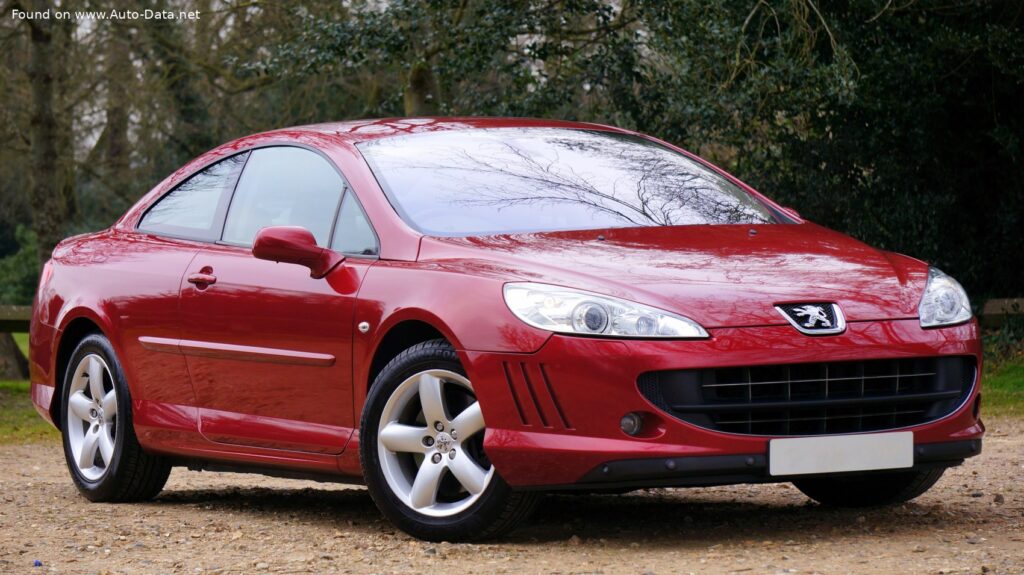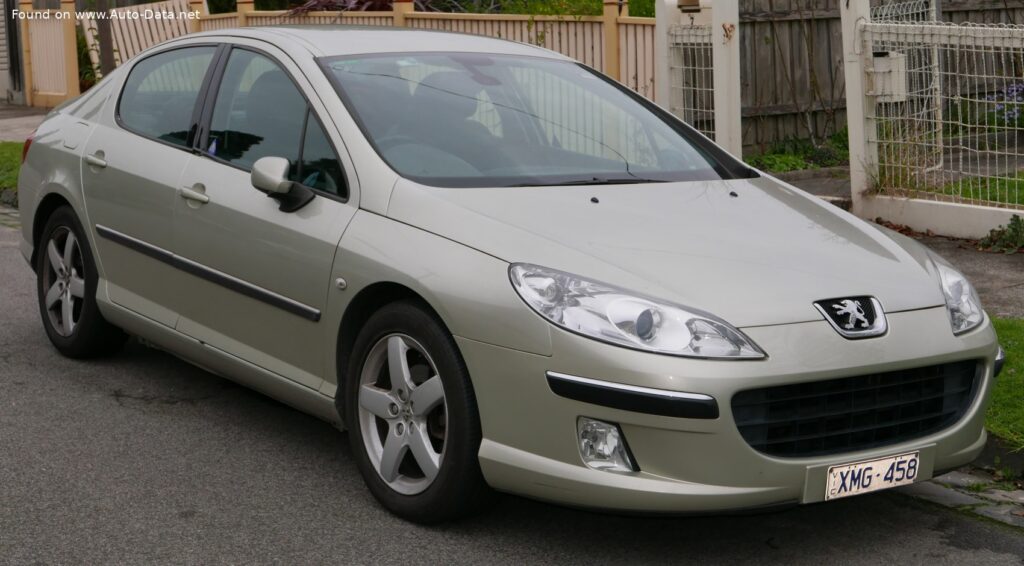
The Peugeot 407 is a large family car produced by the French manufacturer Peugeot from 2004 to 2011. Positioned above the 307 and below the 607 in Peugeot’s lineup, the 407 aimed to provide a more sophisticated and comfortable driving experience than its predecessors. This article focuses on the 3.0 i V6 24V variant, produced between April 2004 and September 2007, a model primarily sold in the European market. While not officially sold in the United States, the 407 represents Peugeot’s attempt to compete with established brands in the mid-size executive car segment, offering a blend of style, performance, and technology.
Peugeot 407 3.0 i V6: An Overview
The 407 represented a significant step forward for Peugeot in terms of design and engineering. It replaced the aging 406 and was intended to appeal to buyers seeking a more modern and refined vehicle. The 3.0 i V6 model, equipped with a naturally aspirated V6 engine, was positioned as the premium offering within the 407 range, providing a higher level of performance and refinement. The car’s design, penned by Pininfarina, was a departure from previous Peugeot models, featuring a more flowing and dynamic silhouette. The 407 was available in sedan, coupe, and SW (station wagon) body styles, with the sedan being the most common.
Engine & Performance
The heart of the Peugeot 407 3.0 i V6 is its 2.9-liter (2946 cm³) naturally aspirated V6 engine, designated XFV ES9A. This engine produces 211 horsepower (Hp) at 6000 rpm and 290 Newton-meters (213.89 lb.-ft.) of torque at 3750 rpm. The engine features a double overhead camshaft (DOHC) valvetrain with four valves per cylinder and multi-port fuel injection. This configuration delivers a smooth and responsive power delivery, making it well-suited for both urban driving and long-distance cruising. Power is sent to the front wheels via a six-speed automatic transmission.
Performance figures for the 407 3.0 i V6 are respectable for its class. Acceleration from 0 to 100 km/h (0-62 mph) takes 9.2 seconds, while the 0 to 60 mph sprint is achieved in approximately 8.7 seconds. The car has a maximum speed of 235 km/h (146.02 mph). The engine’s power-to-weight ratio is 7.5 kg/Hp, and its torque-to-weight ratio is 5.5 kg/Nm, contributing to a balanced driving experience. Fuel economy is rated at 9.8 liters per 100 kilometers (24 US mpg) combined, with 14.5 l/100 km (16.2 US mpg) in urban conditions and 7 l/100 km (33.6 US mpg) on the extra-urban cycle.
Design & Features
The Peugeot 407 sedan is a four-door, five-seater vehicle with a classic three-box design. Its exterior styling is characterized by its sleek lines, prominent front grille, and distinctive headlamps. The interior is designed with a focus on comfort and ergonomics, featuring supportive seats and a well-laid-out dashboard. Standard features typically included air conditioning, power windows, central locking, and an audio system. Higher trim levels offered features such as leather upholstery, sunroof, and automatic climate control.
Safety features were a key consideration in the 407’s design. The car is equipped with an Anti-lock Braking System (ABS) as standard, and many models also included Electronic Stability Control (ESC). The body structure is designed to provide good crash protection, and airbags are fitted throughout the cabin. The 407’s suspension utilizes a spring strut setup for both the front and rear axles, providing a comfortable ride quality. The car rides on 215/55 R17 tires mounted on 7J x 17 alloy wheels.
Technical Specifications
| Brand | Peugeot |
| Model | 407 |
| Generation | 407 |
| Type (Engine) | 3.0 i V6 24V (211 Hp) |
| Start of production | April, 2004 |
| End of production | September, 2007 |
| Powertrain Architecture | Internal Combustion engine |
| Body type | Sedan |
| Seats | 5 |
| Doors | 4 |
| Fuel consumption (urban) | 14.5 l/100 km (16.2 US mpg) |
| Fuel consumption (extra urban) | 7 l/100 km (33.6 US mpg) |
| Fuel consumption (combined) | 9.8 l/100 km (24 US mpg) |
| Fuel Type | Petrol (Gasoline) |
| Acceleration 0 – 100 km/h | 9.2 sec |
| Acceleration 0 – 62 mph | 9.2 sec |
| Acceleration 0 – 60 mph | 8.7 sec |
| Maximum speed | 235 km/h (146.02 mph) |
| Weight-to-power ratio | 7.5 kg/Hp |
| Weight-to-torque ratio | 5.5 kg/Nm |
| Power | 211 Hp @ 6000 rpm |
| Torque | 290 Nm @ 3750 rpm (213.89 lb.-ft. @ 3750 rpm) |
| Engine layout | Front, Transverse |
| Engine Model/Code | XFV ES9A |
| Engine displacement | 2946 cm³ (179.78 cu. in.) |
| Number of cylinders | 6 |
| Engine configuration | V-engine |
| Cylinder Bore | 87 mm (3.43 in.) |
| Piston Stroke | 82.6 mm (3.25 in.) |
| Compression ratio | 10.9:1 |
| Number of valves per cylinder | 4 |
| Fuel injection system | Multi-port manifold injection |
| Engine aspiration | Naturally aspirated engine |
| Valvetrain | DOHC |
| Engine oil capacity | 4.75 l (5.02 US qt | 4.18 UK qt) |
| Coolant | 9.8 l (10.36 US qt | 8.62 UK qt) |
| Kerb Weight | 1585 kg (3494.33 lbs.) |
| Max. weight | 2140 kg (4717.89 lbs.) |
| Max load | 555 kg (1223.57 lbs.) |
| Trunk (boot) space – minimum | 407 l (14.37 cu. ft.) |
| Fuel tank capacity | 66 l (17.44 US gal | 14.52 UK gal) |
| Length | 4675 mm (184.06 in.) |
| Width | 1811 mm (71.3 in.) |
| Height | 1447 mm (56.97 in.) |
| Wheelbase | 2725 mm (107.28 in.) |
| Front track | 1552 mm (61.1 in.) |
| Rear (Back) track | 1518 mm (59.76 in.) |
| Drivetrain Architecture | Front wheel drive |
| Number of gears and type of gearbox | 6 gears, automatic transmission |
| Front suspension | Spring Strut |
| Rear suspension | Spring Strut |
| Front brakes | Ventilated discs |
| Rear brakes | Disc |
| Assisting systems | ABS (Anti-lock braking system) |
| Steering type | Steering rack and pinion |
| Tires size | 215/55 R17 |
| Wheel rims size | 7J x17 |
The Peugeot 407 3.0 i V6, while never officially available in the US market, offered a compelling package of performance, comfort, and style for European buyers. It represented Peugeot’s ambition to compete with established players in the mid-size executive car segment and showcased the brand’s engineering capabilities.