
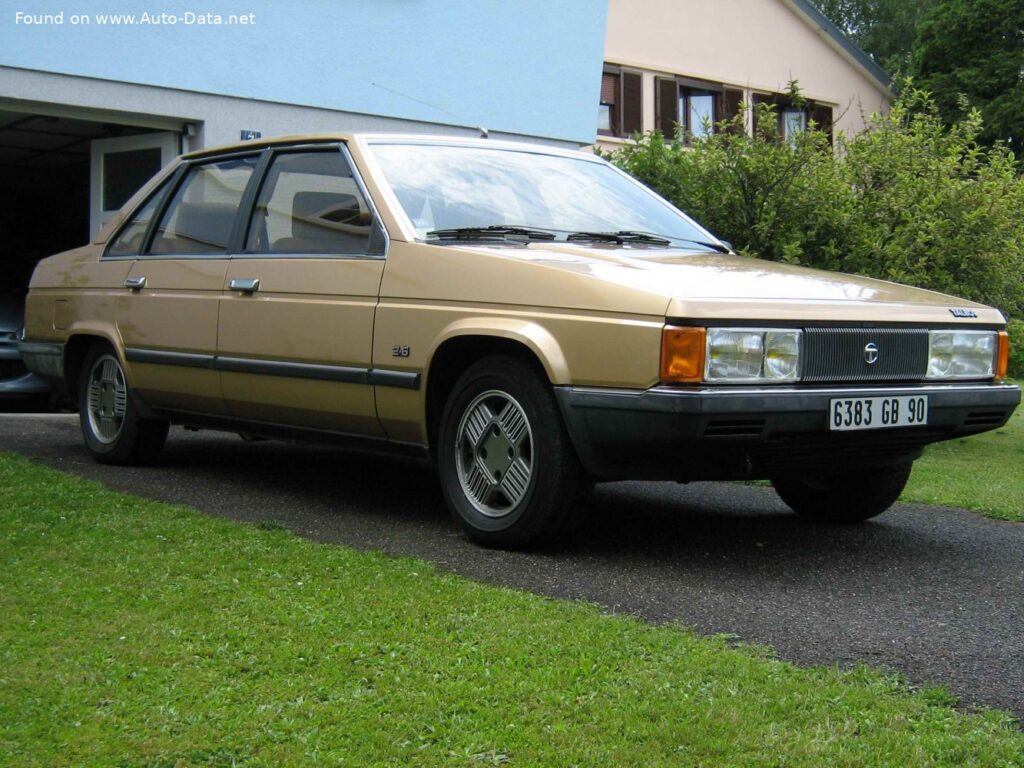
The Talbot Tagora was a large, executive sedan produced by the Simca-Talbot division of PSA (Peugeot Société Anonyme) between 1980 and 1983. Positioned as a competitor to vehicles like the Ford Granada, Opel Commodore, and Renault 20/30, the Tagora represented a significant attempt by PSA to establish a presence in the upper echelons of the European car market. It was the largest car ever produced by Simca-Talbot, and its development was marked by financial difficulties and ultimately, limited success. The Tagora, while offering a comfortable ride and relatively modern features for its time, struggled to gain widespread acceptance, and production ceased after only three years. It remains a relatively rare and interesting example of 1980s European automotive engineering.
The Talbot Tagora 2.1: A Detailed Overview
The 2.1-liter version of the Tagora, producing 116 horsepower, was one of the more common engine options offered during the car’s short production run. It aimed to balance performance with fuel economy, appealing to buyers seeking a comfortable and refined driving experience. The Tagora was intended to be a flagship model, showcasing Simca-Talbot’s engineering capabilities and design flair. However, it was launched during a period of economic uncertainty and faced stiff competition from established rivals. The car was primarily sold in Europe, and never officially exported to the United States. Its significance lies in being a final, ambitious project from a brand that would soon be absorbed into Peugeot.
Origins and Market Positioning
The Talbot brand itself was a product of corporate restructuring. Originally Simca, the company was acquired by Chrysler Europe in the 1970s. When Chrysler Europe was sold to PSA in 1978, the brand was rebranded as Talbot, named after the early 20th-century British motor manufacturer. The Tagora was conceived under Chrysler ownership but brought to fruition by PSA. It was designed to fill a gap in the Talbot lineup, offering a larger, more luxurious alternative to the smaller Simca models. The target audience was business professionals and families seeking a spacious and comfortable sedan with a degree of prestige. The car was intended to elevate the Talbot brand’s image and compete with established German and British executive cars.
Engine & Performance
The Talbot Tagora 2.1 was powered by a 2.1-liter, naturally aspirated inline-four cylinder petrol (gasoline) engine. This engine, derived from the Simca Type 315 series, produced 116 horsepower at approximately 5,500 rpm and around 138 lb-ft of torque. While not a particularly powerful engine by contemporary standards, it provided adequate performance for comfortable cruising and everyday driving. The engine featured a single overhead camshaft and a two-barrel carburetor. It was known for its relatively smooth operation and reasonable fuel economy, although specific figures varied depending on driving conditions.
Power was delivered to the rear wheels via a four-speed manual or a three-speed automatic transmission. The rear-wheel-drive layout was a traditional configuration for executive cars of the era, offering balanced handling characteristics. Performance figures were modest, with a 0-60 mph time estimated to be around 11-12 seconds and a top speed of approximately 105 mph. The Tagora was not designed for outright speed but rather for refined comfort and ease of driving. The suspension system, featuring independent front suspension and a live axle with trailing arms at the rear, was tuned to provide a smooth and compliant ride, absorbing bumps and imperfections in the road surface effectively.
Design & Features
The Talbot Tagora was a conventional three-box sedan, characterized by clean lines and a relatively understated design. Styled by Italian design house Bertone under the direction of Marcello Gandini (also known for his work on the Lamborghini Countach), the Tagora featured a square, angular profile typical of late 1970s and early 1980s automotive design. The front end was dominated by rectangular headlights and a chrome grille, while the rear featured horizontally oriented taillights. The car’s overall appearance was intended to convey a sense of solidity and sophistication.
Inside, the Tagora offered a spacious and well-appointed cabin. The interior was designed with comfort in mind, featuring supportive seats upholstered in cloth or velour. Standard features included power steering, central locking, and electric windows. Higher trim levels offered additional luxuries such as air conditioning, a sunroof, and a premium sound system. Safety features, while limited by the standards of today, included front disc brakes and rear drum brakes, as well as a reinforced passenger safety cell. The Tagora’s interior was considered relatively modern for its time, offering a comfortable and practical environment for both driver and passengers. The large trunk provided ample storage space for luggage and other items.
Technical Specifications
| Brand | Talbot |
| Model | Tagora |
| Generation | Tagora |
| Type (Engine) | 2.1 (116 Hp) |
| Start of production | 1980 |
| End of production | 1983 |
| Powertrain Architecture | Internal Combustion engine |
| Body type | Sedan |
| Fuel Type | Petrol (Gasoline) |
| Engine specs Power | 116 Hp |
| Engine aspiration | Naturally aspirated engine |
The Talbot Tagora, despite its ambition and relatively modern features, ultimately failed to achieve commercial success. Production ended in 1983, and the Talbot brand was gradually phased out by Peugeot. Today, the Tagora is a rare and collectible classic car, appreciated by enthusiasts for its unique design, comfortable ride, and historical significance as a final effort from a once-prominent European automaker. It serves as a reminder of a period of change and restructuring within the European automotive industry.
