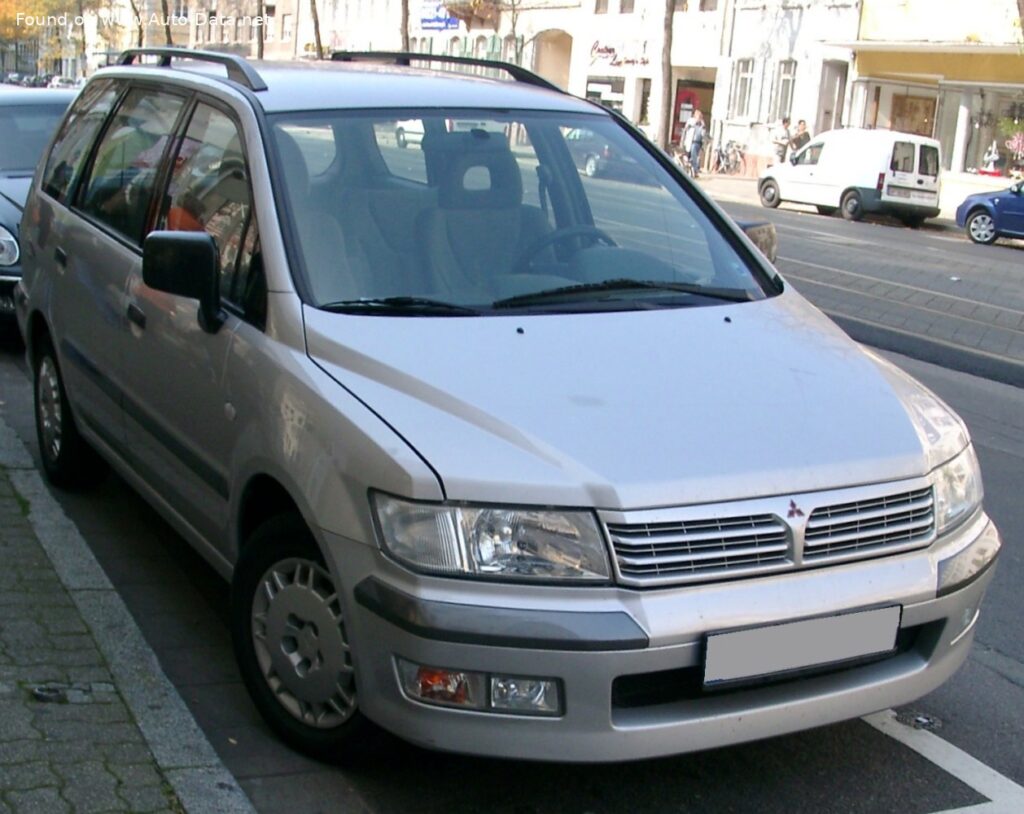
The Mitsubishi Space Wagon III 2.4 GDi (165 Hp), produced between 1998 and 2004, represents the third generation of Mitsubishi’s popular multi-purpose vehicle (MPV). While not widely sold in the United States, the Space Wagon held a significant position in the European and Asian markets as a practical and spacious family vehicle. It competed with models like the Renault Espace, Citroën Evasion, and Toyota Previa, offering a blend of affordability, versatility, and relatively modern technology for its time. The Space Wagon III aimed to provide a comfortable and functional transportation solution for families needing seven-passenger capacity and ample cargo space.
Mitsubishi Space Wagon III: An Overview
The Space Wagon III was a key model in Mitsubishi’s lineup during the late 1990s and early 2000s. It built upon the success of its predecessors, offering improved styling, enhanced safety features, and a more refined driving experience. The 2.4 GDi variant, equipped with a 2.4-liter gasoline direct injection engine, was a popular choice, providing a good balance of power and fuel efficiency. The vehicle’s design prioritized interior space and practicality, making it a favorite among families and those requiring a versatile vehicle for both personal and commercial use.
Engine & Performance
The heart of the Space Wagon III 2.4 GDi is its 2351 cm³ (143.47 cu. in.) inline-four cylinder engine. This engine utilizes Gasoline Direct Injection (GDi) technology, a relatively advanced feature for the period, which improves fuel efficiency and power output compared to traditional port fuel injection systems. Producing 165 horsepower at 5700 rpm and 230 Nm (169.64 lb.-ft.) of torque at 3500 rpm, the engine delivers adequate performance for everyday driving and comfortably handles a fully loaded vehicle. The power-to-weight ratio of 9.2 kg/Hp (109.3 Hp/tonne) and torque-to-weight ratio of 6.6 kg/Nm (152.3 Nm/tonne) demonstrate a reasonable level of responsiveness. Power per liter is rated at 70.2 Hp/l. The engine is transversely mounted at the front of the vehicle and is coupled with a 5-speed manual transmission, providing drivers with direct control over gear selection. The front-wheel-drive configuration contributes to fuel efficiency and simplifies the drivetrain.
Design & Features
The Mitsubishi Space Wagon III is a five-door minivan designed to accommodate up to seven passengers. Its boxy, yet functional, design maximizes interior space. The vehicle’s dimensions – 4600 mm (181.1 in.) in length, 1775 mm (69.88 in.) in width, and 1690 mm (66.54 in.) in height – provide ample headroom and legroom for all occupants. A key feature is its versatile seating arrangement, with the rear seats capable of folding flat or being removed entirely to create a large cargo area. Trunk space ranges from a minimum of 240 liters (8.48 cu. ft.) with all seats in place to a maximum of 1930 liters (68.16 cu. ft.) with the rear seats folded. Safety features for the era included an Anti-lock Braking System (ABS), which helped improve braking performance and stability. The suspension system, featuring wishbone front suspension and coil springs in the rear, provides a comfortable ride. Hydraulic power steering enhances maneuverability. The vehicle rides on 205/65 R15 tires.
Technical Specifications
| Brand | Mitsubishi |
| Model | Space Wagon |
| Generation | Space Wagon III |
| Type (Engine) | 2.4 GDi (165 Hp) |
| Start of production | 1998 |
| End of production | 2004 |
| Powertrain Architecture | Internal Combustion engine |
| Body type | Minivan |
| Seats | 7 |
| Doors | 5 |
| Fuel Type | Petrol (Gasoline) |
| Weight-to-power ratio | 9.2 kg/Hp |
| Weight-to-torque ratio | 6.6 kg/Nm |
| Power | 165 Hp @ 5700 rpm |
| Power per litre | 70.2 Hp/l |
| Torque | 230 Nm @ 3500 rpm / 169.64 lb.-ft. @ 3500 rpm |
| Engine layout | Front, Transverse |
| Engine displacement | 2351 cm3 / 143.47 cu. in. |
| Number of cylinders | 4 |
| Engine configuration | Inline |
| Cylinder Bore | 86.5 mm / 3.41 in. |
| Piston Stroke | 100 mm / 3.94 in. |
| Compression ratio | 11.5:1 |
| Number of valves per cylinder | 4 |
| Fuel injection system | Direct injection |
| Engine aspiration | Naturally aspirated engine |
| Valvetrain | DOHC |
| Kerb Weight | 1510 kg / 3328.98 lbs |
| Max. weight | 2180 kg / 4806.08 lbs |
| Max load | 670 kg / 1477.1 lbs |
| Trunk (boot) space – minimum | 240 l / 8.48 cu. ft. |
| Trunk (boot) space – maximum | 1930 l / 68.16 cu. ft. |
| Fuel tank capacity | 63 l / 16.64 US gal | 13.86 UK gal |
| Length | 4600 mm / 181.1 in. |
| Width | 1775 mm / 69.88 in. |
| Height | 1690 mm / 66.54 in. |
| Wheelbase | 2780 mm / 109.45 in. |
| Front track | 1500 mm / 59.06 in. |
| Rear (Back) track | 1535 mm / 60.43 in. |
| Drivetrain Architecture | The Internal combustion engine (ICE) drives the front wheels of the vehicle. |
| Drive wheel | Front wheel drive |
| Number of gears and type of gearbox | 5 gears, manual transmission |
| Front suspension | Wishbone |
| Rear suspension | Coil spring |
| Front brakes | Ventilated discs |
| Rear brakes | Disc |
| Assisting systems | ABS (Anti-lock braking system) |
| Steering type | Steering rack and pinion |
| Power steering | Hydraulic Steering |
| Tires size | 205/65 R15 |
The Mitsubishi Space Wagon III 2.4 GDi, while not a common sight on American roads, offered a compelling package of space, practicality, and efficiency for European and Asian buyers. Its GDi engine and versatile interior made it a popular choice for families seeking a reliable and functional MPV.