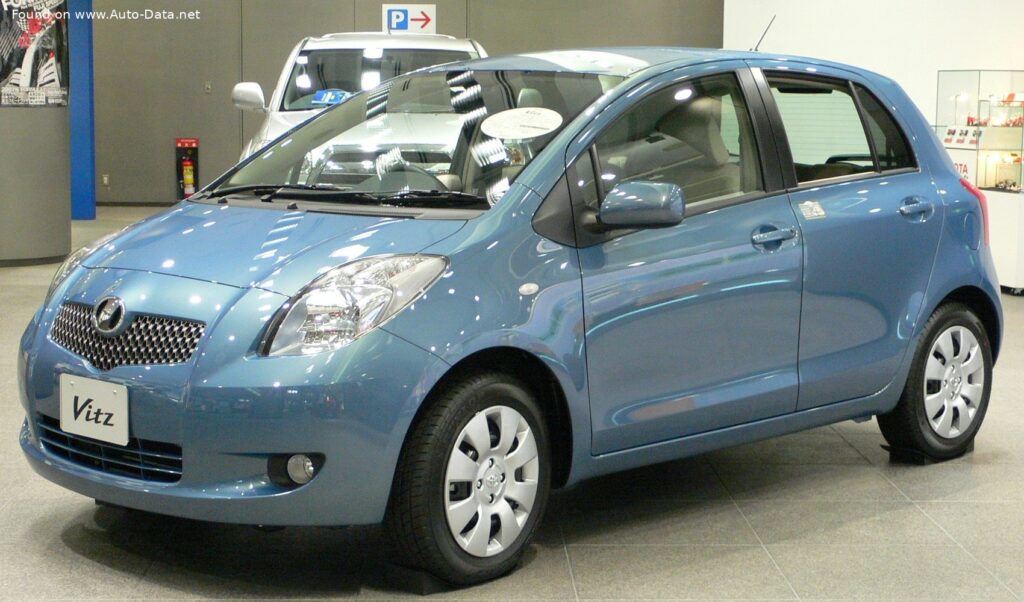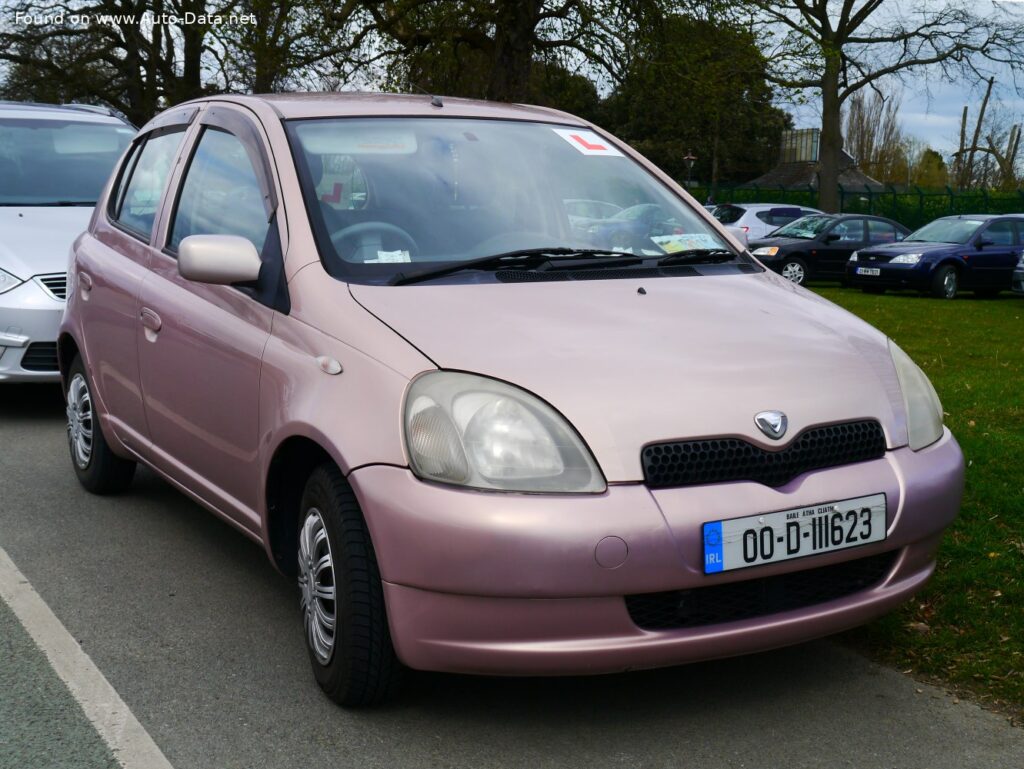
The Toyota Vitz, known as the Toyota Yaris in many global markets including the United States (starting with the second generation), is a subcompact hatchback produced by Toyota Motor Corporation. The first generation, known as the Vitz in Japan and much of Asia, was introduced in 1999 and continued in production through 2005. This model marked Toyota’s entry into the burgeoning supermini segment, offering a practical, fuel-efficient, and surprisingly spacious vehicle in a small package. The Vitz I was primarily aimed at urban drivers and first-time car buyers, and quickly gained popularity for its maneuverability and reliability. While not initially sold in the US, the Vitz laid the groundwork for the Yaris’s eventual success in the American market.
Toyota Vitz I: A Detailed Overview
The Vitz I represented a significant shift in Toyota’s design philosophy, moving towards a more rounded and contemporary aesthetic. It was available in both 3-door and 5-door configurations, catering to different lifestyle needs. The vehicle’s compact dimensions made it ideal for navigating congested city streets and parking in tight spaces. The first generation Vitz was a key player in the Japanese automotive market, known for its adherence to the “Kei car” spirit of maximizing interior space within strict size regulations, even though it didn’t strictly qualify as a Kei car.
Engine & Performance
The 1.0i 16V variant of the Vitz I is powered by a 997 cc (60.84 cubic inches) inline-four cylinder gasoline engine. This engine produces 70 horsepower at 6000 rpm and 95 Nm (70.07 lb-ft) of torque at 4000 rpm. While not a performance powerhouse, the engine is characterized by its responsiveness and fuel efficiency. The power-to-weight ratio of 11.6 kg/Hp (86.4 Hp/tonne) and torque-to-weight ratio of 8.5 kg/Nm (117.3 Nm/tonne) contribute to a surprisingly lively driving experience, especially in urban environments. The engine utilizes a multi-port fuel injection system and a double overhead camshaft (DOHC) valvetrain, enhancing its efficiency and power delivery. The Vitz I featured a naturally aspirated engine, relying on atmospheric pressure for intake, a common characteristic of vehicles in this class during the late 1990s and early 2000s. It was paired with a 5-speed manual transmission, providing drivers with direct control over the powertrain.
Design & Features
The Toyota Vitz I is a classic example of late-1990s/early-2000s hatchback design. Its rounded shape and relatively tall roofline maximized interior space for its footprint. The 3-door and 5-door options offered varying levels of practicality, with the 5-door being more family-oriented. Inside, the Vitz I prioritized functionality and ease of use. The interior was designed to be durable and easy to clean, reflecting its target demographic. Safety features for the time included an Anti-lock Braking System (ABS), which was becoming increasingly common on vehicles in this segment. The steering system employed a hydraulic power steering rack and pinion, providing a balance between assisted steering and road feel. The vehicle’s suspension consisted of a wishbone setup at the front and a trailing arm configuration at the rear, offering a comfortable ride quality. The standard tire size was 155/80 R13 S.
Technical Specifications
| Brand | Toyota |
| Model | Vitz |
| Generation | Vitz I |
| Type (Engine) | 1.0i 16V (70 Hp) |
| Start of production | 1999 |
| End of production | 2005 |
| Powertrain Architecture | Internal Combustion engine |
| Body type | Hatchback |
| Seats | 5 |
| Doors | 3/5 |
| Fuel consumption (urban) | 4.6 l/100 km (51.1 US mpg, 61.4 UK mpg, 21.7 km/l) |
| Fuel consumption (extra urban) | 3.3 l/100 km (71.3 US mpg, 85.6 UK mpg, 30.3 km/l) |
| Fuel Type | Petrol (Gasoline) |
| Weight-to-power ratio | 11.6 kg/Hp |
| Power | 70 Hp @ 6000 rpm |
| Power per litre | 70.2 Hp/l |
| Torque | 95 Nm @ 4000 rpm (70.07 lb.-ft. @ 4000 rpm) |
| Engine layout | Front, Transverse |
| Engine displacement | 997 cm3 (60.84 cu. in.) |
| Number of cylinders | 4 |
| Engine configuration | Inline |
| Cylinder Bore | 69 mm (2.72 in.) |
| Piston Stroke | 66.7 mm (2.63 in.) |
| Compression ratio | 10:1 |
| Number of valves per cylinder | 4 |
| Fuel injection system | Multi-port manifold injection |
| Engine aspiration | Naturally aspirated engine |
| Valvetrain | DOHC |
| Kerb Weight | 810 kg (1785.74 lbs.) |
| Max. weight | 1085 kg (2392.02 lbs.) |
| Max load | 275 kg (606.27 lbs.) |
| Fuel tank capacity | 40 l (10.57 US gal | 8.8 UK gal) |
| Length | 3610 mm (142.13 in.) |
| Width | 1660 mm (65.35 in.) |
| Height | 1500 mm (59.06 in.) |
| Wheelbase | 2370 mm (93.31 in.) |
| Front track | 1450 mm (57.09 in.) |
| Rear track | 1430 mm (56.3 in.) |
| Minimum turning circle | 8.6 m (28.22 ft.) |
| Drivetrain Architecture | Front wheel drive, Internal Combustion engine |
| Number of gears | 5 |
| Gearbox type | Manual transmission |
| Front suspension | Wishbone |
| Rear suspension | Trailing arm |
| Front brakes | Ventilated discs |
| Rear brakes | Drum |
| Assisting systems | ABS (Anti-lock braking system) |
| Steering type | Steering rack and pinion |
| Power steering | Hydraulic Steering |
| Tires size | 155/80 R13 S |
The Toyota Vitz I, while not a groundbreaking vehicle in terms of technological innovation, was a remarkably successful and influential subcompact hatchback. Its blend of practicality, fuel efficiency, and reliability cemented its position as a popular choice for urban commuters and first-time car buyers, particularly in Japan and Asia. It paved the way for the globally successful Yaris, and continues to be remembered as a significant milestone in Toyota’s history.