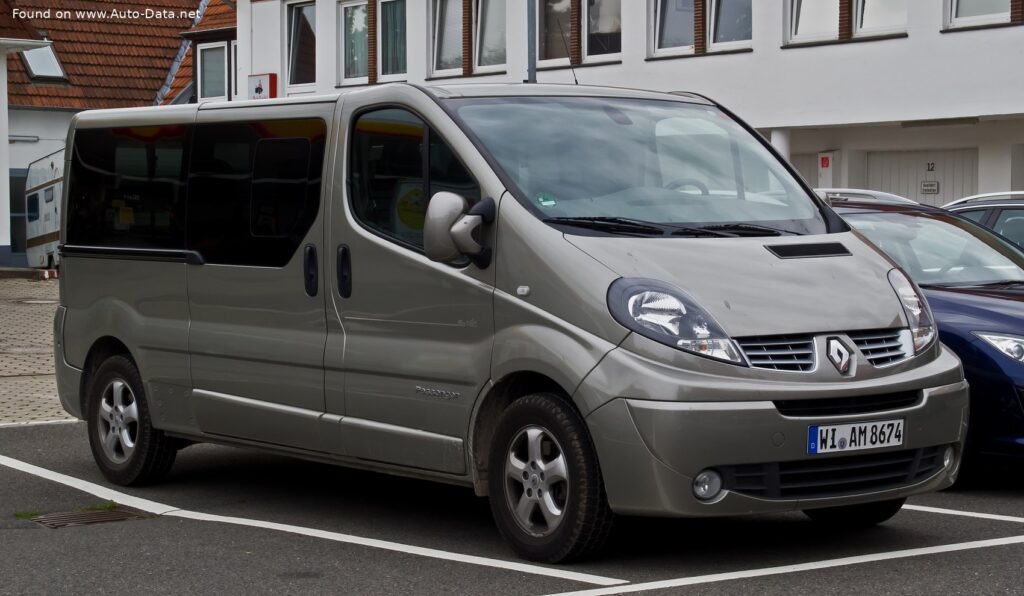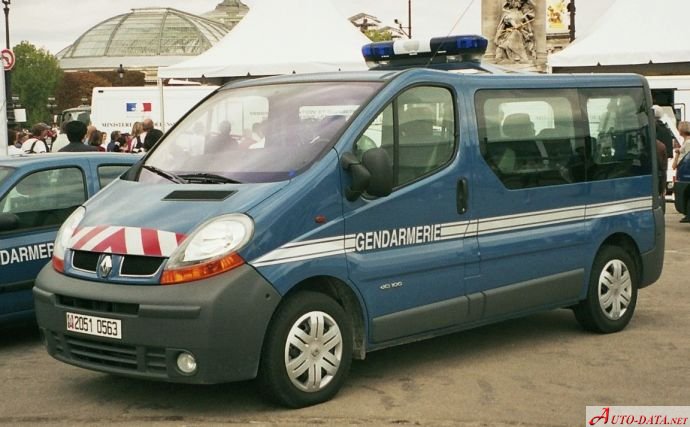
The Renault Trafic II (Phase I), produced from 2001 to 2006, represents the second generation of Renault’s popular light commercial vehicle. This iteration of the Trafic, a mid-size van, was primarily aimed at the European market, serving as a versatile workhorse for businesses and tradespeople. While not officially sold in the United States, the Trafic II, particularly in configurations like the 1.9 dCi (82 Hp) L2H1, became a common sight across Europe due to its practicality, reliability, and relatively affordable price point. The “L2H1” designation refers to the vehicle’s body length and roof height, indicating a medium-length wheelbase and a standard roof.
Renault Trafic II (Phase I): Overview
The Trafic II marked a significant step forward from its predecessor, offering improved comfort, safety, and performance. It shared its platform with the Opel/Vauxhall Vivaro and Nissan Primastar, a result of a joint venture between the Renault-Nissan Alliance and Opel. This collaboration allowed for economies of scale and a broader market reach. The Phase I models, produced between 2001 and 2006, established the Trafic II as a leading contender in the competitive European van segment.
Engine & Performance
The 1.9 dCi engine powering this variant of the Trafic II is a 1,870 cc (114.11 cu. in.) inline four-cylinder diesel engine. This engine, designated F9Q, produces 82 horsepower (Hp) at 3500 rpm and 190 Newton-meters (140.14 lb.-ft.) of torque at 2000 rpm. While not exceptionally powerful, the engine provides adequate performance for typical commercial applications. The power-to-weight ratio is 22.5 kg/Hp, and the torque-to-weight ratio is 9.7 kg/Nm. The engine utilizes a turbocharger with an intercooler to enhance efficiency and power output. Fuel injection is handled by a Diesel Commonrail system, contributing to improved combustion and reduced emissions for its time. Acceleration from 0 to 100 km/h (0-62 mph) takes 14.9 seconds, and 0 to 60 mph is achieved in approximately 14.2 seconds. The top speed is limited to 138 km/h (85.75 mph). Fuel economy figures are 9.3 l/100 km (25.3 US mpg) in urban conditions, 6.8 l/100 km (34.6 US mpg) on the extra-urban cycle, and 7.7 l/100 km (30.5 US mpg) combined.
Design & Features
The Renault Trafic II (Phase I) is a four-door minivan designed to maximize cargo space and practicality. It can accommodate up to nine passengers, making it suitable for both commercial and family use. The L2H1 configuration offers a balance between interior volume and maneuverability. The vehicle’s design is functional rather than flamboyant, prioritizing utility and durability. Key features include a relatively spacious cabin, a large rear cargo area, and a practical layout. Safety features for the period included an Anti-lock Braking System (ABS). The front brakes are ventilated discs, while the rear brakes are solid discs. The steering system utilizes a rack and pinion setup for precise handling. The vehicle rides on 16-inch wheels with tire size 195/65 R16. The Trafic II’s robust construction and relatively simple mechanicals contributed to its reputation for reliability and ease of maintenance.
Technical Specifications
| Brand | Renault |
| Model | Trafic |
| Generation | Trafic II (Phase I) |
| Type (Engine) | 1.9 dCi (82 Hp) L2H1 |
| Start of production | 2001 |
| End of production | 2006 |
| Powertrain Architecture | Internal Combustion engine |
| Body type | Minivan |
| Seats | 9 |
| Doors | 4 |
| Fuel consumption (urban) | 9.3 l/100 km (25.3 US mpg) |
| Fuel consumption (extra urban) | 6.8 l/100 km (34.6 US mpg) |
| Fuel consumption (combined) | 7.7 l/100 km (30.5 US mpg) |
| Fuel Type | Diesel |
| Acceleration 0 – 100 km/h | 14.9 sec |
| Acceleration 0 – 62 mph | 14.9 sec |
| Acceleration 0 – 60 mph | 14.2 sec |
| Maximum speed | 138 km/h (85.75 mph) |
| Weight-to-power ratio | 22.5 kg/Hp |
| Weight-to-torque ratio | 9.7 kg/Nm |
| Power | 82 Hp @ 3500 rpm |
| Torque | 190 Nm @ 2000 rpm (140.14 lb.-ft. @ 2000 rpm) |
| Engine layout | Front, Transverse |
| Engine Model/Code | F9Q |
| Engine displacement | 1870 cm3 (114.11 cu. in.) |
| Engine configuration | Inline |
| Number of valves per cylinder | 2 |
| Fuel injection system | Diesel Commonrail |
| Engine oil capacity | 4.6 l (4.86 US qt | 4.05 UK qt) |
| Coolant capacity | 6.5 l (6.87 US qt | 5.72 UK qt) |
| Kerb Weight | 1846 kg (4069.73 lbs.) |
| Max. weight | 2900 kg (6393.41 lbs.) |
| Max load | 1054 kg (2323.67 lbs.) |
| Fuel tank capacity | 90 l (23.78 US gal | 19.8 UK gal) |
| Length | 5182 mm (204.02 in.) |
| Width | 1904 mm (74.96 in.) |
| Height | 1940 mm (76.38 in.) |
| Wheelbase | 3498 mm (137.72 in.) |
| Front track | 1615 mm (63.58 in.) |
| Rear track | 1630 mm (64.17 in.) |
| Drivetrain | Front wheel drive |
| Number of gears | 5 gears, manual transmission |
| Front brakes | Ventilated discs |
| Rear brakes | Disc |
| Assisting systems | ABS (Anti-lock braking system) |
| Steering type | Steering rack and pinion |
| Tires size | 195/65 R16 |
| Wheel rims size | 16 |
The Renault Trafic II (Phase I) 1.9 dCi L2H1, while not a performance vehicle, offered a practical and reliable solution for commercial and personal transport needs in Europe. Its robust design, efficient engine, and versatile configuration made it a popular choice for businesses and families alike. The collaborative engineering with Opel and Nissan further solidified its position in the competitive light commercial vehicle market.