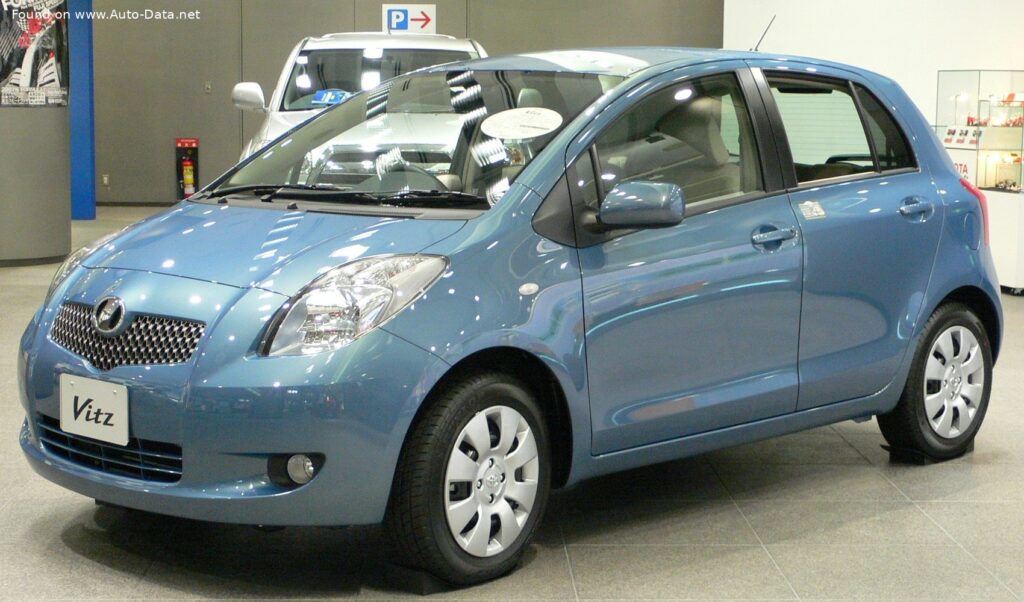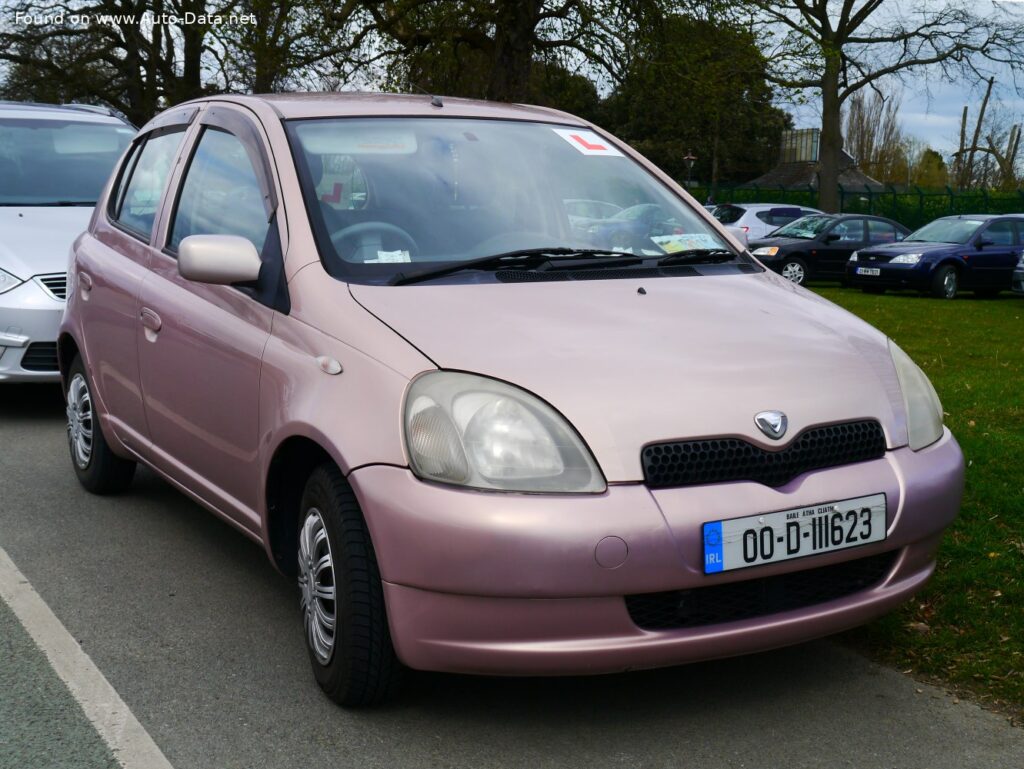
The Toyota Vitz, known as the Toyota Yaris in many global markets including the United States, represents Toyota’s entry into the subcompact hatchback segment. The first generation, produced from 1999 to 2005 (referred to here as the Vitz I), was a pivotal model for Toyota, designed to appeal to a younger demographic and offer efficient, urban-focused transportation. While not initially sold in the US, the Vitz I established the Yaris’s reputation for reliability, fuel economy, and nimble handling – qualities that would eventually make the Yaris a successful model in North America with the introduction of the second generation. The Vitz I was primarily marketed in Japan and Europe, offering a practical and affordable alternative to larger, more expensive vehicles.
Toyota Vitz I 1.5 VVT-I 16V: An Overview
The Vitz I 1.5 VVT-I 16V is a specific variant of the first-generation Vitz, powered by Toyota’s 1NZ-FE 1.5-liter inline-four engine. This engine, equipped with Variable Valve Timing-intelligence (VVT-i), delivers a balance of performance and fuel efficiency. The Vitz I was available in both 3-door and 5-door configurations, catering to different lifestyle needs. Its compact dimensions and responsive handling made it particularly well-suited for navigating crowded city streets. The 1.5L engine was considered a step up in performance compared to the base 1.0L engine offered in some markets, providing a more engaging driving experience.
Engine & Performance
The heart of the Vitz I 1.5 VVT-I 16V is the 1NZ-FE engine, a 1.5-liter (1496 cm3 or 91.29 cu. in.) inline-four cylinder gasoline engine. This naturally aspirated engine produces 109 horsepower at 6000 rpm and 143 Nm (105.47 lb.-ft.) of torque at 4200 rpm. The VVT-i system optimizes valve timing for improved performance and fuel economy across the engine’s operating range. The engine’s power-to-weight ratio is 8.6 kg/Hp, or 116 Hp/tonne, and the torque-to-weight ratio is 6.6 kg/Nm, or 152.1 Nm/tonne. Power per liter is a respectable 72.9 Hp/l. Power is delivered to the front wheels via a 5-speed manual transmission. The drivetrain architecture is a conventional front-wheel-drive setup, with the internal combustion engine directly powering the front axle. This configuration contributes to the Vitz’s relatively simple and reliable mechanical design.
Design & Features
The Vitz I features a distinctive, rounded hatchback design that was considered modern for its time. Available as either a 3-door or 5-door model, the Vitz prioritized interior space efficiency within its compact footprint. The interior was designed with practicality in mind, offering seating for five passengers. While not lavishly equipped by modern standards, the Vitz I offered essential features such as power steering (hydraulic), and an Anti-lock Braking System (ABS) for enhanced safety. The suspension system consists of a wishbone setup at the front and a trailing arm configuration at the rear, providing a comfortable ride and responsive handling. The vehicle’s dimensions are 3630 mm (142.91 in.) in length, 1660 mm (65.35 in.) in width, and 1485 mm (58.46 in.) in height, with a wheelbase of 2370 mm (93.31 in.). The turning circle is a tight 8.6 m (28.22 ft), making it easy to maneuver in urban environments. The tires are sized 185/55 R14 S.
Technical Specifications
| Brand | Toyota |
| Model | Vitz |
| Generation | Vitz I |
| Type (Engine) | 1.5 VVT-I 16V (109 Hp) |
| Start of production | 1999 year |
| End of production | 2005 year |
| Powertrain Architecture | Internal Combustion engine |
| Body type | Hatchback |
| Seats | 5 |
| Doors | 3/5 |
| Fuel Type | Petrol (Gasoline) |
| Weight-to-power ratio | 8.6 kg/Hp |
| Weight-to-torque ratio | 6.6 kg/Nm |
| Power | 109 Hp @ 6000 rpm |
| Power per litre | 72.9 Hp/l |
| Torque | 143 Nm @ 4200 rpm / 105.47 lb.-ft. @ 4200 rpm |
| Engine layout | Front, Transverse |
| Engine Model/Code | 1NZ-FE |
| Engine displacement | 1496 cm3 / 91.29 cu. in. |
| Number of cylinders | 4 |
| Engine configuration | Inline |
| Cylinder Bore | 75 mm / 2.95 in. |
| Piston Stroke | 84.7 mm / 3.33 in. |
| Compression ratio | 10.5:1 |
| Number of valves per cylinder | 4 |
| Fuel injection system | Multi-port manifold injection |
| Engine aspiration | Naturally aspirated engine |
| Valvetrain | DOHC |
| Kerb Weight | 940 kg / 2072.35 lbs |
| Max. weight | 1245 kg / 2744.76 lbs |
| Max load | 305 kg / 672.41 lbs |
| Fuel tank capacity | 45 l / 11.89 US gal | 9.9 UK gal |
| Length | 3630 mm / 142.91 in. |
| Width | 1660 mm / 65.35 in. |
| Height | 1485 mm / 58.46 in. |
| Wheelbase | 2370 mm / 93.31 in. |
| Front track | 1445 mm / 56.89 in. |
| Rear (Back) track | 1420 mm / 55.91 in. |
| Minimum turning circle | 8.6 m / 28.22 ft |
| Drivetrain Architecture | ICE drives front wheels |
| Drive wheel | Front wheel drive |
| Number of gears | 5 gears, manual transmission |
| Front suspension | Wishbone |
| Rear suspension | Trailing arm |
| Front brakes | Ventilated discs |
| Rear brakes | Disc |
| Assisting systems | ABS (Anti-lock braking system) |
| Steering type | Steering rack and pinion |
| Power steering | Hydraulic Steering |
| Tires size | 185/55 R14 S |
The Toyota Vitz I 1.5 VVT-I 16V, while not a performance car, offered a compelling package of efficiency, reliability, and practicality. It laid the groundwork for the Yaris’s success in global markets and remains a popular choice for those seeking a dependable and economical subcompact hatchback.