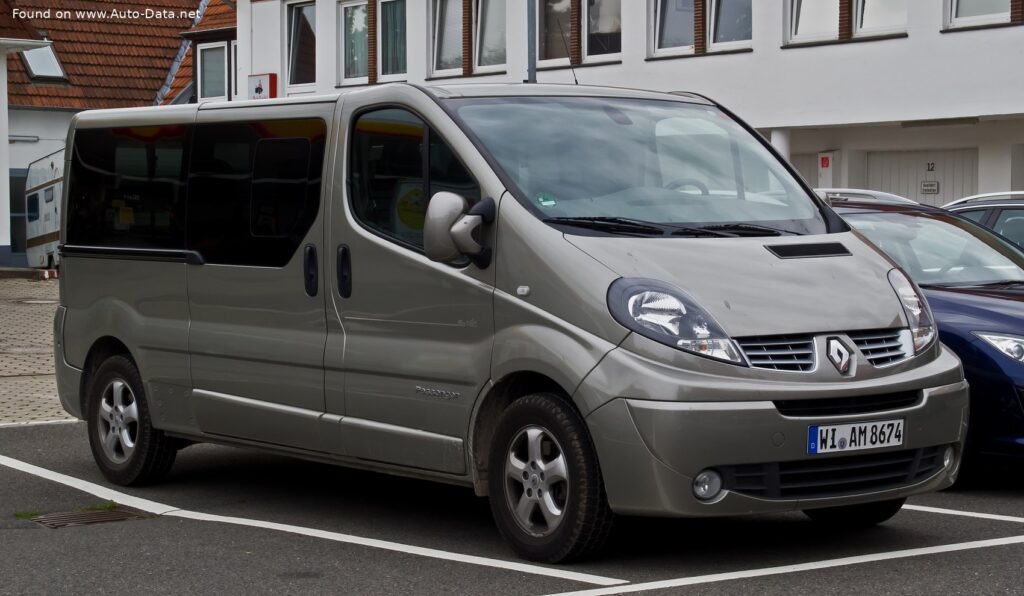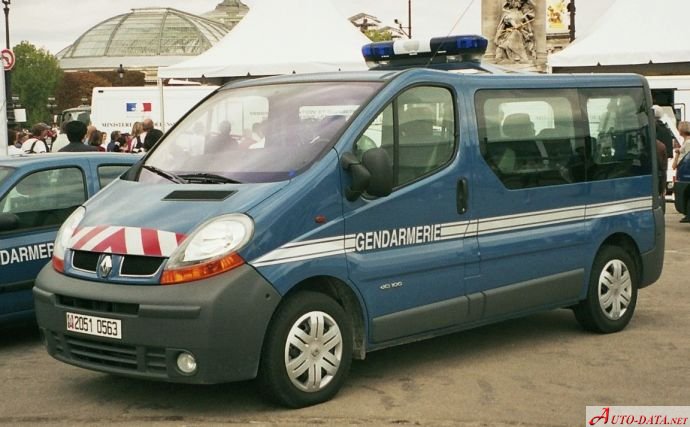
The Renault Trafic II (Phase I) 2.5 dCi (135 Hp) L1H1, produced between 2003 and 2006, represents a significant iteration in Renault’s popular light commercial vehicle line. This model, a minivan configuration, primarily served the European market as a versatile workhorse and people carrier. While not officially sold in the United States, understanding its specifications and features provides insight into the demands of the European van segment and Renault’s engineering approach during this period. The Trafic II offered a balance of practicality, efficiency, and a relatively comfortable driving experience for its class.
Renault Trafic II (Phase I): Overview and Market Position
The Trafic II, launched in 2001, was a collaborative effort with Opel/Vauxhall and Nissan, resulting in the Opel Vivaro and Nissan Primastar, respectively. This partnership allowed for shared development costs and economies of scale. The Phase I version, spanning from 2003 to 2006, introduced refinements to the original design and powertrain options. The L1H1 designation refers to the vehicle’s length and roof height – ‘L1’ indicating the shorter wheelbase and ‘H1’ denoting the lower roof. This configuration made it particularly suitable for urban environments where maneuverability and parking were key considerations. The Trafic II competed directly with vehicles like the Volkswagen Transporter, Ford Transit, and Mercedes-Benz Vito, all popular choices for businesses and families needing a flexible and spacious vehicle.
Engine & Performance
The 2.5 dCi engine, a core component of the Trafic II Phase I, was a robust and relatively efficient diesel powerplant. Producing 135 horsepower at 3500 rpm and 310 Nm (228.64 lb.-ft.) of torque at 1750 rpm, it provided adequate performance for both hauling cargo and transporting passengers. The engine’s 2463 cm³ (150.3 cu. in.) displacement and inline configuration contributed to its durability and relatively smooth operation. A turbocharger with an intercooler enhanced power output and improved throttle response. The engine utilized a Diesel Commonrail fuel injection system, a technology that improved fuel atomization and reduced emissions compared to older diesel injection systems. Acceleration from 0 to 100 km/h (0-62 mph) took 12.6 seconds, while the top speed was rated at 163 km/h (101.28 mph). The weight-to-power ratio of 14.3 kg/Hp and weight-to-torque ratio of 6.2 kg/Nm indicated a reasonable balance between power and vehicle mass.
Design & Features
The Renault Trafic II Phase I adopted a functional, yet modern design for its time. Its minivan body style offered a spacious interior capable of accommodating up to nine passengers. The four-door configuration provided easy access for both driver and passengers. The L1H1 variant’s dimensions – 4782 mm (188.27 in.) in length, 1904 mm (74.96 in.) in width, and 1940 mm (76.38 in.) in height – made it relatively compact for a vehicle of its type.
Inside, the Trafic II prioritized practicality. The cabin was designed to be durable and easy to clean, with hard-wearing materials used throughout. Safety features, while not as comprehensive as those found in modern vehicles, included an Anti-lock Braking System (ABS) as standard equipment. The vehicle’s steering employed a rack and pinion system for precise handling. The 6-speed manual transmission provided drivers with good control over the engine’s power delivery. Standard tire size was 195/65 R16, mounted on 16-inch wheel rims. The vehicle’s front-wheel-drive configuration contributed to its fuel efficiency and reduced mechanical complexity.
Technical Specifications
| Brand | Renault |
| Model | Trafic |
| Generation | Trafic II (Phase I) |
| Type (Engine) | 2.5 dCi (135 Hp) L1H1 |
| Start of production | 2003 |
| End of production | 2006 |
| Powertrain Architecture | Internal Combustion engine |
| Body type | Minivan |
| Seats | 9 |
| Doors | 4 |
| Fuel consumption (urban) | 10.3 l/100 km (22.8 US mpg / 27.4 UK mpg / 9.7 km/l) |
| Fuel consumption (extra urban) | 7.7 l/100 km (30.5 US mpg / 36.7 UK mpg / 13 km/l) |
| Fuel consumption (combined) | 8.6 l/100 km (27.4 US mpg / 32.8 UK mpg / 11.6 km/l) |
| Fuel Type | Diesel |
| Acceleration 0 – 100 km/h | 12.6 sec |
| Acceleration 0 – 62 mph | 12.6 sec |
| Acceleration 0 – 60 mph | 12 sec |
| Maximum speed | 163 km/h (101.28 mph) |
| Weight-to-power ratio | 14.3 kg/Hp |
| Weight-to-torque ratio | 6.2 kg/Nm |
| Power | 135 Hp @ 3500 rpm |
| Torque | 310 Nm @ 1750 rpm (228.64 lb.-ft. @ 1750 rpm) |
| Engine layout | Front, Transverse |
| Engine Model/Code | G9U |
| Engine displacement | 2463 cm3 (150.3 cu. in.) |
| Engine configuration | Inline |
| Number of valves per cylinder | 4 |
| Fuel injection system | Diesel Commonrail |
| Engine oil capacity | 8 l (8.45 US qt | 7.04 UK qt) |
| Coolant capacity | 5.6 l (5.92 US qt | 4.93 UK qt) |
| Kerb Weight | 1935 kg (4265.94 lbs.) |
| Max. weight | 2835 kg (6250.11 lbs.) |
| Max load | 900 kg (1984.16 lbs.) |
| Fuel tank capacity | 90 l (23.78 US gal | 19.8 UK gal) |
| Length | 4782 mm (188.27 in.) |
| Width | 1904 mm (74.96 in.) |
| Height | 1940 mm (76.38 in.) |
| Wheelbase | 3098 mm (121.97 in.) |
| Front track | 1615 mm (63.58 in.) |
| Rear track | 1630 mm (64.17 in.) |
| Drivetrain | Front wheel drive |
| Number of gears | 6 gears, manual transmission |
| Front brakes | Ventilated discs |
| Rear brakes | Disc |
| Assisting systems | ABS (Anti-lock braking system) |
| Steering type | Steering rack and pinion |
| Tires size | 195/65 R16 |
| Wheel rims size | 16 |
The Renault Trafic II (Phase I) 2.5 dCi (135 Hp) L1H1, while not a vehicle commonly found on American roads, represents a significant example of European commercial vehicle design. Its blend of practicality, efficiency, and reasonable performance made it a popular choice for businesses and families alike, solidifying its position as a key player in the competitive light commercial vehicle market.