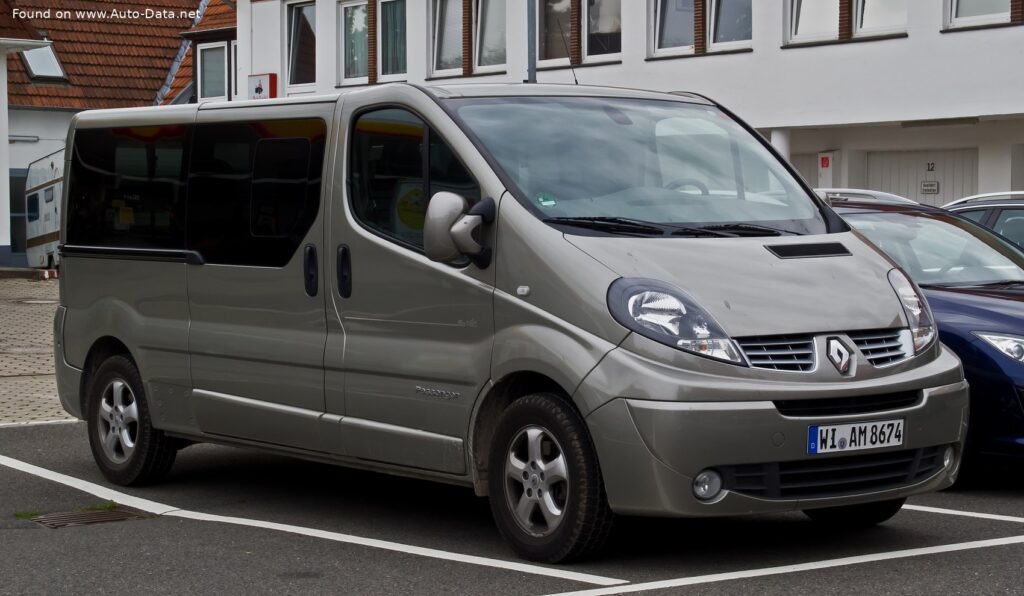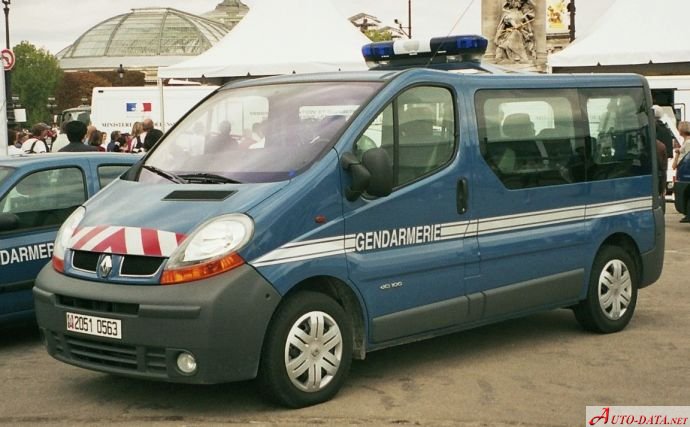
The Renault Trafic II (Phase I) 2.5 dCi (135 Hp) L2H1 is a commercial vehicle produced by the French manufacturer Renault from 2003 to 2006. Part of the second generation of the Trafic line, this model served as a popular choice in the European market for businesses and individuals requiring a versatile and practical van. The “L2H1” designation refers to the vehicle’s body length and roof height – a medium length and low roof configuration. While not officially sold in the United States, understanding its specifications provides insight into the European light commercial vehicle segment of the early 2000s.
Renault Trafic II (Phase I) Overview
The Trafic II represented a significant upgrade over its predecessor, offering improved comfort, safety, and performance. It was designed to compete with other mid-size vans like the Volkswagen Transporter, Ford Transit, and Mercedes-Benz Vito. The Phase I models, produced between 2003 and 2006, established the foundation for the second-generation Trafic, with subsequent phases introducing refinements and updated features. The vehicle’s primary appeal lay in its balance of cargo capacity, fuel efficiency, and relatively compact dimensions, making it suitable for urban deliveries and a variety of commercial applications.
Engine & Performance
The Renault Trafic II (Phase I) 2.5 dCi (135 Hp) L2H1 is powered by a 2.5-liter, inline four-cylinder diesel engine, designated the G9U. This engine utilizes a turbocharger with an intercooler and a diesel common rail fuel injection system to deliver a power output of 135 horsepower at 3500 rpm and 310 Nm (228.64 lb.-ft.) of torque at 1750 rpm. This torque figure provides ample pulling power for hauling loads, while the turbocharging enhances responsiveness. The engine’s power-to-weight ratio is 14.5 kg/Hp, and the torque-to-weight ratio is 6.3 kg/Nm. The engine is transversely mounted at the front of the vehicle.
Power is delivered to the front wheels via a six-speed manual transmission. Acceleration from 0 to 100 km/h (0-62 mph) takes 12.6 seconds, and 0 to 60 mph is achieved in approximately 12 seconds. The vehicle has a maximum speed of 163 km/h (101.28 mph). Fuel economy is rated at 8.6 l/100 km (27.4 US mpg, 32.8 UK mpg) on a combined cycle, with 10.3 l/100 km (22.8 US mpg, 27.4 UK mpg) in urban conditions and 7.7 l/100 km (30.5 US mpg, 36.7 UK mpg) on the extra-urban cycle.
Design & Features
The Renault Trafic II (Phase I) L2H1 is a four-door minivan configuration, capable of seating up to nine passengers, although it was more commonly used as a cargo van. Its body style is characterized by a functional, utilitarian design, prioritizing practicality over aesthetics. The L2H1 variant offers a good compromise between interior space and maneuverability. The vehicle’s dimensions are: length 5182 mm (204.02 in), width 1904 mm (74.96 in), and height 1940 mm (76.38 in), with a wheelbase of 3498 mm (137.72 in).
Safety features for the time included an Anti-lock Braking System (ABS). The braking system consists of ventilated discs on the front wheels and discs on the rear. The steering system is a rack and pinion type. The vehicle rides on 16-inch wheels with 195/65 R16 tires. The Trafic II offered a relatively comfortable driving experience for a commercial vehicle, with a focus on driver ergonomics and ease of use. The interior was designed to be durable and easy to clean, reflecting its intended use as a work vehicle.
Technical Specifications
| Brand | Renault |
| Model | Trafic |
| Generation | Trafic II (Phase I) |
| Type (Engine) | 2.5 dCi (135 Hp) L2H1 |
| Start of production | 2003 |
| End of production | 2006 |
| Powertrain Architecture | Internal Combustion engine |
| Body type | Minivan |
| Seats | 9 |
| Doors | 4 |
| Fuel consumption (urban) | 10.3 l/100 km (22.8 US mpg, 27.4 UK mpg) |
| Fuel consumption (extra urban) | 7.7 l/100 km (30.5 US mpg, 36.7 UK mpg) |
| Fuel consumption (combined) | 8.6 l/100 km (27.4 US mpg, 32.8 UK mpg) |
| Fuel Type | Diesel |
| Acceleration 0 – 100 km/h | 12.6 sec |
| Acceleration 0 – 62 mph | 12.6 sec |
| Acceleration 0 – 60 mph | 12 sec |
| Maximum speed | 163 km/h (101.28 mph) |
| Weight-to-power ratio | 14.5 kg/Hp |
| Weight-to-torque ratio | 6.3 kg/Nm |
| Power | 135 Hp @ 3500 rpm |
| Torque | 310 Nm @ 1750 rpm (228.64 lb.-ft. @ 1750 rpm) |
| Engine layout | Front, Transverse |
| Engine Model/Code | G9U |
| Engine displacement | 2463 cm3 (150.3 cu. in.) |
| Engine configuration | Inline |
| Number of valves per cylinder | 4 |
| Fuel injection system | Diesel Commonrail |
| Engine oil capacity | 8 l (8.45 US qt | 7.04 UK qt) |
| Coolant capacity | 5.6 l (5.92 US qt | 4.93 UK qt) |
| Kerb Weight | 1951 kg (4301.22 lbs.) |
| Max. weight | 3070 kg (6768.19 lbs.) |
| Max load | 1119 kg (2466.97 lbs.) |
| Fuel tank capacity | 90 l (23.78 US gal | 19.8 UK gal) |
| Length | 5182 mm (204.02 in.) |
| Width | 1904 mm (74.96 in.) |
| Height | 1940 mm (76.38 in.) |
| Wheelbase | 3498 mm (137.72 in.) |
| Front track | 1615 mm (63.58 in.) |
| Rear track | 1630 mm (64.17 in.) |
| Drivetrain | Front wheel drive |
| Number of gears | 6 gears, manual transmission |
| Front brakes | Ventilated discs |
| Rear brakes | Disc |
| Assisting systems | ABS (Anti-lock braking system) |
| Steering type | Steering rack and pinion |
| Tires size | 195/65 R16 |
| Wheel rims size | 16 |