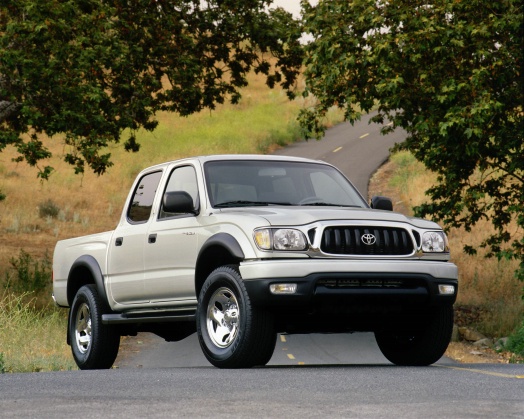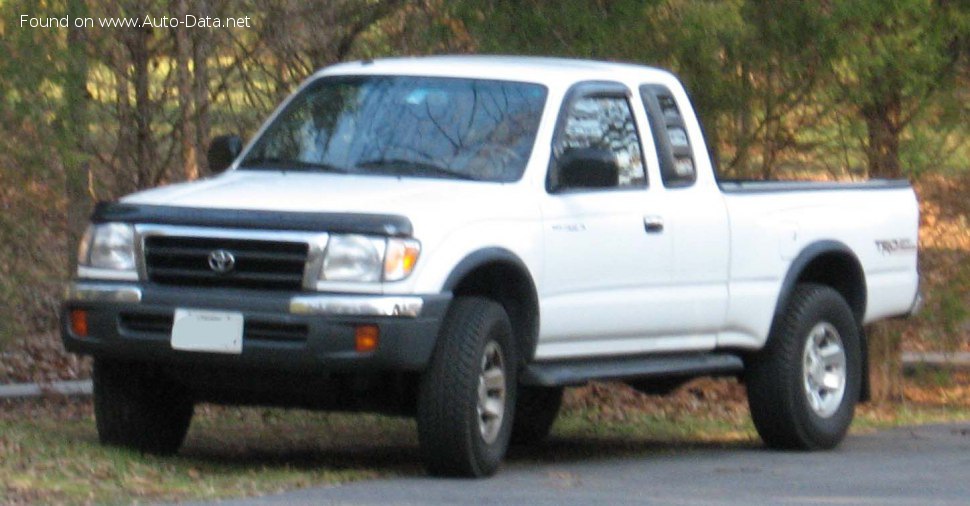
The Toyota Tacoma I xTracab 2.7 (150 Hp) 4WD is a compact pickup truck produced by Toyota from 1995 to 2000. Representing the first generation of the Tacoma, this vehicle was designed to replace the aging Toyota Hilux in the North American market, offering a more modern and feature-rich alternative. The xTracab designation refers to the extended cab configuration, providing limited rear seating and storage space. This model played a significant role in establishing the Tacoma as a popular and reliable choice for both personal and commercial use in the United States, known for its durability and off-road capability.
Toyota Tacoma I xTracab: A Detailed Overview
The first-generation Tacoma, including the xTracab 2.7 4WD variant, was a pivotal model for Toyota in the competitive North American pickup truck market. Prior to the Tacoma, Toyota’s pickup offerings were largely based on the Hilux, a globally successful but somewhat spartan vehicle. The Tacoma aimed to bridge the gap between the rugged utility of the Hilux and the comfort and features expected by American truck buyers. The xTracab configuration, with its small rear seats and extra storage, offered a compromise for those needing occasional passenger capacity without the full size of a crew cab.
Engine & Performance
The Tacoma I xTracab 2.7 4WD is powered by the 3RZ-FE 2.7-liter inline-four cylinder gasoline engine. This naturally aspirated engine produces 150 horsepower at 4800 rpm and 240 Nm (177.01 lb.-ft.) of torque at 4000 rpm. The engine features a double overhead camshaft (DOHC) valvetrain and multi-port fuel injection. The 2.7-liter engine, while not the most powerful option available in the Tacoma lineup (a V6 was also offered), provided a good balance of fuel efficiency and adequate performance for everyday use and light-duty tasks. The engine’s longitudinal front-engine layout contributes to a balanced weight distribution. The power-to-weight ratio is 99 Hp/tonne, and the torque-to-weight ratio is 158.4 Nm/tonne. Fuel economy is rated at approximately 13 liters per 100 kilometers (18.1 US mpg) in urban driving and 10.6 liters per 100 kilometers (22.2 US mpg) in extra-urban conditions. The vehicle utilizes a 5-speed manual transmission and a part-time four-wheel-drive system, enhancing its off-road capabilities.
Design & Features
The Toyota Tacoma I xTracab is a two-door pickup truck with seating for five passengers. Its body-on-frame construction provides a robust and durable platform. The xTracab configuration features a small rear seat area accessible via two small doors. The exterior styling is functional and utilitarian, typical of pickup trucks of the era. The Tacoma offered a relatively comfortable interior for its class, with features such as air conditioning, an AM/FM radio, and basic instrumentation. Safety features were limited by the standards of the 1990s, typically including seatbelts and a basic braking system. The vehicle’s ride height (ground clearance) is 275 mm (10.83 inches), contributing to its off-road prowess. The Tacoma’s design prioritized practicality and durability, making it a popular choice for work and recreational use. The vehicle’s dimensions are 5055 mm (199.02 in) in length, 1689 mm (66.5 in) in width, and 1560 mm (61.42 in) in height. The wheelbase measures 3096 mm (121.89 in).
Technical Specifications
| Brand | Toyota |
| Model | Tacoma |
| Generation | Tacoma I xTracab |
| Type (Engine) | 2.7 (150 Hp) 4WD |
| Start of production | 1995 |
| End of production | 2000 |
| Powertrain Architecture | Internal Combustion engine |
| Body type | Pick-up |
| Seats | 5 |
| Doors | 2 |
| Fuel consumption (urban) | 13 l/100 km (18.1 US mpg) |
| Fuel consumption (extra urban) | 10.6 l/100 km (22.2 US mpg) |
| Fuel Type | Petrol (Gasoline) |
| Weight-to-power ratio | 10.1 kg/Hp |
| Weight-to-torque ratio | 6.3 kg/Nm |
| Power | 150 Hp @ 4800 rpm |
| Torque | 240 Nm @ 4000 rpm (177.01 lb.-ft. @ 4000 rpm) |
| Engine layout | Front, Longitudinal |
| Engine Model/Code | 3RZ-FE |
| Engine displacement | 2694 cm3 (164.4 cu. in.) |
| Number of cylinders | 4 |
| Engine configuration | Inline |
| Cylinder Bore | 95 mm (3.74 in.) |
| Piston Stroke | 95 mm (3.74 in.) |
| Compression ratio | 9.5:1 |
| Number of valves per cylinder | 4 |
| Fuel injection system | Multi-port manifold injection |
| Engine aspiration | Naturally aspirated |
| Valvetrain | DOHC |
| Engine oil capacity | 5.4 l (5.71 US qt | 4.75 UK qt) |
| Coolant capacity | 8.2 l (8.66 US qt | 7.21 UK qt) |
| Kerb Weight | 1515 kg (3340 lbs.) |
| Max. weight | 2268 kg (5000.08 lbs.) |
| Max load | 753 kg (1660.08 lbs.) |
| Fuel tank capacity | 57 l (15.06 US gal | 12.54 UK gal) |
| Length | 5055 mm (199.02 in.) |
| Width | 1689 mm (66.5 in.) |
| Height | 1560 mm (61.42 in.) |
| Wheelbase | 3096 mm (121.89 in.) |
| Front track | 1311 mm (51.61 in.) |
| Rear track | 1440 mm (56.69 in.) |
| Ride height (ground clearance) | 275 mm (10.83 in.) |
| Drive wheel | All wheel drive (4×4) |
| Number of gears | 5 |
| Gearbox type | Manual transmission |
| Front brakes | Ventilated discs |
| Rear brakes | Drum |
| Tires size | 205/75 R15; 235/55 R16 |
| Wheel rims size | 15; 16 |
The Toyota Tacoma I xTracab 2.7 4WD remains a popular choice among enthusiasts and those seeking a reliable and capable used pickup truck. Its combination of durability, off-road capability, and relatively simple mechanical design contribute to its enduring appeal. While superseded by newer generations of the Tacoma, the first-generation model holds a significant place in Toyota’s North American history and continues to be a respected vehicle in the used car market.