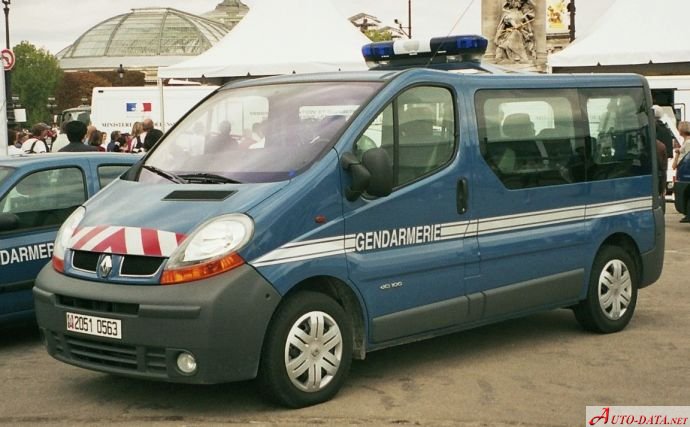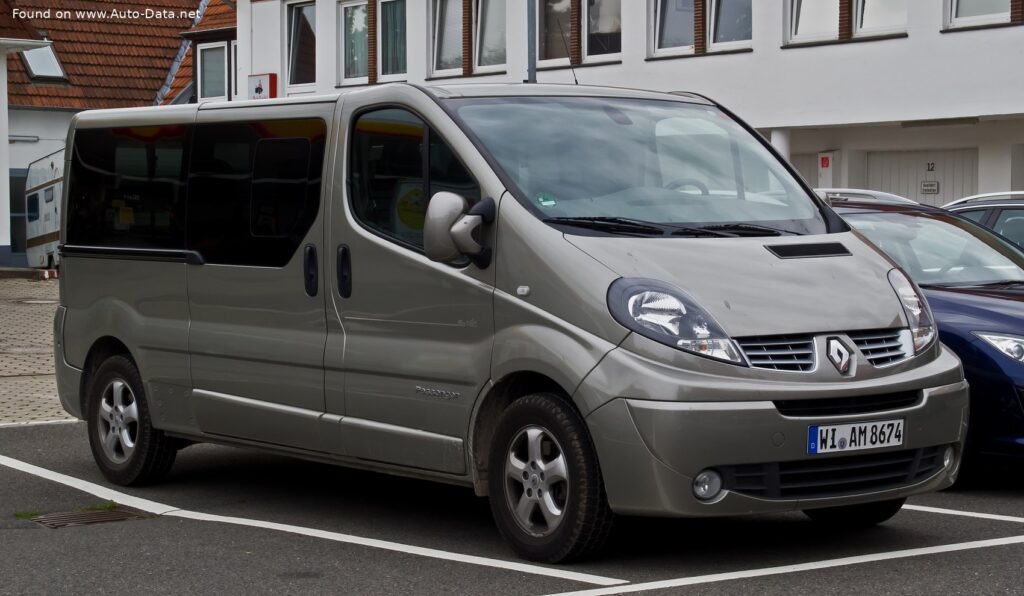
The Renault Trafic II (Phase II) 2.0 (120 Hp) L1H1, produced between 2006 and 2011, represents a significant iteration of Renault’s popular light commercial vehicle. This model, a minivan configuration, primarily served the European market as a versatile workhorse and people carrier. While not officially sold in the United States, understanding its specifications provides insight into the European van segment and Renault’s engineering during this period. The Trafic II, and specifically this Phase II update, aimed to balance practicality, efficiency, and a reasonable level of comfort for both commercial and family use.
Renault Trafic II (Phase II): A Detailed Overview
The Trafic II, launched in 2001, was a collaborative effort with Opel/Vauxhall and Nissan, resulting in the Opel Vivaro and Nissan Primastar, respectively. This partnership allowed for shared development costs and economies of scale. The Phase II update, introduced in 2006, brought refinements to the engine range, interior, and exterior styling. The L1H1 designation indicates a short wheelbase and low roof height, making it a relatively compact van suitable for urban environments. The 2.0-liter gasoline engine variant, producing 120 horsepower, was a common choice for operators prioritizing lower initial cost over diesel fuel economy.
Engine & Performance
The Renault Trafic II (Phase II) 2.0 (120 Hp) L1H1 is powered by a naturally aspirated 2.0-liter inline four-cylinder gasoline engine, designated the F4R. This engine delivers a peak power output of 120 horsepower at 4700 rpm and 190 Nm (140.14 lb.-ft.) of torque at 3750 rpm. The engine features multi-port fuel injection and a compression ratio optimized for both performance and fuel efficiency. Power per liter is rated at 60.1 Hp/l. The engine’s front, transverse mounting contributes to a compact engine bay layout. Power is delivered to the front wheels via a six-speed manual transmission. Performance figures include a 0-100 km/h (0-62 mph) acceleration time of 14.5 seconds, and a 0-60 mph time of 13.8 seconds. The maximum speed is electronically limited to 160 km/h (99.42 mph). The weight-to-power ratio is 15.4 kg/Hp, and the weight-to-torque ratio is 9.7 kg/Nm.
Design & Features
The Trafic II (Phase II) L1H1 is a four-door minivan capable of seating up to nine passengers. Its body style is characterized by a functional, utilitarian design, prioritizing interior space and cargo capacity. The L1H1 configuration offers a relatively compact footprint, making it easier to maneuver in tight spaces compared to longer wheelbase or high-roof variants. The Phase II update included minor cosmetic changes, such as revised front grille and headlight designs. Inside, the cabin is designed for durability and practicality, with hard-wearing materials and a focus on ease of cleaning. Safety features for the period included ABS (Anti-lock Braking System) as standard equipment. The vehicle’s dimensions are: length 4782 mm (188.27 in.), width 1904 mm (74.96 in.), and height 1950 mm (76.77 in.). The wheelbase measures 3098 mm (121.97 in.).
Technical Specifications
| Brand | Renault |
| Model | Trafic |
| Generation | Trafic II (Phase II) |
| Type (Engine) | 2.0 (120 Hp) L1H1 |
| Start of production | 2006 |
| End of production | 2011 |
| Powertrain Architecture | Internal Combustion engine |
| Body type | Minivan |
| Seats | 9 |
| Doors | 4 |
| Fuel consumption (urban) | 13.3 l/100 km (17.7 US mpg, 21.2 UK mpg, 7.5 km/l) |
| Fuel consumption (extra urban) | 8.6 l/100 km (27.4 US mpg, 32.8 UK mpg, 11.6 km/l) |
| Fuel consumption (combined) | 10.3 l/100 km (22.8 US mpg, 27.4 UK mpg, 9.7 km/l) |
| Fuel Type | Petrol (Gasoline) |
| Acceleration 0 – 100 km/h | 14.5 sec |
| Acceleration 0 – 62 mph | 14.5 sec |
| Acceleration 0 – 60 mph | 13.8 sec |
| Maximum speed | 160 km/h (99.42 mph) |
| Weight-to-power ratio | 15.4 kg/Hp |
| Weight-to-torque ratio | 9.7 kg/Nm |
| Power | 120 Hp @ 4700 rpm |
| Torque | 190 Nm @ 3750 rpm (140.14 lb.-ft. @ 3750 rpm) |
| Engine layout | Front, Transverse |
| Engine Model/Code | F4R |
| Engine displacement | 1998 cm3 (121.93 cu. in.) |
| Engine configuration | Inline |
| Number of valves per cylinder | 4 |
| Fuel injection system | Multi-port manifold injection |
| Engine aspiration | Naturally aspirated |
| Engine oil capacity | 5.25 l (5.55 US qt | 4.62 UK qt) |
| Coolant capacity | 6.5 l (6.87 US qt | 5.72 UK qt) |
| Kerb Weight | 1851 kg (4080.76 lbs.) |
| Max. weight | 2865 kg (6316.24 lbs.) |
| Max load | 1014 kg (2235.49 lbs.) |
| Fuel tank capacity | 90 l (23.78 US gal | 19.8 UK gal) |
| Length | 4782 mm (188.27 in.) |
| Width | 1904 mm (74.96 in.) |
| Height | 1950 mm (76.77 in.) |
| Wheelbase | 3098 mm (121.97 in.) |
| Front track | 1615 mm (63.58 in.) |
| Rear track | 1630 mm (64.17 in.) |
| Drivetrain | Front wheel drive |
| Number of gears | 6 gears, manual transmission |
| Front brakes | Ventilated discs |
| Rear brakes | Disc |
| Tires size | 205/65 R16 |
| Wheel rims size | 16 |
The Renault Trafic II (Phase II) 2.0 (120 Hp) L1H1, while not a high-performance vehicle, offered a practical and reliable solution for commercial and family transport in Europe. Its blend of functionality, reasonable running costs, and collaborative engineering made it a popular choice in its segment.