
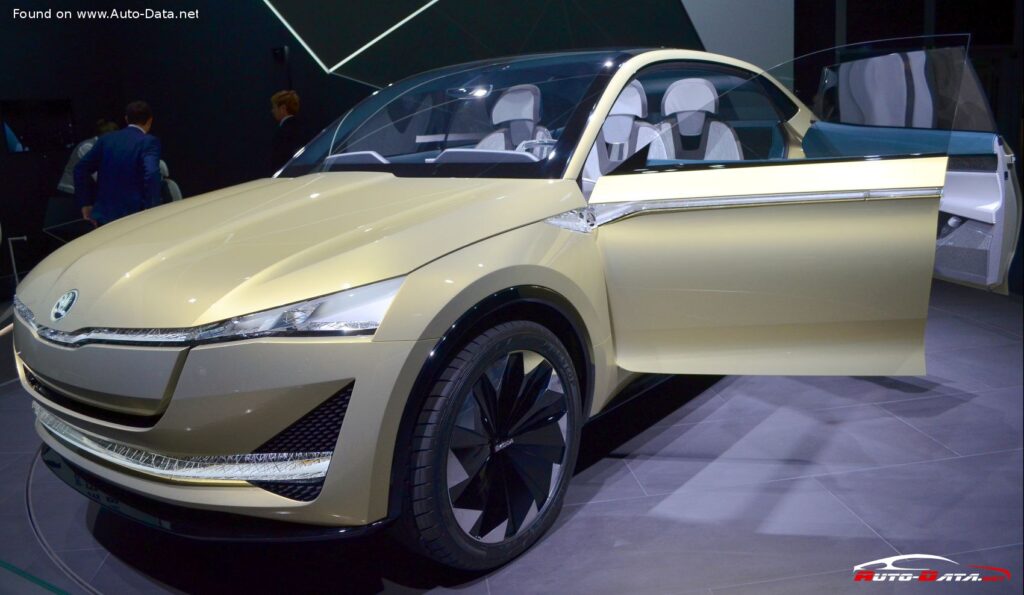
The Skoda Vision E is an all-electric concept vehicle unveiled by the Czech automaker in 2017. Representing Skoda’s vision for a future electric coupe-SUV, the Vision E showcased the brand’s potential in the burgeoning electric vehicle market. While never reaching production in its exact concept form, it heavily influenced the design and technology found in subsequent Skoda electric models, most notably the Enyaq iV. The Vision E aimed to blend the practicality of an SUV with the sleek aesthetics of a coupe, offering a glimpse into Skoda’s strategy for appealing to a modern, environmentally conscious consumer base. It was primarily intended as a demonstration of Skoda’s capabilities and a signal of their commitment to electrification, rather than a direct precursor to a specific production model for the US market.
Skoda Vision E: A Technological Showcase
The Vision E concept arrived at a pivotal moment for Skoda and the automotive industry as a whole. Traditional internal combustion engines were facing increasing scrutiny, and electric vehicle technology was rapidly advancing. Skoda, a brand known for its value and practicality within the Volkswagen Group, saw an opportunity to leverage electric power to enhance its offerings. The Vision E was designed to be a statement – a demonstration that electric vehicles could be stylish, spacious, and capable. It was presented as a vehicle that could comfortably accommodate a family while delivering a compelling driving experience and a substantial all-electric range.
Engine & Performance
At the heart of the Skoda Vision E lies a fully electric powertrain, delivering a combined system output of 306 horsepower. This power is distributed to all four wheels via an all-wheel-drive system, providing enhanced traction and stability. The vehicle utilizes a Battery Electric Vehicle (BEV) architecture, meaning it relies solely on electricity for propulsion. The concept boasted an impressive all-electric range of 500 kilometers (310.69 miles) based on the New European Driving Cycle (NEDC) standard, a figure that aimed to alleviate range anxiety – a common concern among potential EV buyers. The Vision E was capable of reaching a top speed of 180 kilometers per hour (111.85 mph). While specific details regarding the battery capacity were not fully disclosed, the concept was designed to support fast-charging capabilities, allowing for convenient replenishment of the battery at public charging stations. The instant torque characteristic of electric motors provided brisk acceleration and a responsive driving experience, hallmarks of modern electric vehicles.
Design & Features
The Skoda Vision E’s design language blended the practicality of an SUV with the dynamic lines of a coupe. Its exterior featured a sleek, aerodynamic silhouette, characterized by a sloping roofline and sculpted body panels. The front fascia incorporated Skoda’s signature grille design, albeit adapted for an electric vehicle with a more closed-off appearance. Full LED headlights and taillights contributed to the vehicle’s modern aesthetic. The interior of the Vision E was designed to be spacious and technologically advanced. It featured a minimalist dashboard layout with a large touchscreen display serving as the central control interface. The concept incorporated advanced driver-assistance systems, including adaptive cruise control, lane-keeping assist, and automatic emergency braking, reflecting the growing emphasis on safety and convenience in the automotive industry. The vehicle offered seating for four passengers, with a focus on comfort and connectivity. The use of sustainable materials in the interior further underscored Skoda’s commitment to environmental responsibility. The overall design aimed to create a premium and inviting cabin environment, showcasing the potential for electric vehicles to offer a refined and luxurious experience.
Technical Specifications
| Brand | Skoda |
| Model | Vision E (Concept) |
| Generation | Vision E (Concept) |
| Type (Engine) | 306 Hp Electric |
| Start of production | 2017 |
| Powertrain Architecture | BEV (Electric Vehicle) |
| Body type | Coupe, SUV |
| Seats | 4 |
| Doors | 4 |
| Fuel Type | Electricity |
| Maximum speed | 180 km/h (111.85 mph) |
| All-electric range | 500 km (310.69 mi) |
| System power | 306 Hp |
| Length | 4645 mm (182.87 in.) |
| Width | 1917 mm (75.47 in.) |
| Height | 1550 mm (61.02 in.) |
| Wheelbase | 2850 mm (112.2 in.) |
| Drive wheel | All wheel drive (4×4) |
| Front brakes | Ventilated discs |
| Rear brakes | Ventilated discs |
The Skoda Vision E, while remaining a concept vehicle, served as a crucial stepping stone in Skoda’s transition towards electric mobility. It demonstrated the brand’s ability to design and engineer a compelling electric vehicle that combined performance, practicality, and style. The technologies and design elements showcased in the Vision E paved the way for the development of the Enyaq iV, Skoda’s first fully electric production model, which has become a significant player in the European EV market. The Vision E’s legacy lies not in its physical existence, but in its contribution to shaping the future of Skoda and the broader automotive landscape.
