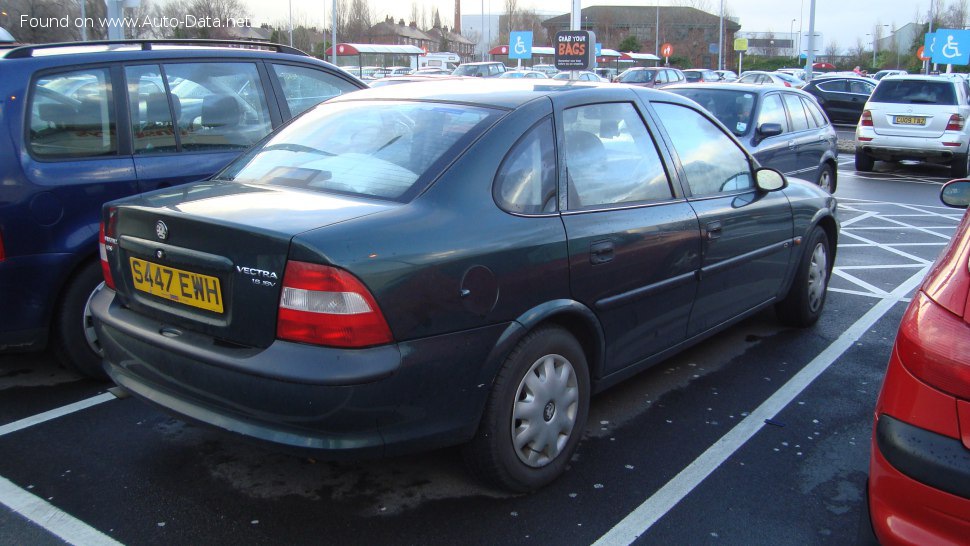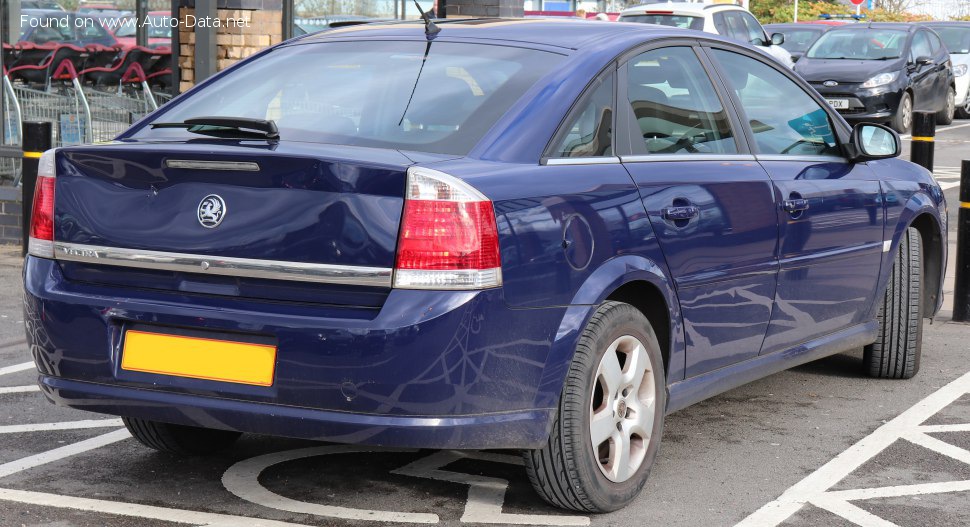
The Vauxhall Vectra C 3.0 V6 CDTi 24V ECOTEC Automatic, produced between 2002 and 2008, represents a significant iteration in Vauxhall’s mid-size family car lineage. As part of the Vectra C generation (1999-2008), this model aimed to provide a blend of comfort, practicality, and performance, particularly appealing to buyers seeking a diesel-powered alternative with a more refined driving experience. While the Vectra nameplate has been discontinued in favor of the Insignia, the C generation, and specifically this 3.0L V6 diesel variant, holds a place as a capable and relatively sophisticated vehicle of its era. It was primarily sold in Europe, where large sedans with diesel engines were, and continue to be, popular due to fuel efficiency and torque characteristics suited for long-distance driving.
Vauxhall Vectra C: A Detailed Overview
The Vectra C was designed to compete with established rivals like the Ford Mondeo, Volkswagen Passat, and Peugeot 406. It represented a move upmarket for Vauxhall, with a focus on improved build quality and a more contemporary design. The 3.0 V6 CDTi model, in particular, was positioned as a premium offering within the range, boasting a powerful and relatively quiet diesel engine paired with a smooth-shifting automatic transmission. This combination aimed to deliver a driving experience that was both engaging and comfortable, making it suitable for both daily commutes and longer journeys.
Engine & Performance
At the heart of the Vectra C 3.0 V6 CDTi lies the Z30DT 3.0-liter V6 turbodiesel engine. This engine produces 184 horsepower at 4000 rpm and a substantial 400 Nm (295 lb-ft) of torque between 1900 and 2700 rpm. The common rail direct injection system and turbocharger with intercooler contribute to both power output and fuel efficiency. The engine’s transverse mounting and front-wheel-drive configuration were typical for vehicles in this segment. The six-speed automatic transmission provides smooth gear changes and enhances the overall driving experience. Performance figures include a maximum speed of 224 km/h (139.19 mph). The weight-to-power ratio of 7.1 kg/Hp and weight-to-torque ratio of 3.3 kg/Nm demonstrate a good balance between engine output and vehicle mass.
Design & Features
The Vauxhall Vectra C is a four-door sedan with a relatively conservative, yet modern, design for its time. The body style prioritizes practicality and passenger space, offering seating for five occupants. Key features included ABS (Anti-lock Braking System) as standard, reflecting the growing emphasis on safety in the early 2000s. The interior was designed to be comfortable and functional, with a focus on ergonomics and ease of use. Trunk space is generous, ranging from a minimum of 500 liters (17.66 cu. ft.) to a maximum of 1050 liters (37.08 cu. ft.) with the rear seats folded down. The vehicle’s dimensions – 4611 mm (181.54 in.) in length, 1798 mm (70.79 in.) in width, and 1460 mm (57.48 in.) in height – place it squarely within the mid-size sedan category. A drag coefficient of 0.28 contributes to reasonable aerodynamic efficiency.
Technical Specifications
| Brand | Vauxhall |
| Model | Vectra |
| Generation | Vectra C |
| Type (Engine) | 3.0 V6 CDTi 24V ECOTEC (184 Hp) Automatic |
| Start of production | 2002 |
| End of production | 2008 |
| Powertrain Architecture | Internal Combustion engine |
| Body type | Sedan |
| Seats | 5 |
| Doors | 4 |
| Fuel consumption (urban) | 10.8 l/100 km (21.8 US mpg / 26.2 UK mpg / 9.3 km/l) |
| Fuel consumption (extra urban) | 5.6 l/100 km (42 US mpg / 50.4 UK mpg / 17.9 km/l) |
| Fuel consumption (combined) | 7.7 l/100 km (30.5 US mpg / 36.7 UK mpg / 13 km/l) |
| CO2 emissions | 208 g/km |
| Fuel Type | Diesel |
| Maximum speed | 224 km/h (139.19 mph) |
| Emission standard | Euro 4 |
| Weight-to-power ratio | 7.1 kg/Hp |
| Weight-to-torque ratio | 3.3 kg/Nm |
| Power | 184 Hp @ 4000 rpm |
| Power per litre | 62.2 Hp/l |
| Torque | 400 Nm @ 1900-2700 rpm (295.02 lb.-ft. @ 1900-2700 rpm) |
| Engine layout | Front, Transverse |
| Engine Model/Code | Z30DT |
| Engine displacement | 2958 cm3 (180.51 cu. in.) |
| Number of cylinders | 6 |
| Engine configuration | V-engine |
| Compression ratio | 18.5:1 |
| Number of valves per cylinder | 4 |
| Fuel injection system | Diesel Commonrail |
| Engine oil capacity | 7.5 l (7.93 US qt | 6.6 UK qt) |
| Coolant capacity | 8.3 l (8.77 US qt | 7.3 UK qt) |
| Kerb Weight | 1300 kg (2866.01 lbs.) |
| Trunk (boot) space – minimum | 500 l (17.66 cu. ft.) |
| Trunk (boot) space – maximum | 1050 l (37.08 cu. ft.) |
| Fuel tank capacity | 60 l (15.85 US gal | 13.2 UK gal) |
| Length | 4611 mm (181.54 in.) |
| Width | 1798 mm (70.79 in.) |
| Width including mirrors | 2036 mm (80.16 in.) |
| Height | 1460 mm (57.48 in.) |
| Wheelbase | 2700 mm (106.3 in.) |
| Drag coefficient (Cd) | 0.28 |
| Drivetrain Architecture | Internal Combustion engine (ICE) – Front Wheel Drive |
| Drive wheel | Front wheel drive |
| Number of gears and type of gearbox | 6 gears, automatic transmission |
| Front suspension | Independent, type McPherson with coil spring and anti-roll bar |
| Rear suspension | Independent multi-link suspension |
| Front brakes | Ventilated discs |
| Rear brakes | Disc |
| Assisting systems | ABS (Anti-lock braking system) |
The Vauxhall Vectra C 3.0 V6 CDTi Automatic, while no longer in production, remains a noteworthy example of a European mid-size sedan that offered a compelling combination of performance, efficiency, and practicality. Its diesel engine and automatic transmission made it a comfortable and capable long-distance cruiser, appealing to drivers who valued refinement and fuel economy.