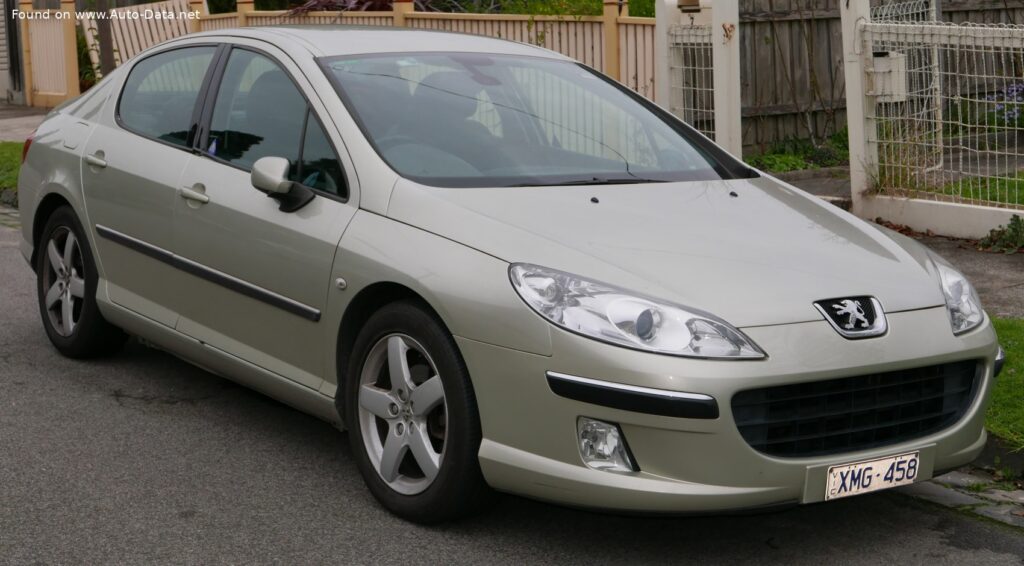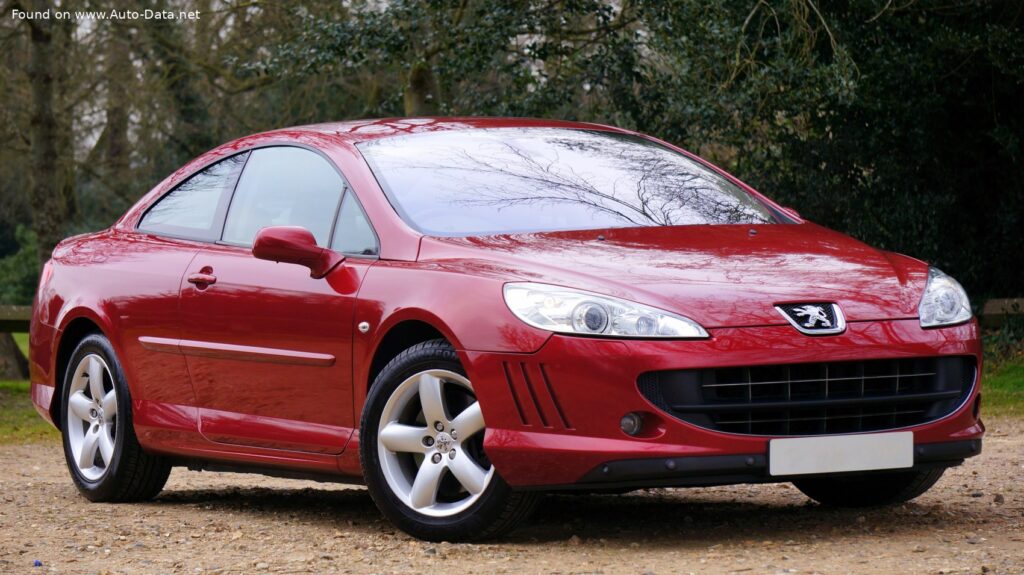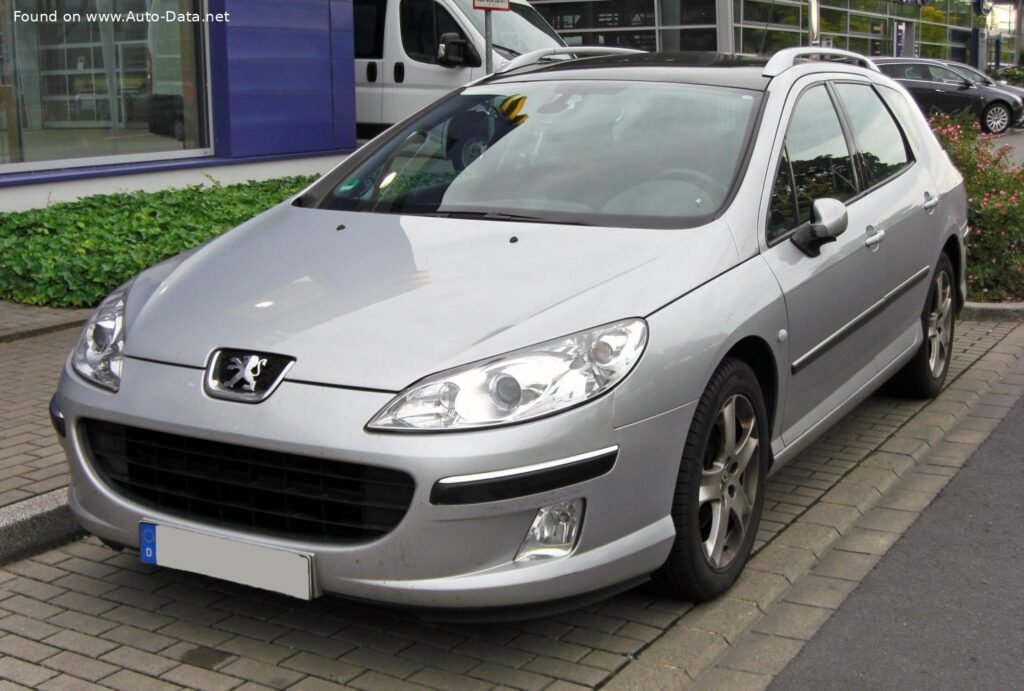
The Peugeot 407 SW 2.2 HDI, produced between 2006 and 2008, represents Peugeot’s entry into the competitive D-segment of station wagons (estate cars). Positioned as a practical and stylish alternative to traditional sedans, the 407 SW aimed to provide a blend of comfort, space, and fuel efficiency. While not officially sold in the United States, the 407 range, including the SW variant, was a significant model for Peugeot in Europe, offering a compelling package for families and those requiring versatile cargo capacity. The “SW” designation, standing for “Station Wagon,” highlights the vehicle’s primary focus on practicality and load-lugging ability.
Peugeot 407 SW 2.2 HDI: Overview and Market Position
The 407 SW was part of the larger 407 family, which replaced the Peugeot 406. The SW specifically targeted buyers who needed the increased versatility of a wagon without sacrificing the driving experience or refinement associated with the 407 platform. In a European market dominated by brands like Ford, Volkswagen, and Renault, the 407 SW distinguished itself with its distinctive styling and a focus on interior quality. It competed directly with models like the Ford Mondeo Estate, Volkswagen Passat Variant, and Renault Laguna Estate. The 2.2 HDI engine variant, equipped with a twin-turbo diesel, was a popular choice due to its balance of performance and fuel economy.
Engine & Performance
The heart of the Peugeot 407 SW 2.2 HDI is its 2.2-liter, inline-four cylinder diesel engine, designated the 4HT DW12BTED4. This engine produces 170 horsepower at 4,000 rpm and a substantial 370 Nm (272.9 lb.-ft.) of torque at just 1500 rpm. The twin-turbocharger configuration, coupled with an intercooler, allows for a broad torque curve, providing strong acceleration and effortless cruising. Power is delivered to the front wheels via a six-speed manual transmission. Acceleration from 0 to 100 km/h (0-62 mph) takes approximately 9 seconds, while the 0-60 mph sprint is achieved in 8.6 seconds. The 407 SW 2.2 HDI boasts a top speed of 221 km/h (137.32 mph). Fuel economy is a strong point, with combined cycle figures of 6.2 l/100 km (37.9 US mpg, 45.6 UK mpg), making it an efficient option for long-distance travel. The engine’s power-to-weight ratio is 97.1 hp per tonne, and the torque-to-weight ratio is 211.4 Nm per tonne.
Design & Features
The Peugeot 407 SW is a five-door, five-seat station wagon characterized by its sleek and modern design. The exterior styling features a sloping roofline and a relatively long wheelbase, contributing to a balanced and dynamic appearance. Inside, the 407 SW offers a spacious and well-appointed cabin. The rear seats can be folded down to create a large, flat load area, significantly increasing cargo capacity. Trunk space ranges from a minimum of 448 liters (15.82 cu. ft.) with the rear seats up to a maximum of 1365 liters (48.2 cu. ft.) with the seats folded. Standard features typically included air conditioning, power windows, central locking, and an audio system. Safety features, crucial for a family vehicle, included ABS (Anti-lock Braking System) and front and rear disc brakes. The vehicle’s kerb weight is 1750 kg (3858.09 lbs), with a maximum permissible weight of 2275 kg (5015.52 lbs). The suspension utilizes a double wishbone setup at the front and an independent multi-link system at the rear, providing a comfortable and controlled ride.
Technical Specifications
| Brand | Peugeot |
| Model | 407 |
| Generation | 407 SW |
| Type (Engine) | 2.2 HDI (170 Hp) |
| Start of production | 2006 |
| End of production | 2008 |
| Powertrain Architecture | Internal Combustion engine |
| Body type | Station wagon (estate) |
| Seats | 5 |
| Doors | 5 |
| Fuel consumption (urban) | 8.2 l/100 km (28.7 US mpg) |
| Fuel consumption (extra urban) | 5.1 l/100 km (46.1 US mpg) |
| Fuel consumption (combined) | 6.2 l/100 km (37.9 US mpg) |
| CO2 emissions | 165 g/km |
| Fuel Type | Diesel |
| Acceleration 0 – 100 km/h | 9 sec |
| Acceleration 0 – 62 mph | 9 sec |
| Acceleration 0 – 60 mph | 8.6 sec |
| Maximum speed | 221 km/h (137.32 mph) |
| Weight-to-power ratio | 10.3 kg/Hp |
| Weight-to-torque ratio | 4.7 kg/Nm |
| Power | 170 Hp @ 4000 rpm |
| Torque | 370 Nm @ 1500 rpm (272.9 lb.-ft. @ 1500 rpm) |
| Engine layout | Front, Transverse |
| Engine Model/Code | 4HT DW12BTED4 |
| Engine displacement | 2179 cm3 (132.97 cu. in.) |
| Number of cylinders | 4 |
| Engine configuration | Inline |
| Number of valves per cylinder | 4 |
| Fuel injection system | Diesel Commonrail |
| Engine aspiration | Twin-Turbo, Intercooler |
| Engine oil capacity | 5.25 l (5.55 US qt | 4.62 UK qt) |
| Coolant capacity | 9.7 l (10.25 US qt | 8.53 UK qt) |
| Kerb Weight | 1750 kg (3858.09 lbs) |
| Max. weight | 2275 kg (5015.52 lbs) |
| Max load | 525 kg (1157.43 lbs) |
| Trunk (boot) space – minimum | 448 l (15.82 cu. ft.) |
| Trunk (boot) space – maximum | 1365 l (48.2 cu. ft.) |
| Fuel tank capacity | 66 l (17.44 US gal | 14.52 UK gal) |
| Max. roof load | 80 kg (176.37 lbs) |
| Permitted trailer load with brakes (12%) | 1900 kg (4188.78 lbs) |
| Permitted trailer load without brakes | 750 kg (1653.47 lbs) |
| Permitted towbar download | 80 kg (176.37 lbs) |
| Length | 4763 mm (187.52 in) |
| Width | 1811 mm (71.3 in) |
| Height | 1486 mm (58.5 in) |
| Wheelbase | 2725 mm (107.28 in) |
| Front track | 1554 mm (61.18 in) |
| Rear track | 1510 mm (59.45 in) |
| Minimum turning circle | 12 m (39.37 ft) |
| Drivetrain | Front wheel drive |
| Number of gears | 6 gears, manual transmission |
| Front suspension | Double wishbone |
| Rear suspension | Independent multi-link suspension |
| Front brakes | Ventilated discs |
| Rear brakes | Disc |
| Tires size | 215/55 R17 |
| Wheel rims size | 17 |