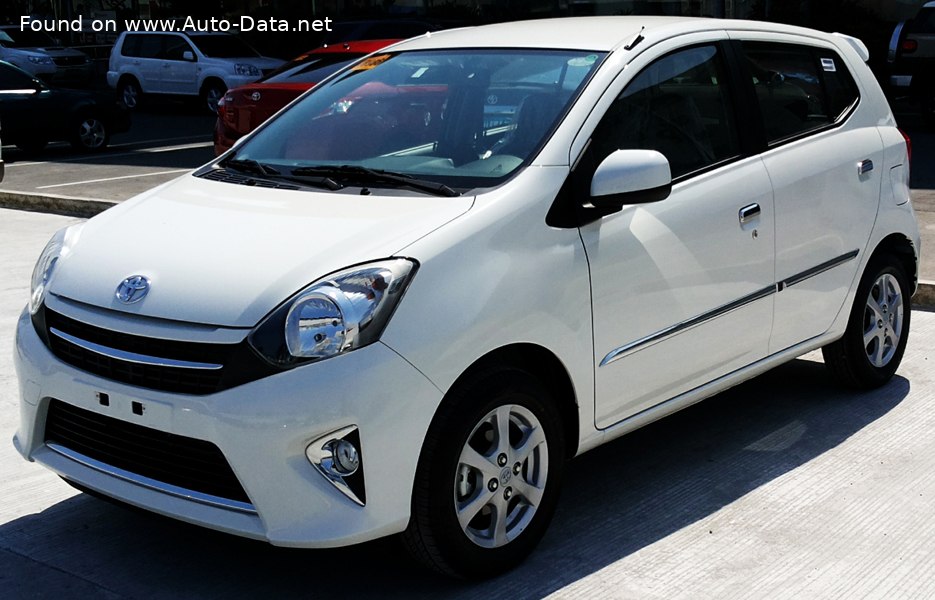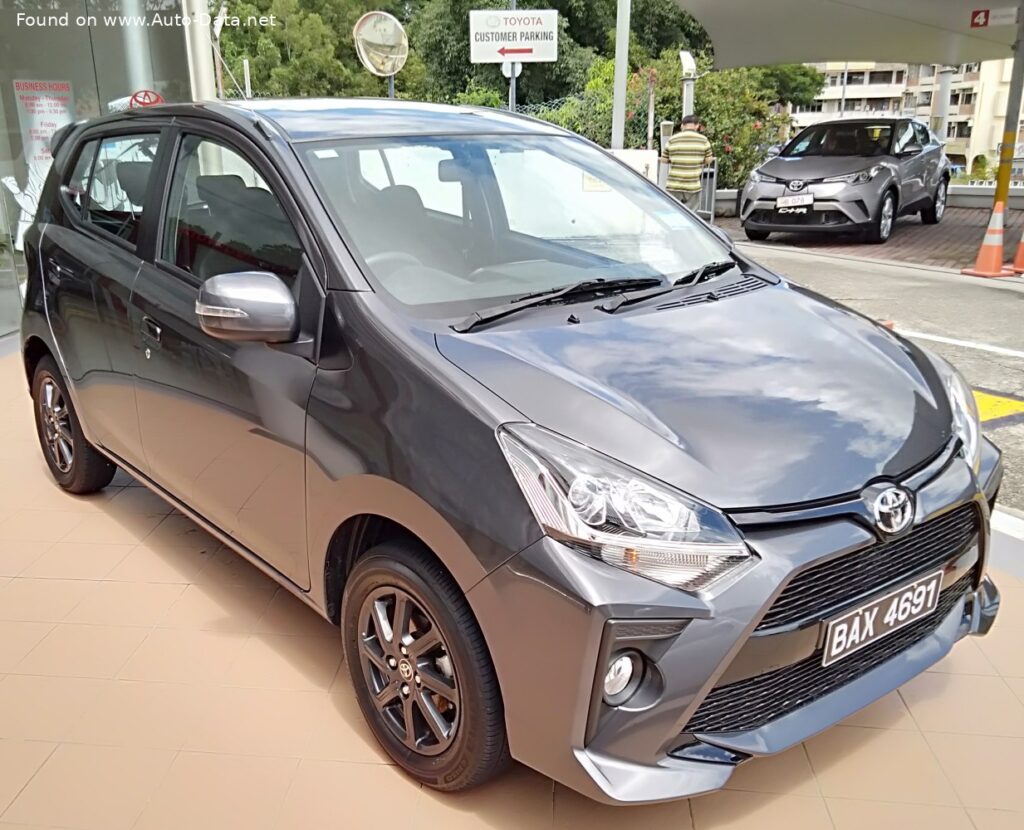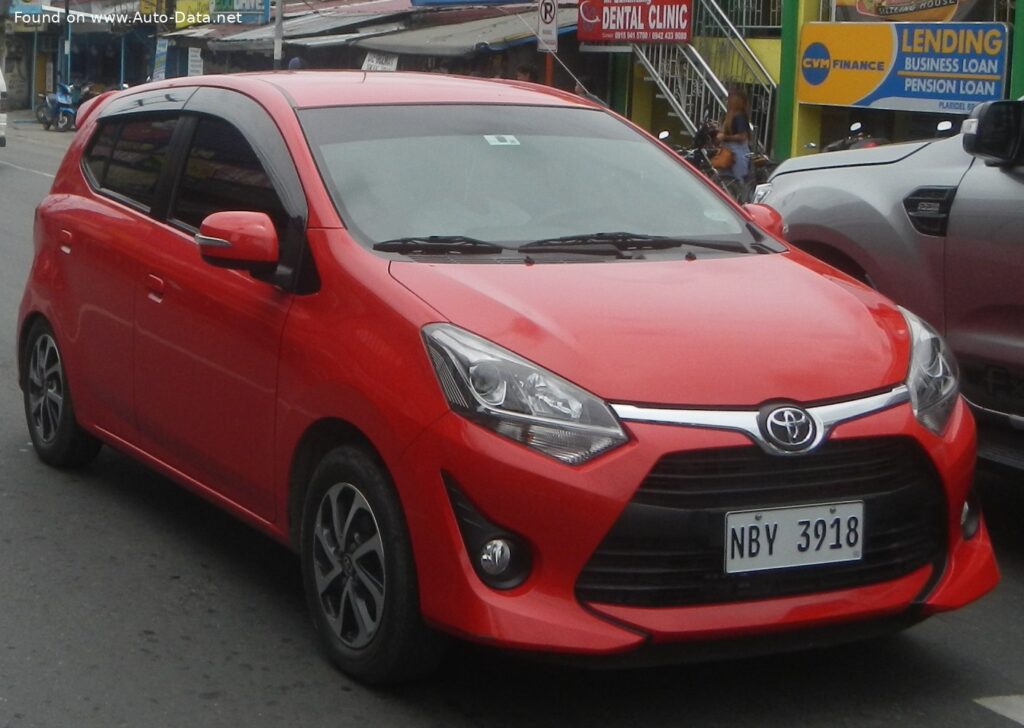
The Toyota Wigo (facelift 2017) 1.0 VVT-i Automatic is a city car primarily designed for the Southeast Asian market. While not officially sold in the United States, it represents a significant segment of affordable, fuel-efficient transportation popular in developing nations. Introduced in 2017 as a refresh of the first-generation Wigo (originally launched in 2014), this facelift brought updated styling and minor mechanical improvements to an already successful formula. The Wigo occupies the “A-segment” – the smallest and most economical class of hatchback – competing with vehicles like the Suzuki Celerio and Mitsubishi Mirage. Its focus is on practicality, low running costs, and ease of maneuverability in congested urban environments.
Toyota Wigo (Facelift 2017): An Overview
The Wigo, known as the Toyota Agya in Indonesia, is a product of Toyota’s Daihatsu subsidiary, which specializes in compact and affordable vehicles. The collaboration between Toyota and Daihatsu allows for shared development costs and economies of scale, resulting in a competitively priced product. The 2017 facelift aimed to enhance the Wigo’s appeal with a more modern exterior design and improved interior features, while retaining its core strengths of fuel efficiency and affordability. It was produced from 2017 through 2020, with subsequent generations offering further refinements.
Engine & Performance
The Toyota Wigo (facelift 2017) 1.0 VVT-i is powered by the 1KR-VE, a 998cc inline-3 cylinder gasoline engine. This engine produces 66 horsepower at 6000 rpm and 89 Nm (65.64 lb-ft) of torque at 4400 rpm. While modest by American standards, this powertrain is optimized for fuel economy and low-speed drivability. The engine utilizes multi-port fuel injection and Toyota’s Variable Valve Timing-intelligence (VVT-i) system to improve efficiency and responsiveness. Power is delivered to the front wheels via a 4-speed automatic transmission. The Wigo’s weight-to-power ratio of 13 kg/Hp and weight-to-torque ratio of 9.7 kg/Nm contribute to its relatively sprightly performance in city traffic. The engine’s small displacement and naturally aspirated design prioritize fuel efficiency over outright speed.
Design & Features
The Wigo (facelift 2017) is a five-door hatchback with a compact footprint, measuring 3660 mm (144.09 in) in length, 1600 mm (62.99 in) in width, and 1520 mm (59.84 in) in height. The facelift brought a revised front fascia with a more prominent grille and updated headlights, giving the car a more contemporary appearance. The interior is designed for practicality, offering seating for five passengers. While not luxurious, the cabin provides essential comfort features for its target market. Safety features include an Anti-lock Braking System (ABS), a crucial addition for improving braking performance and stability. The Wigo’s compact size makes it easy to park and maneuver in crowded urban areas. The vehicle’s design prioritizes functionality and affordability, making it a sensible choice for first-time car buyers or those seeking a basic, reliable mode of transportation.
Technical Specifications
| Brand | Toyota |
| Model | Wigo |
| Generation | Wigo (facelift 2017) |
| Type (Engine) | 1.0 VVT-i (66 Hp) Automatic |
| Start of production | 2017 |
| End of production | 2020 |
| Powertrain Architecture | Internal Combustion engine |
| Body type | Hatchback |
| Seats | 5 |
| Doors | 5 |
| Fuel Type | Petrol (Gasoline) |
| Weight-to-power ratio | 13 kg/Hp |
| Weight-to-torque ratio | 9.7 kg/Nm |
| Power | 66 Hp @ 6000 rpm |
| Power per litre | 66.1 Hp/l |
| Torque | 89 Nm @ 4400 rpm / 65.64 lb.-ft. @ 4400 rpm |
| Engine layout | Front, Transverse |
| Engine Model/Code | 1KR-VE |
| Engine displacement | 998 cm3 / 60.9 cu. in. |
| Number of cylinders | 3 |
| Engine configuration | Inline |
| Number of valves per cylinder | 4 |
| Fuel injection system | Multi-port manifold injection |
| Engine aspiration | Naturally aspirated engine |
| Valvetrain | DOHC, VVT-i |
| Engine oil capacity | 2.7 l / 2.85 US qt | 2.38 UK qt |
| Coolant | 3.7 l / 3.91 US qt | 3.26 UK qt |
| Kerb Weight | 860 kg / 1895.98 lbs |
| Fuel tank capacity | 33 l / 8.72 US gal | 7.26 UK gal |
| Length | 3660 mm / 144.09 in |
| Width | 1600 mm / 62.99 in |
| Height | 1520 mm / 59.84 in |
| Drivetrain Architecture | The Internal combustion engine (ICE) drives the front wheels of the vehicle. |
| Drive wheel | Front wheel drive |
| Number of gears and type of gearbox | 4 gears, automatic transmission |
| Front suspension | Independent, type McPherson with coil spring and anti-roll bar |
| Rear suspension | Torsion |
| Front brakes | Ventilated discs |
| Rear brakes | Drum |
| Assisting systems | ABS (Anti-lock braking system) |
| Steering type | Steering rack and pinion |
| Power steering | Electric Steering |
| Tires size | 175/65 R14 |
| Wheel rims size | 5J x 14 |
In conclusion, the Toyota Wigo (facelift 2017) 1.0 VVT-i Automatic is a practical and affordable city car designed for the demands of Southeast Asian urban environments. While not available in the US market, it exemplifies Toyota’s commitment to providing reliable and fuel-efficient transportation solutions for a wide range of consumers. Its compact size, economical engine, and essential safety features make it a popular choice for those seeking a basic and dependable vehicle.