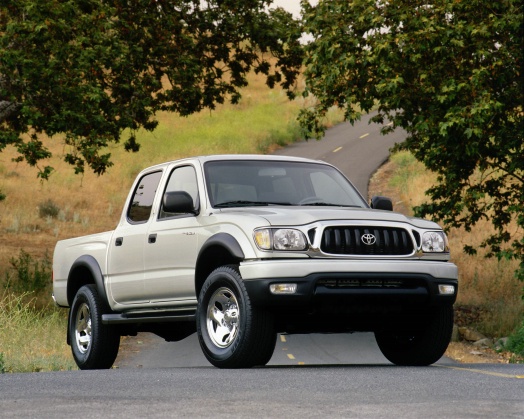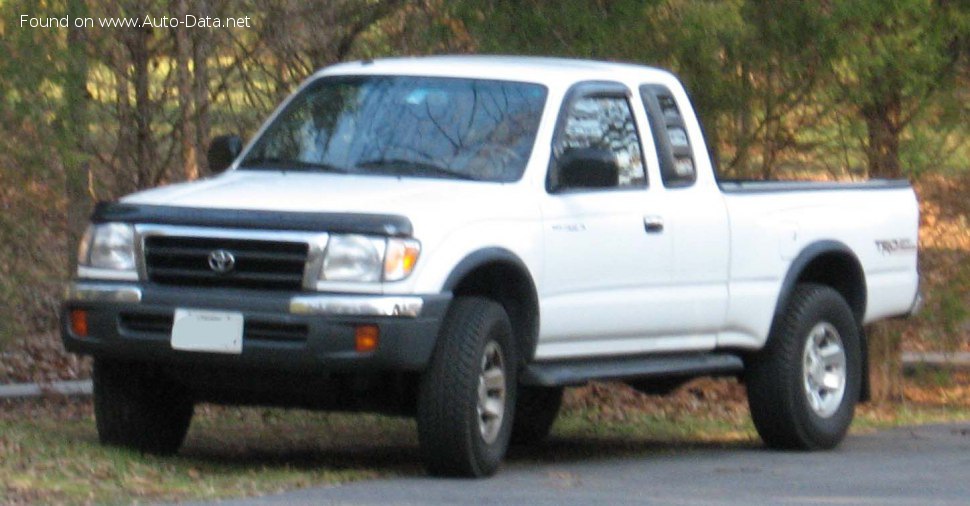
The Toyota Tacoma, particularly the first generation Tacoma I xTracab, represents a pivotal moment in the evolution of the compact pickup truck in the United States. Produced from 1995 to 2000, this model bridged the gap between the smaller, more utilitarian trucks of the past and the more refined, feature-rich pickups that would dominate the market in the 21st century. The xTracab configuration, offering a small extended cab, provided a unique blend of practicality and passenger space, appealing to both work and recreational users. This generation Tacoma quickly gained a reputation for reliability and durability, establishing the Tacoma as a formidable competitor in a segment traditionally dominated by American manufacturers.
Toyota Tacoma I xTracab: A Legacy of Reliability
The first-generation Tacoma was a significant departure from the Hilux-based trucks Toyota had previously offered in the US market. Designed specifically for North American tastes, the Tacoma offered a more comfortable ride, increased interior space, and a wider range of features. The xTracab model, with its side-facing rear seats, was particularly popular, offering a flexible seating arrangement for families or occasional passengers without sacrificing cargo bed space. The Tacoma’s success was built on Toyota’s renowned commitment to quality and its ability to deliver a truck that was both capable and dependable. It quickly became a favorite among outdoor enthusiasts and those seeking a versatile vehicle for everyday use.
Engine & Performance
Powering the 1995-2000 Toyota Tacoma I xTracab was the 5VZ-FE 3.4-liter V6 engine. This naturally aspirated engine produced 190 horsepower at 4800 rpm and 298 Nm (219.79 lb.-ft.) of torque at 3600 rpm. While not the most powerful engine in its class, the 5VZ-FE was known for its smooth operation, excellent reliability, and ample low-end torque, making it well-suited for both on-road driving and off-road adventures. The engine featured a double overhead camshaft (DOHC) valvetrain and multi-port fuel injection, contributing to its efficiency and responsiveness. The Tacoma was equipped with a four-speed automatic transmission, delivering power to all four wheels via a robust 4×4 drivetrain. This combination provided a balance of performance and fuel economy, making the Tacoma a practical choice for a wide range of applications. The engine’s longitudinal front-engine layout contributed to a balanced weight distribution, enhancing handling and stability.
Design & Features
The Toyota Tacoma I xTracab was offered as a two-door pickup with seating for five passengers. The xTracab configuration featured a small extended cab with side-facing jump seats, providing limited but useful passenger space. The truck’s styling was functional and modern for its time, with a relatively streamlined body and a practical interior layout. Safety features, while limited by the standards of today, included standard anti-lock brakes on some models. The Tacoma’s interior was designed with durability in mind, featuring hard-wearing materials and a straightforward layout. The truck’s bed offered ample cargo space, and a variety of accessories were available to enhance its versatility. The Tacoma’s ride quality was a significant improvement over previous-generation Toyota trucks, offering a more comfortable experience for both driver and passengers. The vehicle’s 215 mm (8.46 in) of ground clearance made it capable of tackling moderate off-road terrain.
Technical Specifications
| Brand | Toyota |
| Model | Tacoma |
| Generation | Tacoma I xTracab |
| Type (Engine) | 3.4 V6 (190 Hp) 4WD Automatic |
| Start of production | 1995 |
| End of production | 2000 |
| Powertrain Architecture | Internal Combustion engine |
| Body type | Pick-up |
| Seats | 5 |
| Doors | 2 |
| Fuel Type | Petrol (Gasoline) |
| Power | 190 Hp @ 4800 rpm |
| Power per litre | 56.2 Hp/l |
| Torque | 298 Nm @ 3600 rpm / 219.79 lb.-ft. @ 3600 rpm |
| Engine layout | Front, Longitudinal |
| Engine Model/Code | 5VZ-FE |
| Engine displacement | 3378 cm3 / 206.14 cu. in. |
| Number of cylinders | 6 |
| Engine configuration | V-engine |
| Cylinder Bore | 93.4 mm / 3.68 in. |
| Piston Stroke | 82.04 mm / 3.23 in. |
| Compression ratio | 9.6:1 |
| Number of valves per cylinder | 4 |
| Fuel injection system | Multi-port manifold injection |
| Engine aspiration | Naturally aspirated engine |
| Valvetrain | DOHC |
| Engine oil capacity | 5.2 l / 5.49 US qt | 4.58 UK qt |
| Coolant | 9.5 l / 10.04 US qt | 8.36 UK qt |
| Max. weight | 1928 kg / 4250.51 lbs |
| Fuel tank capacity | 57 l / 15.06 US gal | 12.54 UK gal |
| Length | 5055 mm / 199.02 in |
| Width | 1689 mm / 66.5 in |
| Height | 1560 mm / 61.42 in |
| Wheelbase | 3096 mm / 121.89 in |
| Front track | 1311 mm / 51.61 in |
| Rear (Back) track | 1440 mm / 56.69 in |
| Ride height (ground clearance) | 215 mm / 8.46 in |
| Drive wheel | All wheel drive (4×4) |
| Number of gears and type of gearbox | 4 gears, automatic transmission |
| Front brakes | Ventilated discs |
| Rear brakes | Drum |
| Tires size | 205/75 R15; 235/55 R16 |
| Wheel rims size | 15; 16 |
The Toyota Tacoma I xTracab 3.4 V6 4WD Automatic remains a highly sought-after vehicle among enthusiasts and collectors. Its combination of reliability, capability, and practicality has cemented its place as a classic in the compact pickup truck segment. The enduring popularity of this generation Tacoma is a testament to Toyota’s engineering prowess and its ability to create vehicles that stand the test of time.