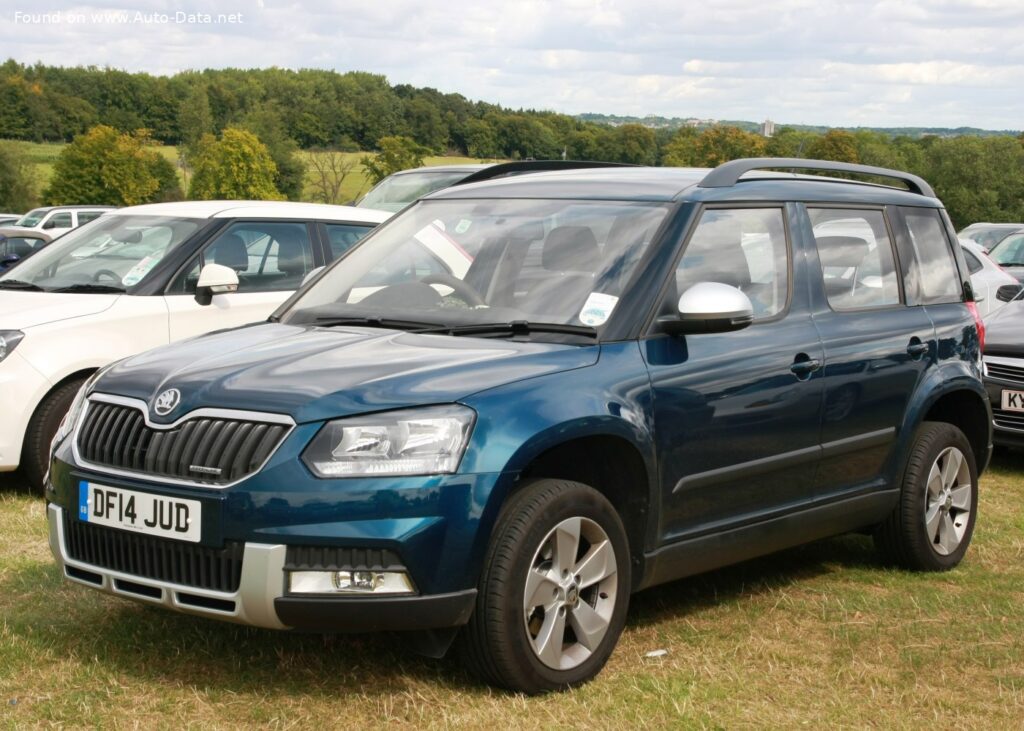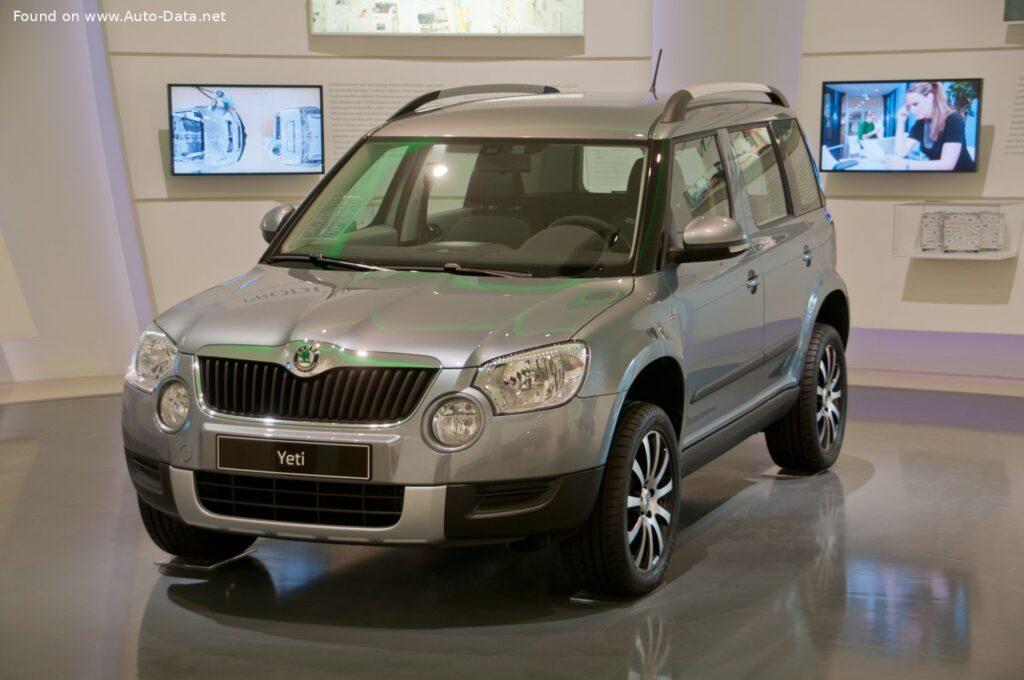
The Skoda Yeti, produced from 2009 to 2013, was a compact crossover SUV marketed primarily in Europe. While not officially sold in the United States, the Yeti represented Skoda’s entry into the increasingly popular segment of small, practical, and versatile family vehicles. Positioned as a more rugged and spacious alternative to traditional hatchbacks, the Yeti aimed to blend the practicality of an MPV with the styling and driving experience of an SUV. It quickly gained popularity for its distinctive design, generous interior space, and available all-wheel-drive system, becoming a significant model for Skoda and contributing to the brand’s growing reputation for value and engineering.
Skoda Yeti 2.0 TDI: A Detailed Overview
The 2.0 TDI variant, equipped with a 140 horsepower diesel engine and a particulate filter (DPF), was a popular choice within the Yeti lineup. This model combined reasonable performance with excellent fuel economy, making it well-suited for both urban commuting and longer journeys. The availability of a four-wheel-drive (4×4) system further enhanced its appeal, providing added traction and stability in challenging weather conditions. The Yeti’s design philosophy centered around functionality and practicality, resulting in a vehicle that prioritized interior space and usability over flashy aesthetics.
Engine & Performance
The heart of the Skoda Yeti 2.0 TDI is a 1968cc (120.09 cubic inches) inline-four cylinder diesel engine, designated the EA189 / CBDB. This engine produces 140 horsepower at 4200 rpm and 320 Newton-meters (236.02 lb.-ft.) of torque between 1750 and 2500 rpm. The engine features a turbocharger with an intercooler, enhancing both power and efficiency. Power per liter is rated at 71.1 hp/l. The engine utilizes a Diesel Commonrail fuel injection system and boasts a compression ratio of 18.5:1. This powertrain delivers a balance of performance and economy, allowing for a 0-100 km/h (0-62 mph) acceleration time of 9.9 seconds and a 0-60 mph time of 9.4 seconds. The Yeti 2.0 TDI achieves a maximum speed of 190 km/h (118.06 mph). Fuel economy figures are impressive, with combined cycle consumption rated at 6.1 liters per 100 kilometers (38.6 US mpg or 46.3 UK mpg).
Design & Features
The Skoda Yeti is a five-door SUV with a distinctive, boxy design that maximizes interior space. Its upright stance and relatively short overhangs contribute to its practical and rugged appearance. The interior is characterized by its spaciousness, comfortable seating for five occupants, and a versatile cargo area. The rear seats can be folded down or even removed entirely, creating a large and flexible loading space ranging from 405 liters (14.3 cubic feet) with all seats in place to 1760 liters (62.15 cubic feet) with the rear seats folded.
Safety features included ABS (Anti-lock Braking System) as standard. The Yeti’s suspension consists of an independent McPherson strut setup at the front and an independent multi-link spring suspension at the rear, providing a comfortable ride and good handling characteristics. The steering is rack and pinion with electric power assistance. Standard tire sizes were 215/60 R16 or 225/50 R17, mounted on 7.0J x 16 or 17-inch wheel rims. The Yeti’s design prioritized practicality and functionality, making it a popular choice for families and those seeking a versatile vehicle for everyday use.
Technical Specifications
| Brand | Skoda |
| Model | Yeti |
| Type (Engine) | 2.0 TDI (140 Hp) DPF 4×4 |
| Start of production | 2009 |
| End of production | 2013 |
| Powertrain Architecture | Internal Combustion engine |
| Body type | SUV |
| Seats | 5 |
| Doors | 5 |
| Fuel consumption (urban) | 7.6 l/100 km (30.9 US mpg) |
| Fuel consumption (extra urban) | 5.2 l/100 km (45.2 US mpg) |
| Fuel consumption (combined) | 6.1 l/100 km (38.6 US mpg) |
| Fuel Type | Diesel |
| Acceleration 0 – 100 km/h | 9.9 sec |
| Acceleration 0 – 62 mph | 9.9 sec |
| Acceleration 0 – 60 mph | 9.4 sec |
| Maximum speed | 190 km/h (118.06 mph) |
| Emission standard | Euro 5 |
| Weight-to-power ratio | 11 kg/Hp |
| Weight-to-torque ratio | 4.8 kg/Nm |
| Power | 140 Hp @ 4200 rpm |
| Torque | 320 Nm @ 1750-2500 rpm (236.02 lb.-ft.) |
| Engine layout | Front, Transverse |
| Engine Model/Code | EA189 / CBDB |
| Engine displacement | 1968 cm3 (120.09 cu. in.) |
| Number of cylinders | 4 |
| Engine configuration | Inline |
| Cylinder Bore | 81 mm (3.19 in.) |
| Piston Stroke | 95.5 mm (3.76 in.) |
| Compression ratio | 18.5:1 |
| Number of valves per cylinder | 4 |
| Fuel injection system | Diesel Commonrail |
| Engine aspiration | Turbocharger, Intercooler |
| Engine oil capacity | 4.3 l (4.54 US qt | 3.78 UK qt) |
| Coolant | 8.7 l (9.19 US qt | 7.65 UK qt) |
| Kerb Weight | 1545 kg (3406.14 lbs.) |
| Max. weight | 2090 kg (4607.66 lbs.) |
| Max load | 545 kg (1201.52 lbs.) |
| Trunk (boot) space – minimum | 405 l (14.3 cu. ft.) |
| Trunk (boot) space – maximum | 1760 l (62.15 cu. ft.) |
| Fuel tank capacity | 60 l (15.85 US gal | 13.2 UK gal) |
| Length | 4223 mm (166.26 in.) |
| Width | 1793 mm (70.59 in.) |
| Height | 1691 mm (66.57 in.) |
| Wheelbase | 2578 mm (101.5 in.) |
| Front track | 1541 mm (60.67 in.) |
| Rear (Back) track | 1537 mm (60.51 in.) |
| Ride height (ground clearance) | 180 mm (7.09 in.) |
| Drag coefficient (Cd) | 0.37 |
| Minimum turning circle | 10.3 m (33.79 ft.) |
| Drive wheel | All wheel drive (4×4) |
| Number of gears | 6 gears, manual transmission |
| Front suspension | Independent, type McPherson with coil spring and anti-roll bar |
| Rear suspension | Independent multi-link spring suspension with stabilizer |
| Front brakes | Ventilated discs |
| Rear brakes | Disc |