
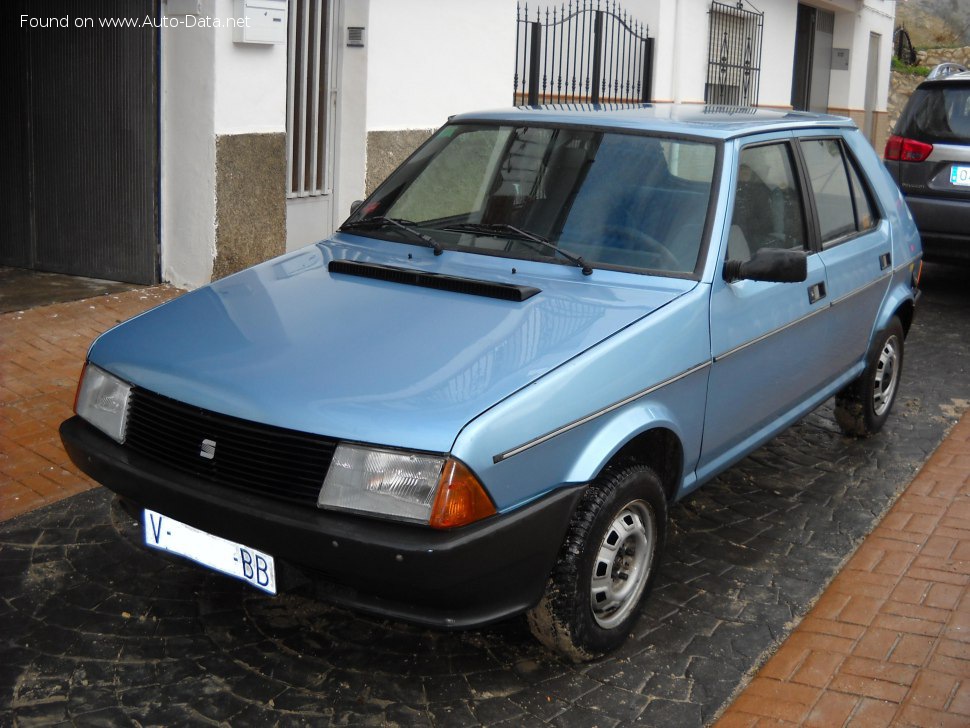
The SEAT Ronda is a small family car produced by the Spanish automobile manufacturer SEAT from 1982 to 1986. Based on the Fiat Ritmo, the Ronda represented SEAT’s attempt to modernize its lineup and offer a contemporary hatchback to compete in the burgeoning European market. Crucially, the Ronda was one of the first SEAT models to be developed largely independently of Fiat, though the underlying platform remained Italian. It was primarily sold in Europe, particularly in Spain and other European countries where SEAT had a strong presence. The Ronda never received a significant US market release, due to import restrictions and differing consumer preferences at the time. The 1.6-liter version, producing 95 horsepower, was a popular trim level, offering a balance of performance and economy for the era. This article details the Ronda (022A) 1.6 (95 Hp) model produced between 1983 and 1985.
The SEAT Ronda: A Spanish Take on the European Hatchback
The early 1980s saw a shift in automotive preferences towards more practical and fuel-efficient vehicles. Hatchbacks, in particular, gained popularity due to their versatility and compact size. SEAT, then a state-owned company under the control of the Instituto Nacional de Industria (INI), recognized this trend and sought to introduce a modern hatchback to its range. The Ronda was the result, leveraging the existing Fiat Ritmo platform but with significant styling and engineering changes to differentiate it and appeal to Spanish and European tastes. The Ronda aimed to provide a more affordable and accessible option compared to some of its more established competitors, such as the Volkswagen Golf and Ford Escort.
Origins and Market Positioning
SEAT’s relationship with Fiat had been long-standing, with many SEAT models being rebadged or locally produced versions of Fiat designs. However, with the Ronda, SEAT began to assert more independence in its design and engineering. While the Ritmo’s basic architecture was retained – including the front-wheel-drive layout and MacPherson strut front suspension – the Ronda featured a distinct exterior design, different interior trim, and revised mechanical components. The Ronda was positioned as a mainstream family car, aimed at buyers seeking a practical, reliable, and reasonably priced vehicle. It competed directly with other European hatchbacks in the small to medium-size segment.
Engine & Performance
The Ronda 1.6 (95 Hp) was powered by a 1.6-liter, naturally aspirated inline-four cylinder gasoline engine. This engine, while derived from Fiat designs, was modified by SEAT to meet local emissions standards and improve performance. The engine produced a maximum power output of 95 horsepower (71 kW) at an unspecified RPM, and torque figures were not widely published but were estimated to be around 100 lb-ft (136 Nm). This provided adequate performance for everyday driving, allowing for a top speed of approximately 99 mph (160 km/h) and acceleration from 0 to 60 mph (0 to 97 km/h) in around 11-12 seconds. The engine was paired with a four-speed manual transmission, which was the standard configuration. Fuel delivery was handled by a carburetor, a common feature for vehicles of this era. The engine’s relatively simple design contributed to its reliability and ease of maintenance.
The Ronda’s front-wheel-drive layout provided good traction in most conditions, and the suspension – consisting of MacPherson struts at the front and a twist-beam axle at the rear – offered a comfortable ride. While not a particularly sporty vehicle, the Ronda 1.6 offered a reasonable driving experience for its intended purpose. Fuel economy was a key consideration for buyers in the early 1980s, and the Ronda 1.6 achieved around 33-37 mpg (7.1-6.3 L/100km) on the combined cycle, making it a relatively economical choice.
Design & Features
The SEAT Ronda featured a distinctive hatchback body style, characterized by its sloping rear roofline and large rear window. The exterior design was penned by Giorgetto Giugiaro’s Italdesign studio, giving it a modern and aerodynamic appearance for its time. The Ronda’s front end featured rectangular headlights and a simple grille, while the rear end incorporated taillights that spanned the width of the car. The car’s overall design was clean and functional, reflecting the prevailing design trends of the early 1980s.
Inside, the Ronda offered a practical and spacious cabin for its size. It could comfortably accommodate five passengers, although rear legroom was somewhat limited. The interior trim was relatively basic, with durable cloth upholstery and plastic dashboard components. Features included a steering wheel, basic instrumentation (speedometer, fuel gauge, temperature gauge), and manually operated windows and door locks. Safety features were limited by the standards of the time, consisting primarily of seatbelts. Air conditioning and power steering were not typically offered as standard equipment, although they may have been available as optional extras in some markets. The Ronda’s 50-liter (13.21 US gal) fuel tank provided a reasonable driving range. The Ronda’s focus was on providing a functional and affordable mode of transportation, rather than luxury or advanced features.
Technical Specifications
| Specification | Value |
| Brand | SEAT |
| Model | Ronda |
| Generation | Ronda (022A) |
| Type (Engine) | 1.6 (95 Hp) |
| Start of production | 1983 |
| End of production | 1985 |
| Powertrain Architecture | Internal Combustion engine |
| Body type | Hatchback |
| Seats | 5 |
| Doors | 5 |
| Fuel Type | Petrol (Gasoline) |
| Power | 95 Hp |
| Engine aspiration | Naturally aspirated engine |
| Fuel tank capacity | 50 l / 13.21 US gal / 11 UK gal |
The SEAT Ronda, particularly the 1.6-liter version, represents a significant step in SEAT’s development as an independent automaker. While based on a Fiat platform, the Ronda showcased SEAT’s growing ability to design and engineer its own vehicles. Although it never achieved widespread recognition outside of Europe, the Ronda played an important role in establishing SEAT as a credible competitor in the European automotive market and paved the way for future models that would further solidify the brand’s identity.
