
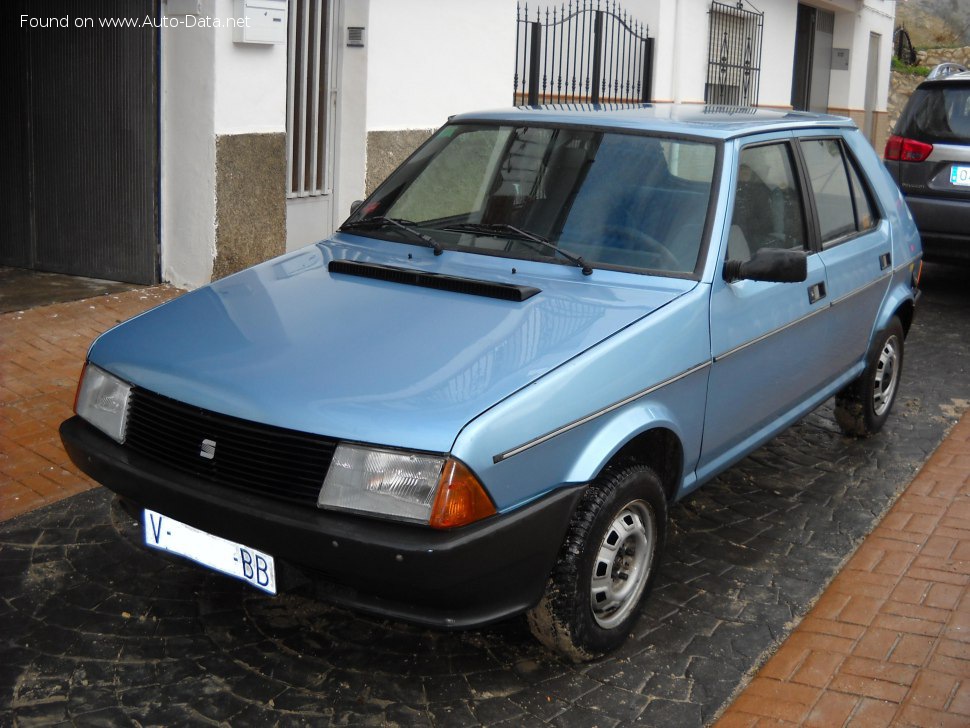
The SEAT Ronda is a small family car produced by the Spanish automobile manufacturer SEAT from 1982 to 1986. Based on the Fiat Ritmo, the Ronda was SEAT’s attempt to modernize its lineup and offer a contemporary hatchback to compete in the burgeoning European small car market. Crucially, the Ronda represented a significant step for SEAT, which at the time was largely state-owned and focused on producing licensed versions of Fiat vehicles for the Spanish domestic market. The Ronda aimed to establish SEAT as a more independent and innovative automaker. While not widely exported outside of Spain and limited European markets, the Ronda was a relatively popular vehicle in its home country, offering a practical and affordable transportation option. The 1.7 Diesel variant, producing 54 horsepower, was a key offering, appealing to buyers prioritizing fuel economy.
SEAT Ronda (022A): A Spanish Take on the European Hatchback
The Ronda’s development stemmed from SEAT’s long-standing relationship with Fiat. However, unlike previous SEAT models which were near-identical copies of Fiat designs, the Ronda featured more substantial styling differences, particularly at the front and rear. This was a deliberate move to differentiate SEAT’s identity. The car was positioned as a competitor to vehicles like the Renault 5, Peugeot 205, and Volkswagen Polo, all popular hatchbacks of the era. The Ronda’s design, while not groundbreaking, was clean and functional, reflecting the design trends of the early 1980s. The 1.7 Diesel model, while not known for its performance, offered a compelling combination of affordability and fuel efficiency, making it a popular choice for everyday commuting and family use.
Engine & Performance
The 1.7 Diesel-powered SEAT Ronda utilized a naturally aspirated, inline-four cylinder diesel engine. This engine produced 54 horsepower, which, while modest by modern standards, was typical for diesel engines of that displacement in the early 1980s. The engine’s primary focus was on fuel economy rather than outright performance. Torque figures were not prominently advertised, but diesel engines of this era generally delivered usable low-end torque, making the Ronda reasonably drivable in urban environments and capable of handling moderate loads. The engine was coupled with a manual transmission, typically a four- or five-speed unit, depending on the specific year and trim level. Acceleration was slow, and top speed was limited, but these were not primary concerns for the target buyer. The emphasis was on reliability and low running costs. The engine’s simplicity also contributed to its durability and ease of maintenance, important factors in a market where affordability was paramount. The powertrain architecture was entirely internal combustion, reflecting the technological landscape of the time. There were no turbocharging or direct injection systems employed in this version of the Ronda.
Design & Features
The SEAT Ronda was a five-door hatchback, offering a practical and versatile body style. The hatchback configuration provided easy access to the cargo area, making it suitable for carrying groceries, luggage, or other items. The interior was functional and relatively spartan, reflecting the car’s affordable price point. Seats were cloth-covered and provided adequate comfort for five occupants. Safety features were limited by the standards of the time, typically consisting of seatbelts and a basic steering column-mounted instrument cluster. Air conditioning and power windows were not commonly available, even as optional extras. The Ronda’s exterior styling was characterized by its angular lines and relatively boxy shape. The front end featured a distinctive grille and headlights, while the rear end incorporated a large tailgate and simple taillights. The overall design was intended to convey a sense of practicality and reliability. The Ronda’s build quality was generally considered to be adequate, although it did not match the standards of some of its more established competitors. The car’s relatively simple construction, however, made it easier to repair and maintain. The 50-liter (13.21 US gallons) fuel tank provided a reasonable driving range, further enhancing the Ronda’s appeal as an economical transportation option.
Technical Specifications
| Brand | Seat |
| Model | Ronda |
| Generation | Ronda (022A) |
| Type (Engine) | 1.7 Diesel (54 Hp) |
| Start of production | 1982 |
| End of production | 1986 |
| Powertrain Architecture | Internal Combustion engine |
| Body type | Hatchback |
| Seats | 5 |
| Doors | 5 |
| Fuel Type | Diesel |
| Power | 54 Hp |
| Engine aspiration | Naturally aspirated engine |
| Fuel tank capacity | 50 l / 13.21 US gal / 11 UK gal |
The SEAT Ronda, particularly the 1.7 Diesel variant, represents a significant chapter in SEAT’s history. It marked the company’s attempt to move beyond simply rebadging Fiat models and establish its own identity in the European automotive market. While the Ronda may not have been a revolutionary vehicle, it provided a practical, affordable, and reliable transportation option for Spanish buyers during the early 1980s. Its focus on fuel economy and durability made it a popular choice for those seeking a no-frills, economical car. The Ronda paved the way for SEAT’s future development and eventual integration into the Volkswagen Group, ultimately leading to the more globally recognized and competitive SEAT models of today. The car’s legacy lies in its role as a stepping stone for a Spanish automaker striving for independence and innovation in a rapidly evolving automotive landscape.
